
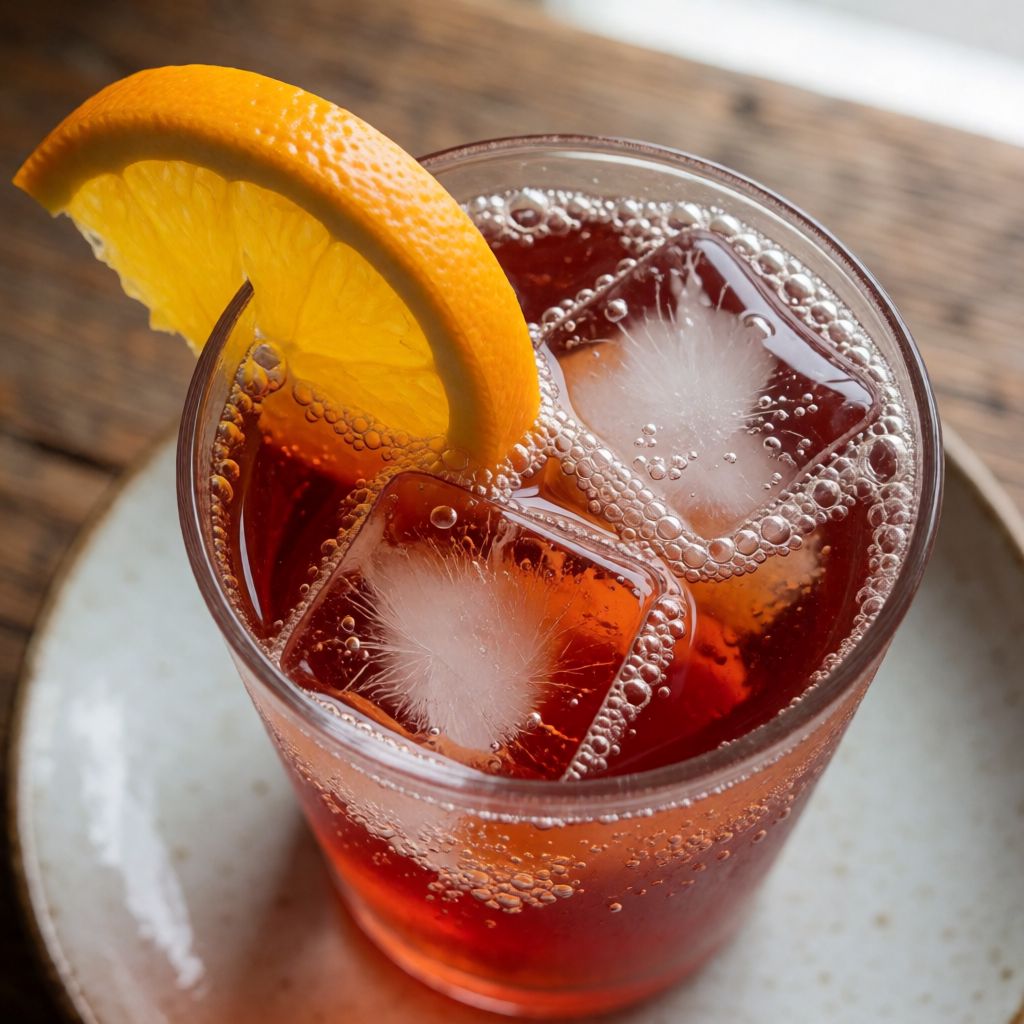
 AI photo
Americano Cocktail
A classic Italian aperitif made with Campari, red vermouth and sparkling water, served over ice.
Labels are worked out automatically from the ingredients and can be wrong. Check the packaging if it matters to you.
Ingredients
- 25 ml Campari
- 25 ml Red vermouth
- 25 ml Sparkling water
- 1 pcs Orange slice, for garnish

Steps
Take a short tumbler or an old fashioned glass. Fill it halfway with ice cubes.
Pour in the Campari, then the red vermouth, and finally the sparkling water. Stir.
The key is that all the ingredients are very cold before serving.
Make sure the ice doesn't float to the top; if that happens after adding the liquid, add a few more ice cubes.
Garnish the cocktail with an orange slice or simply with zest, and serve immediately.
What was changed
Campari was swapped in so the cocktail uses the proper bitter aperitif instead of dashes-style cocktail bitters.
This is not a weak Negroni, whatever anyone tells you. It came first — the Negroni is what happened when someone threw gin into this drink and gave it a count's name. The Americano is older, simpler, and built for daytime: Campari for bitterness, red vermouth for sweetness and herb, soda to stretch the whole thing into something you can nurse on a terrace without falling asleep by four o'clock. Equal parts, built in the glass, over ice. That's the whole architecture.
What decides whether it works has nothing to do with skill and everything to do with cold and timing. This drink has no cooking, so the usual question of heat doesn't apply — instead you're managing the opposite: how cold, and for how long it stays that way before the ice turns it into soup. Cold does a real job here, not a decorative one: it mutes the sharper edges of the Campari's bitterness and lets the vermouth's sweetness and the soda's fizz come through evenly, instead of one note shouting over the others.
The ice is doing two jobs at once — chilling and diluting — and people usually plan for the first and forget the second. If you underfill the glass with ice, you get a drink that's strong and flat at the top, then suddenly watery at the bottom as it melts. That's the actual fault behind "my Americano tastes different every sip" — not bad proportions, just not enough cold mass to hold a steady temperature while you drink it slowly, which is the point of a long drink in the first place.
Campari is the backbone — bitter, red, built on gentian and orange peel, originally coloured with cochineal before that went out of fashion in big production. The bitterness is not a flaw to tone down; it's the entire reason the drink exists as a pre-dinner aperitivo rather than a dessert. If you haven't got Campari, look for any red Italian bitter liqueur with that same gentian spine — Aperol will not do the same job, it's sweeter and softer, closer to orange soda than to bitters, so the drink shifts character rather than just losing a bit of edge.
Red vermouth is aromatised, fortified wine — wine with spirit added to hold it stable, and herbs and spices steeped in to give it that dark, slightly medicinal sweetness. It's the only ingredient here doing a wine's job, so buy an actual vermouth, not a "vermouth-style" cordial. Once opened, it keeps in the fridge a few weeks at most — it's wine, and wine dies slowly once air gets at it, so an old bottle at the back of the cupboard since last Christmas won't ruin the drink outright, but it'll taste tired and flat instead of bright.
Sparkling water is not filler, it's structure. The carbonation lifts the aromatic oils off the Campari and vermouth the way any fizz does — that's why it goes in last and why it has to be properly cold and freshly opened. Water that's gone flat, or warm from sitting out, deadens the whole glass; you'll have made a bitter sweet syrup with ice in it, not an Americano. Any plain soda water works, the only criterion is that it's actually still fizzing when it hits the glass.
The orange is for aromatic oil, not flavour by itself — a twist of zest over the glass releases citrus oils into the air right above where you're about to drink, which is why some bartenders skip the slice and just use a peel. Either works; a slice looks better on a Sunday table, zest alone is less fuss if you're not fond of fishing peel out of your glass.
As for measuring: 25ml three times over is exactly a standard bar jigger, but you don't need one — any small glass or shot measure will do, as long as you keep the three liquids in the same ratio to each other. That ratio is the actual recipe; the millilitres are just one way of writing it down.
One more thing on patience, since this drink has none of the usual cooking steps to force you to slow down: resist the urge to drink it the second it's stirred. Give it a minute for the cold to even out through the glass and for the fizz to settle into the liquid rather than sitting as foam on top. It's a two-minute drink either way — the patience here is tiny, but it's still the difference between a glass that tastes the same from first sip to last and one that doesn't.