
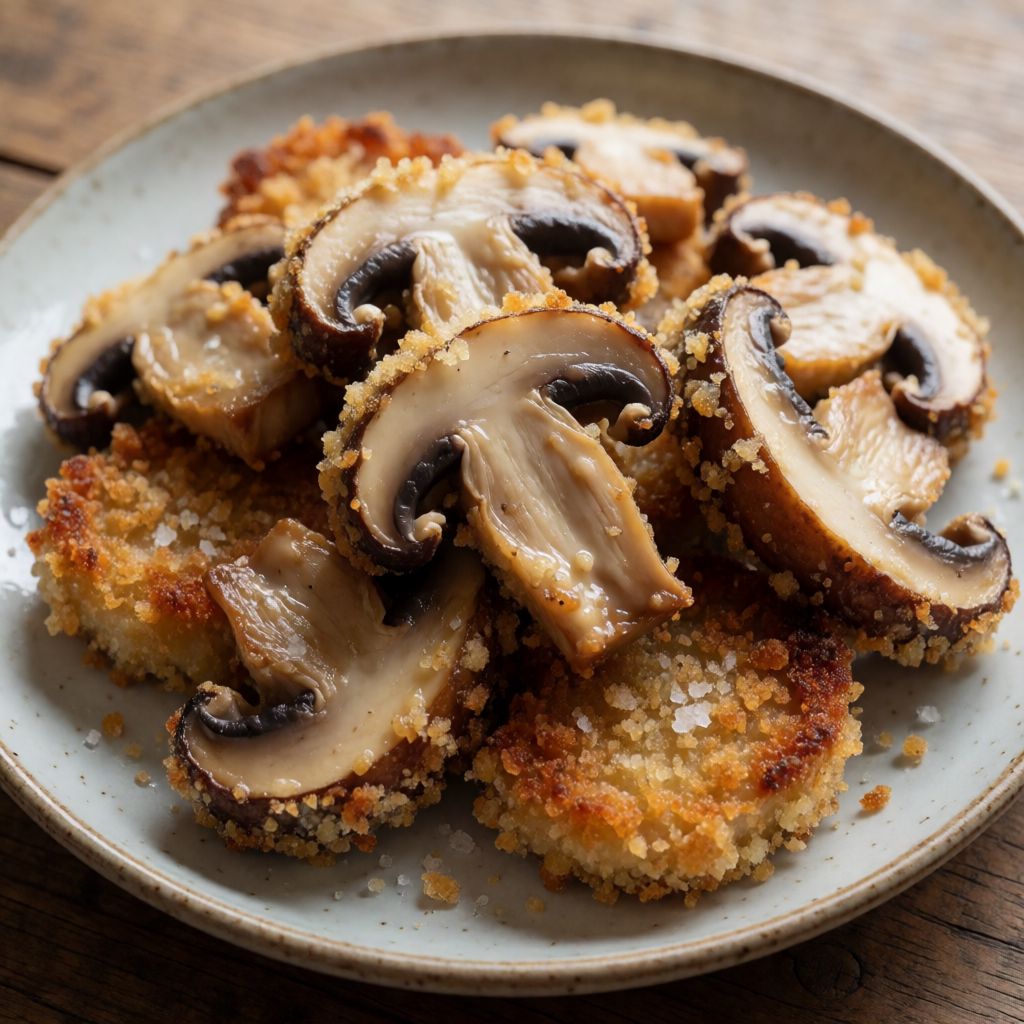
 AI photo
Fried Porcini Mushrooms
A simple pan-fried porcini mushroom dish, coated in egg and breadcrumbs until golden and crisp.
Labels are worked out automatically from the ingredients and can be wrong. Check the packaging if it matters to you.
Ingredients
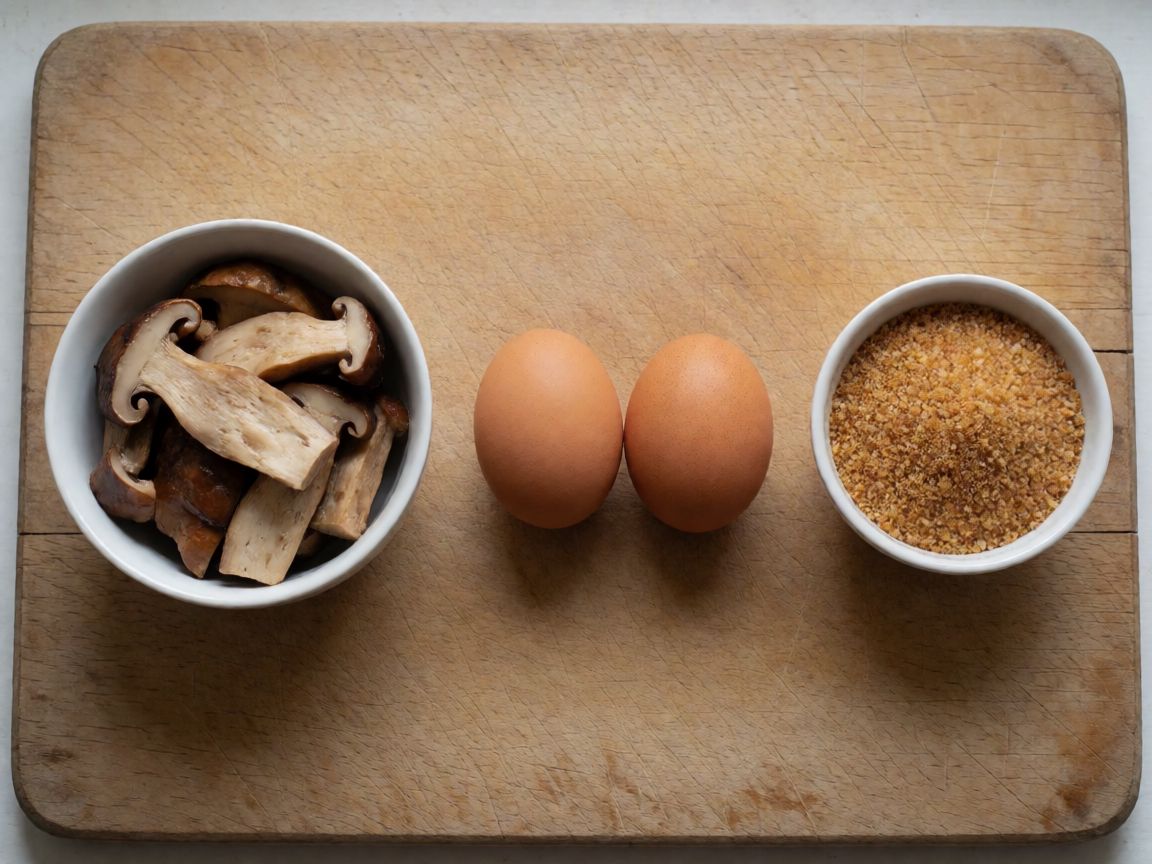
- 400 g Porcini mushrooms
- 2 pcs Eggs
- 300 g Breadcrumbs dried
- 50 ml Vegetable oil
- Salt to taste




Steps
Thoroughly clean the porcini mushrooms with a brush, then cut them into thick slices, 1–1.5 cm.
Crack the eggs into a deep bowl and beat with a fork.
Dip the mushroom slices in the egg, then coat them in breadcrumbs.
Pour the vegetable oil into a frying pan and heat it until small bubbles appear.
Fry the mushrooms until golden.
Remove the mushrooms with a slotted spoon and place on a paper towel. Season with salt to taste and serve hot.
This is a side dish built entirely on one piece of physics: a mushroom is mostly water held in a loose mesh, and if you throw it straight into hot fat, that water boils out before the inside ever softens. You get a leathery shell around a mushroom that's still raw and watery in the middle. The egg-and-breadcrumb coat exists to solve exactly this — it's not decoration, it's a thermal buffer. The crumb takes the direct heat and goes crisp and brown; the mushroom underneath cooks gently in its own steam, trapped by that shell. That's the whole trick of any breaded fry, whether it's a cutlet or a porcino.
What decides whether this works is two things: the thickness of the slice, and whether the oil was hot enough when the mushroom went in. Cut thinner than a centimetre and the mushroom dries out before the crumb even colours — there's no mass left to hold moisture. Thicker than a centimetre and a half, and the crumb burns while the core is still crunchy and raw-tasting. A thick, generous slice gives the water inside time to turn to steam and cook the flesh without racing ahead of the crust.
Some say you should rinse wild mushrooms under the tap to get them properly clean. Don't — not with porcini. The cap is porous, almost sponge-like, and water goes in and sits there. A wet mushroom won't take egg properly, the crumb slides off in patches, and whatever sticks turns soggy and grey instead of crisp. A stiff brush, maybe a damp cloth for the cap, that's enough — the dirt on a porcino is mostly on the stem base anyway, and a knife deals with that in two seconds.
Porcini themselves — look for caps that are firm enough to resist a light squeeze, not spongy or slimy underneath. A porcino that's gone soft has started breaking down and will fall apart in the pan instead of holding a slice. If you can't get porcini, any dense, meaty mushroom works on the same principle — king oyster, or a thick-capped field mushroom — but understand you're borrowing the technique, not the flavour; porcini have a nuttiness nothing else quite matches, so don't expect the substitute to taste the same, just to behave the same in the pan.
The eggs are glue, nothing more mystical than that. Beaten loose with a fork so it coats evenly rather than sitting in clumps. You don't need to add flour as a layer underneath the egg, the way some cutlet recipes do — that trick exists because meat surfaces are smooth and need something to help the egg grip. A porcino's cut surface is already slightly tacky and porous; it holds egg on its own.
Breadcrumbs: the only rule is they must be dry, not fresh. A fresh breadcrumb carries its own moisture, and that moisture turns the coating gummy instead of crisp — you'd just be adding more water to a problem you're trying to solve. Dried, plain breadcrumbs with no sugar in them are the right tool; panko works too and gives a slightly coarser, crunchier shell if that's what you've got in the cupboard. Avoid anything sweetened or seasoned heavily — the crumb should taste of nothing much, so the mushroom underneath can taste of itself.
Oil: this needs to be something with no flavour of its own — sunflower, rapeseed, any plain vegetable oil. Olive oil, especially the good extra virgin kind, has its own voice and it will argue with the porcini instead of supporting them; it also doesn't love sitting at frying heat for long. Fifty millilitres in a wide domestic frying pan gives you a shallow, generous puddle, not a deep fry — you're not drowning the mushrooms, you're letting them sit in enough fat that the crumb can brown evenly on contact.
On the hob: don't crowd the pan. Each slice needs its own patch of hot oil around it; packed too close, they steam each other and the crumb never quite crisps, it just goes pale and greasy. Fry in batches if your pan is on the smaller side — a wide pan stands in perfectly well for a kazan here, there's no need for anything more specialised. If you've ever made Yorkshire puddings for a Sunday roast, you already understand the egg-coat principle: a liquid layer that sets fast in heat and seals in what's underneath.
And patience — don't flip the slices early. The crust needs a moment to actually set before it's turned, otherwise it tears and the bare mushroom hits the oil directly, which is the exact failure the breading was meant to prevent in the first place. Wait for the gold, not the clock, lift with a slotted spoon so the oil stays in the pan and not on the plate, and let them rest a minute on paper before salting — salt straight onto hot oil-slicked crumb just slides off and does nothing.