
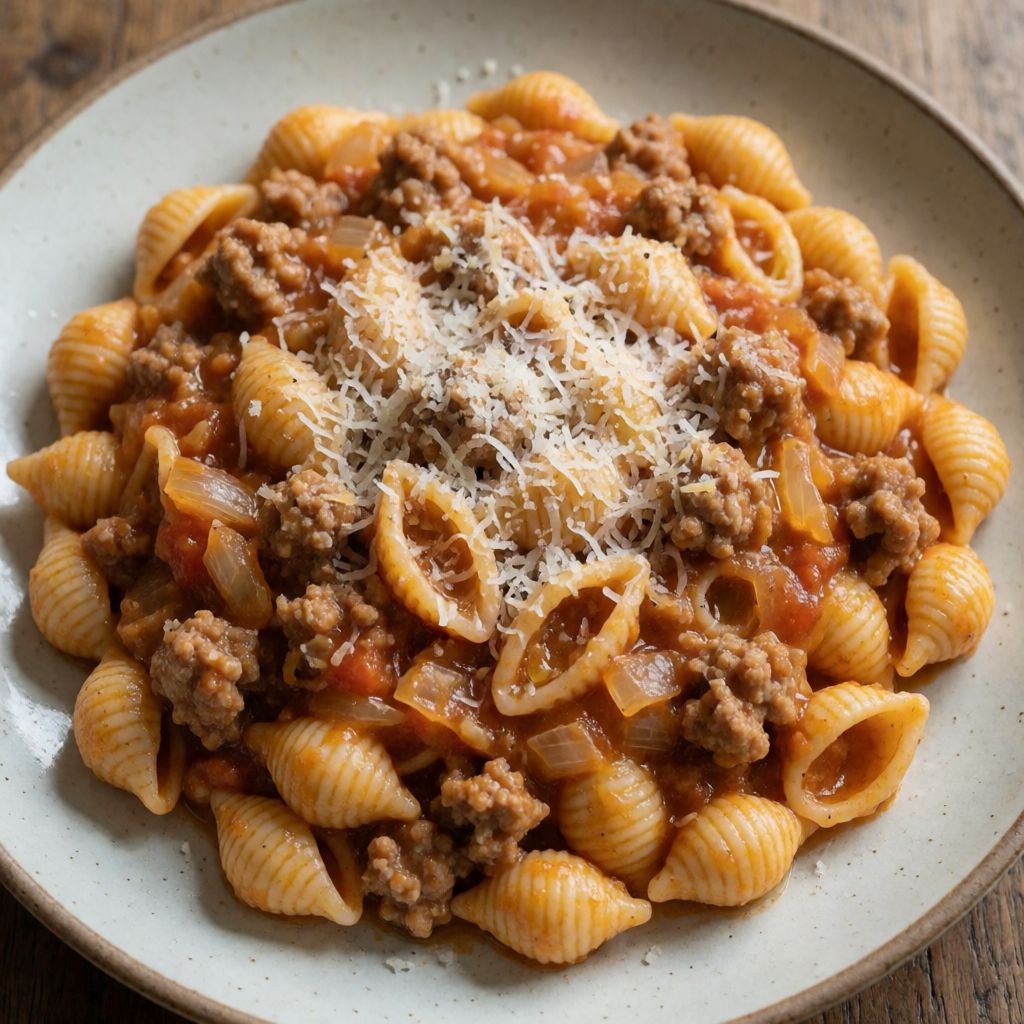
 AI photo
Malloreddus alla Campidanese
A traditional Sardinian pasta dish with sausage, tomato sauce and Pecorino Sardo cheese.
Labels are worked out automatically from the ingredients and can be wrong. Check the packaging if it matters to you.
Ingredients
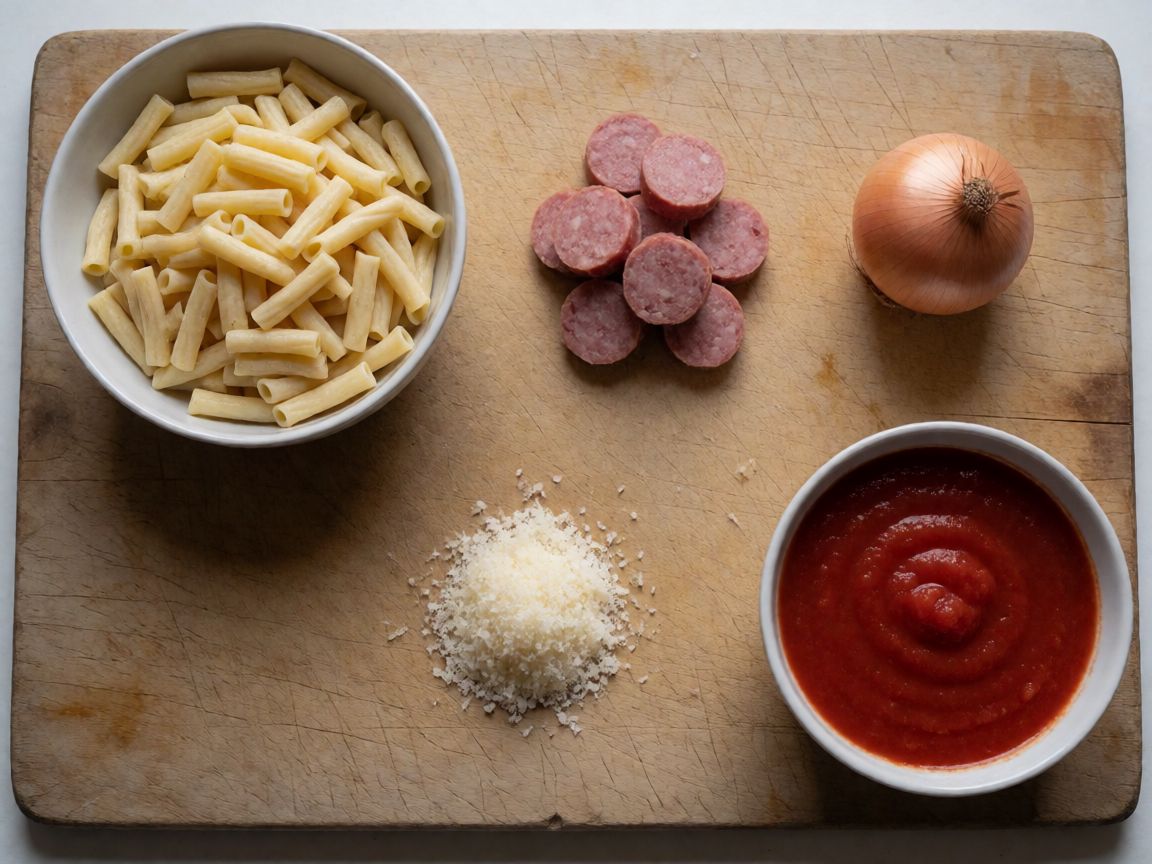
- 400 g Malloreddus
- 300 g Italian sausage
- 1 pcs Onion
- 150 g Pecorino Sardo
- 500 ml Tomato passata
- Olive oil to taste
- Salt to taste







Steps
Thinly slice the onion into half-rings and fry gently in a little olive oil until softened.
Remove the casing from the sausage, crumble it and add to the onion. Fry over high heat for a few minutes, until lightly golden.
Add the tomato passata and a ladleful of hot water. Season with salt to taste and simmer the sauce, covered, over low heat for about 1 hour.
60 minBring a large pot of lightly salted water to the boil and cook the malloreddus until al dente.
Drain the malloreddus and tip into the pan with the sauce, mixing well so the pasta is evenly coated.
Off the heat, stir in the finely grated Pecorino Sardo.
Mix vigorously until the sauce turns creamy and smooth. Serve on plates immediately.
This is a sausage and tomato sauce that spends a full hour becoming one thing instead of two, poured over a short ridged pasta and finished with a sharp sheep cheese stirred in off the flame. It isn't a fifteen-minute tomato pasta wearing a fancy name — the long simmer is doing real work, and skipping it leaves you with something thinner and less convinced of itself.
What decides whether it works is fat, not tomato. Sausage meat fried hard and fast renders its fat straight into the pan, and that fat is what actually carries flavour through the dish — the tomato is there to carry the fat, not the other way round. The hour of low simmering isn't softening anything, the passata is already smooth. It's giving the fat and the tomato's acidity time to stop being two separate flavours sitting next to each other and start tasting like one sauce. Patience is an ingredient here, the same as the sausage or the cheese — there's no shortcut that gets you the same result faster.
Some say stir the cheese in while the pan is still over the heat, so it melts properly. No — that's backwards, and it's why so many home versions of this come out greasy instead of creamy. Pecorino is a hard, dry, salty cheese built for grating, not melting like mozzarella. Thrown into a pan that's still cooking, its proteins tighten up fast, squeeze out their fat, and you get oily puddles and stringy threads instead of a sauce that clings to the pasta. Off the heat, using only the warmth already in the pan and the drained pasta, it melts slowly and evenly and turns the whole thing creamy on its own.
Start with the onion, sliced thin and cooked gently in oil until it goes soft and translucent, not browned. Its job is sweetness and body, quietly, in the background — this isn't a French onion soup chasing colour. If you push it on high heat before the sausage goes in, the thin edges catch and turn bitter, and that bitterness doesn't cook out over the next hour, it just sits under everything else as a flat, burnt note you can't quite place.
The sausage needs to be fresh pork, uncured, unsmoked — the kind sold with fennel seed worked through the meat is the usual Italian version. A plain British pork sausage with the skin peeled off is a fair stand-in; if you want it closer to the original, crush a pinch of fennel seed into the meat yourself before it hits the pan. The casing comes off because its only job was keeping the meat in a neat tube on the butcher's counter — in your pan it's just rubber in the way, and frying it hard and fast afterwards is what gets you browning (real flavour) instead of just grey, boiled-looking crumbs.
Tomato passata is tomato with the seeds and skin already strained out, which is why it melts straight into the rendered fat instead of needing to be broken down first. A tin of whole plum tomatoes blitzed smooth with a stick blender does exactly the same job. A tin of ready-chopped tomatoes does not — the pieces stay separate chunks floating in liquid instead of binding into a sauce, and you'll notice it on the plate.
Pecorino Sardo is a hard, salty, slightly sharp sheep's cheese, and the test for a substitute isn't "a hard cheese" — it's a hard, salty, dry cheese that grates to a fine powder rather than stringing. Pecorino Romano is the nearest and easiest swap. Parmesan works at a push, but it's milder and less salty, so taste the sauce again once it's mixed in — you may need a little more salt than the recipe asks for to make up the difference.
Malloreddus is a Sardinian shape, traditionally rolled by hand across a ridged board or wicker basket, and the ridges come from that tool, not from anyone's sense of decoration — they're there to hold sauce. If your shop doesn't stock it, look for gnocchetti sardi on the label, which is the same shape by another name, or fall back on orecchiette or small shells — anything with a groove or a hollow. Spaghetti is the wrong choice here; a smooth strand has nowhere for a chunky meat sauce to sit, and most of it ends up in the bottom of the bowl.
On an ordinary UK hob, a wide pan with any lid that fits — or a plate laid over the top if nothing fits properly — will hold the heat low enough for that hour-long simmer. This was Sunday food in the Campidano plain built from what a farming household already had hanging around: a pig for the sausage, a flock for the cheese, nothing bought in specially. In spirit it's not far from a Sunday roast — not a dish for midweek, but one that rewards the time you give it precisely because it was never meant to be rushed in the first place.