
 AI photo
Rice Flour Crisps
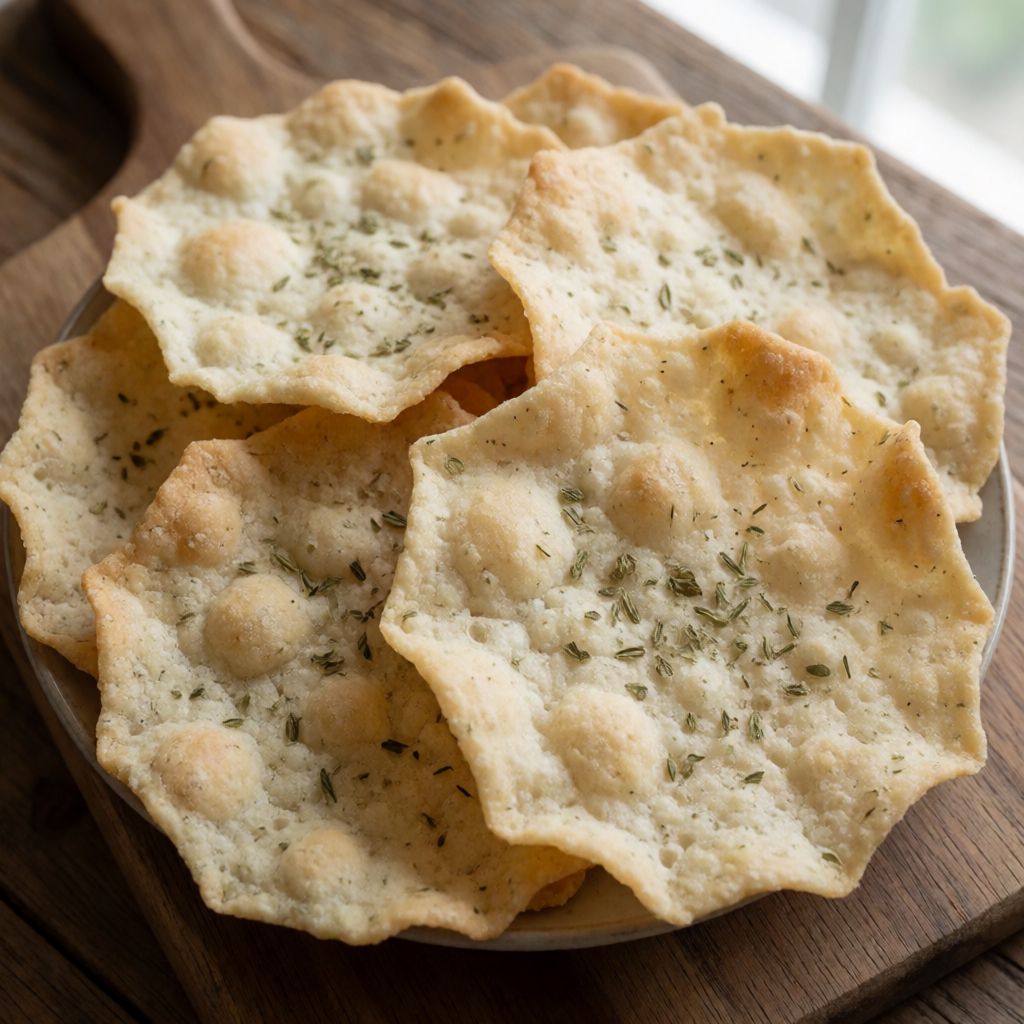
Crispy baked rice flour crisps flavoured with herbs or spices, ready in under half an hour.
Labels are worked out automatically from the ingredients and can be wrong. Check the packaging if it matters to you.
Ingredients
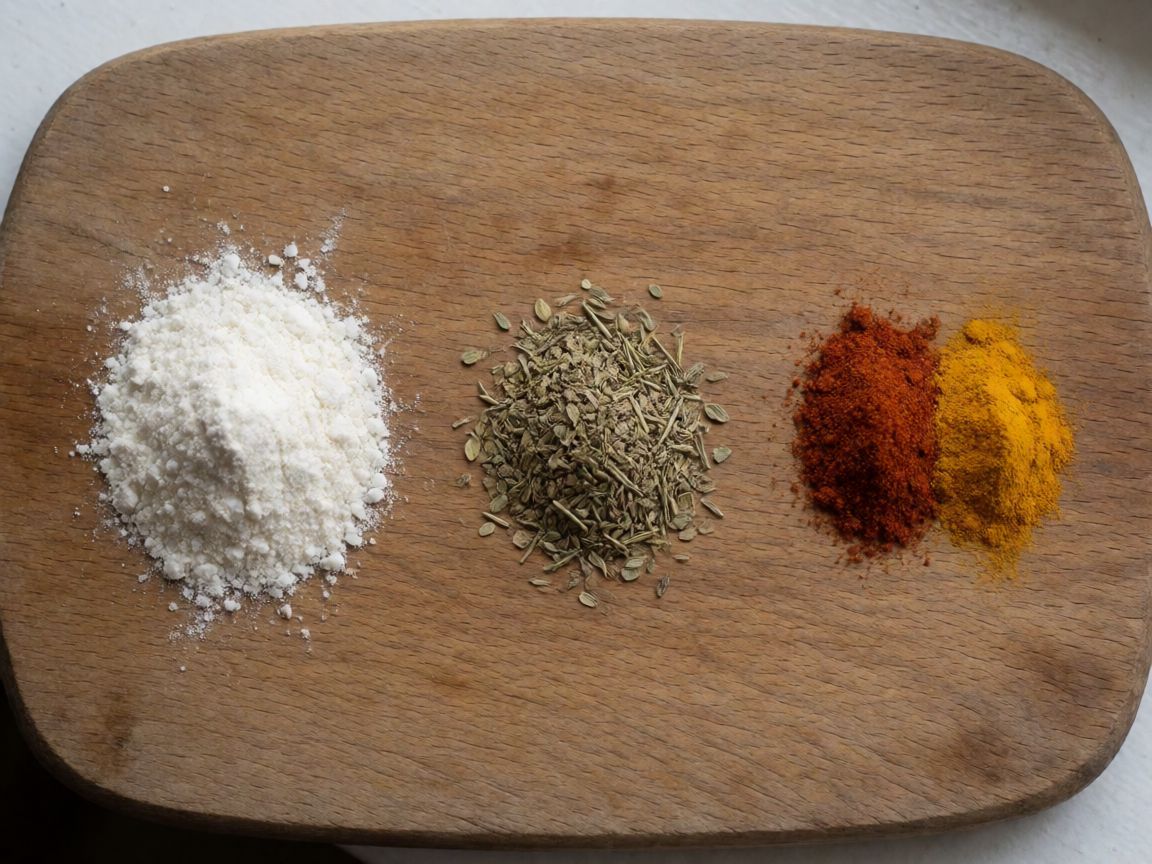
- 300 g Rice flour
- 300 ml Water
- 25 ml Olive oil
- 5 g Salt
- Aromatic herbs or spices such as oregano, rosemary, paprika or turmeric




Steps
Mix the rice flour with the water, then stir in the salt, olive oil and aromatic herbs or spices until you have a soft, creamy batter.
Using a spoon, place small portions of the batter onto a baking tray lined with baking parchment, shaping them into small rounds.
Bake in an oven preheated to 200°C.
20 minLet the crisps cool and serve with sauces of your choice.
This is rice flour and water taken as far as they can go without any help from gluten — no egg, no yeast, nothing to make it rise or stretch. You spoon it out, flatten it a little, and the oven does the rest: it is not baking in the sense of building crumb, it is drying in the sense of making a biscuit. Think of it as a very plain socca or rice pancake, reduced down to a crisp disc the size of a coin.
What decides whether this works is thickness, and only thickness. A round spread thin dries through before it burns at the edge — that is your crisp. A round left thick in the middle stays damp and rubbery under a crisp rim, because the water trapped inside has nowhere to go before the outside has already set hard. There is no rescue for that halfway through; you fix it at the spoon, not in the oven.
Some say rice flour behaves like wheat flour minus the gluten, just lighter. No — because gluten is not a seasoning you can leave out, it's the only thing that gives wheat dough stretch and chew. Take it away and you don't get a leaner cracker, you get a different food entirely: something closer to a dried pancake than a biscuit. That's not a flaw, it's just what rice flour is — and it's why these crisps shatter cleanly rather than snap with any give.
Patience here means resisting the spoon. Small, even, thin — every round the same size — because an oven heats unevenly enough on its own without you adding batter of three different thicknesses to the same tray.
Rice flour is the whole point, not a substitute for anything. It has no gluten, so it never forms a dough you can knead or rest — it only ever makes a batter that sets by losing water, not by any protein network tightening up. If you have none, a fine cornflour or ground rice will do roughly the same job, because what you need is starch with no structural ambition of its own; wheat flour will not give you the same crisp, it will give you something closer to a flatbread, chewy where this should shatter.
Water is there to turn the flour into something spoonable, nothing more mystical than that. Too much and the rounds spread thin on the tray before they've had a chance to hold shape — fine for crispness, bad for handling, they'll tear when you try to lift them off. Too little and you're pushing a paste around with the back of a spoon, and it bakes into something closer to a dense little cake than a crisp. The 300ml to 300g ratio here gives you a batter that drops off the spoon in a blob and holds its shape, which is the texture you're aiming for before it ever sees the oven.
Olive oil in a batter this plain does two jobs: it keeps the crisp from sticking stubbornly to the parchment, and it carries whatever herb or spice you've put in, because flavour compounds in oregano, rosemary or paprika dissolve into fat far better than they dissolve into water. Any oil with no smell of its own will do the sticking job — sunflower, a light vegetable oil — but olive oil earns its place here because the quantity is small enough that its own flavour adds rather than dominates. If you use something completely neutral, lean harder on the herbs, because the oil won't be doing any flavour work for you.
Salt is seasoning, not science, but don't skip it — rice flour on its own tastes of very little, and without salt the whole thing will taste like what it technically is: dried starch and water. The herbs and spices are where you actually make the dish yours — paprika for colour and a little smoke, turmeric for colour and a faint bitterness, rosemary if you want something that stands up to a strong dip. Mix them into the batter, not onto the surface after, so the flavour runs all the way through a crisp that otherwise has no inside to speak of.
On doneness: forget the clock past the point it tells you when to start looking. You're watching for the edges to turn from pale and wet-looking to a faint gold, and for the crisp to lift off the parchment on its own instead of clinging. If it clings, it's still damp underneath, and no amount of extra minutes fixes a round that was spooned on too thick to begin with — that's a problem from step two, not step three. A domestic oven runs hotter at the back and at the top shelf than any dial admits, so turn the tray round partway through if you've got one rack and a hob-top oven doing its best; that's the honest limit of most flats, and it's easily worked around once you know to look rather than trust the number.