
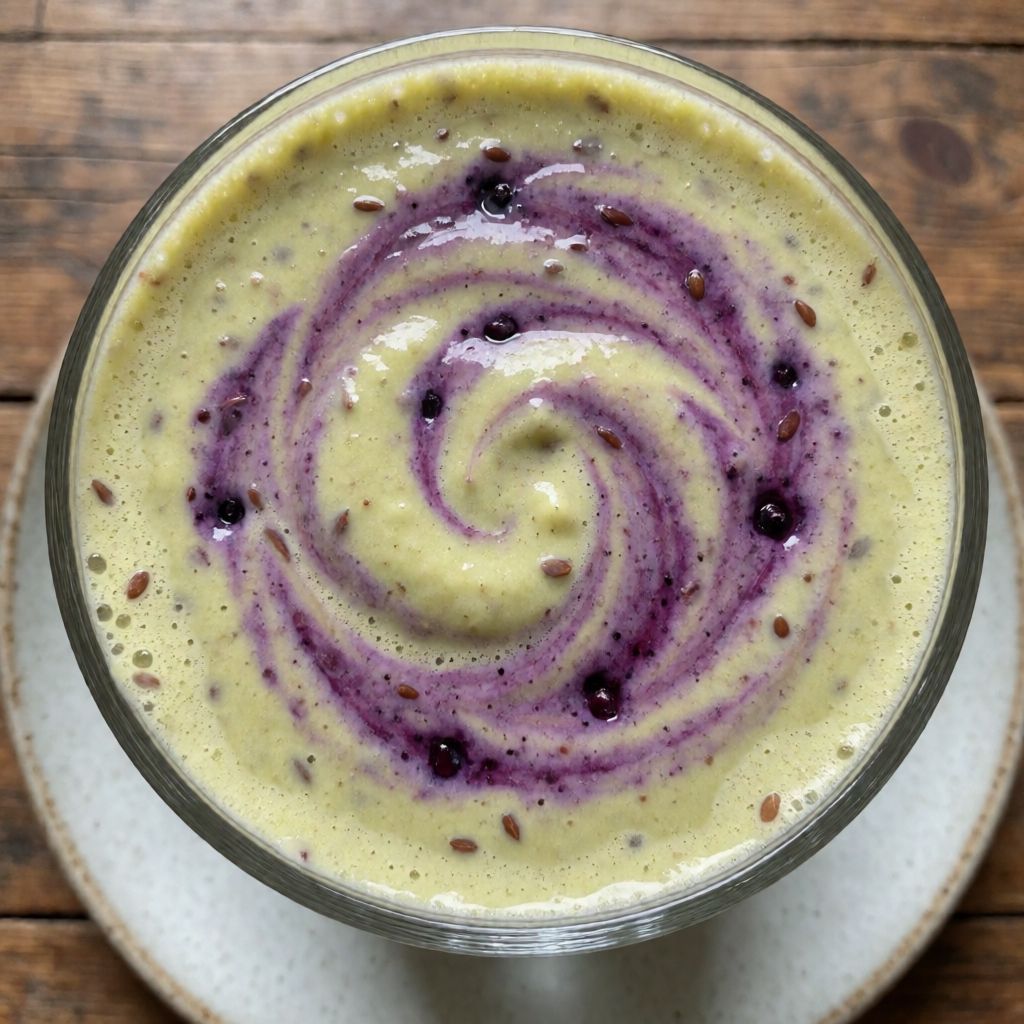
 AI photo
Avocado, Mango and Blueberry Smoothie
A refreshing smoothie made with ripe avocado, mango and blueberries.
Labels are worked out automatically from the ingredients and can be wrong. Check the packaging if it matters to you.
Ingredients
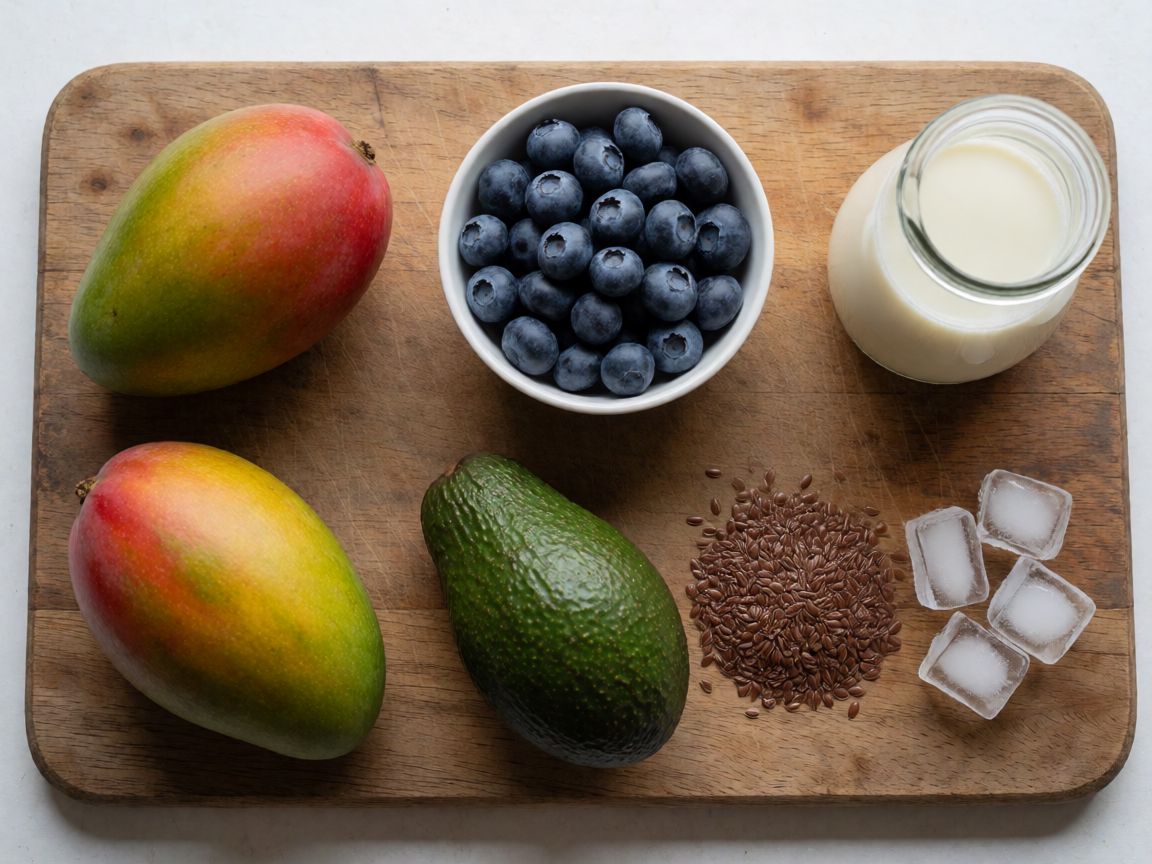
- 2 pcs Mango
- 300 g Blueberries
- 1 pcs Avocado ripe
- 50 g Flax seeds
- 400 ml Soy milk
- 10-12 pcs Ice cubes





Steps
Peel the avocado, halve it, remove the stone and scoop out the flesh into the blender jug.
Peel the mango and cut it into slices or cubes.
Wash the blueberries and add them with the mango to the avocado, then add the flax seeds.
Blend for a few seconds, then pour in the soy milk and add the ice cubes.
Blend everything in pulses until smooth.
Pour the smoothie into a glass.
This isn't cooking, it's assembly with a motor doing the work heat would do elsewhere: breaking cell walls, releasing what's inside. The whole mechanism of a smoothie is order — what goes in first decides whether the blade finds something to grab, or spins uselessly in its own liquid.
Avocado and mango go in before any liquid because they're soft and sticky — they give the blades resistance, something to tear into right from the start, the way a knife needs the board under the onion, not air. Pour the soy milk first, and for the first few seconds you're just swirling milk round a lump of fruit that won't move. That's the real cause behind most "lumpy smoothie" complaints — not a weak blender, wrong order.
Doneness here isn't a time, it's a sound and a look. Listen for the motor's pitch settling from strain into a steady hum, and look for colour: no pale streak of avocado left, no purple fleck sitting apart from the rest, one even lilac-brown through and through. Short of that line you get grit between your teeth; well past it, blending on after it's already smooth just heats the fruit and flattens the flavour — stop the moment it's even.
Mango decides the sweetness and the body — it has enough natural pulp and pectin to thicken the drink without yoghurt or starch doing that job. Ripeness is a press test, not a colour one: a ripe mango gives slightly at the shoulder near the stem, the way a ripe peach does. Green ones are tart and fibrous, and no blending time fixes that. Frozen mango chunks are a fair stand-in and arguably better here — they do the ice's job and the fruit's job together, so a few less ice cubes still get you a cold drink.
Blueberries bring acid and colour, nothing structural. Wash them because the bloom on the skin holds grit and spray residue, and an unwashed berry tastes of dust sitting under the sweetness, not of blueberry. Fresh or frozen both work — frozen ones, again, double as chill.
Avocado is the fat that carries flavour and gives the drink its cream without any actual cream in it. Ripe means it yields to a light thumb press near the stem end, not that it's gone soft everywhere — soft everywhere usually means it's starting to turn, and that shows up as a faint bitterness no amount of blending removes. Scoop the flesh clean of the skin: the green layer right under the peel is the bitterest part of the fruit, and even a sliver of it dragged into the jug is the usual reason a smoothie that should taste of almost nothing ends up tasting faintly of lawn. There's no true substitute for the fat-and-cream job avocado does here — silken tofu gets you the texture without the flavour, so know which one you'd be missing before reaching for it.
Flax seeds are there for the oil and fibre, but only if the blade actually cracks them — swallow them whole and unblended and they pass through you exactly as whole as they went in, doing nothing nutritionally. That's why they go in with the fruit before the liquid: dense fruit gives the blade something to drive the seeds against, so they shatter instead of skating across the surface of thin milk. Chia seeds do a similar nutritional job but swell into a gel in liquid, so the drink keeps thickening as it sits — fine if you like that, but it's a different drink ten minutes on.
Soy milk is the neutral carrier — its only job is to thin everything to drinkable without fighting the fruit for flavour, and its protein helps the avocado's fat blend smooth into the body instead of floating as little oily flecks. Any milk with no strong character of its own does the same work — oat, rice, even ordinary dairy if lactose isn't the reason for soy. This drink has nothing to do with the British habit of tea with milk; it borrowed its ingredients from supermarket shelves stocked by container ship, not from any orchard down the road, worth remembering before anyone calls a smoothie traditional anything.
Ice cubes go in last, after the liquid, because their only job is cold and body, not breaking down. Thrown in dry against the fruit, they're the single biggest cause of a stalled motor and a half-blended drink — ice resists the blade far harder than fruit does, and the machine has to fight both at once with nothing to brace against. Added last, into liquid already moving, they get caught in the current and shred fast.
Eight servings from this comes to a glass each of roughly 150–180ml, not a pint — closer to a starter or a between-meals drink than a breakfast on its own. Halve everything for four people if you want a fuller glass; the ratios don't care how many you're feeding, only the total volume shifts.
Patience here is short but real: give the avocado its days to ripen before you start, since no blending speed fixes underripe fruit, and give the blender its few seconds of running before you judge it finished. Rush either end and you get grit instead of cream.