
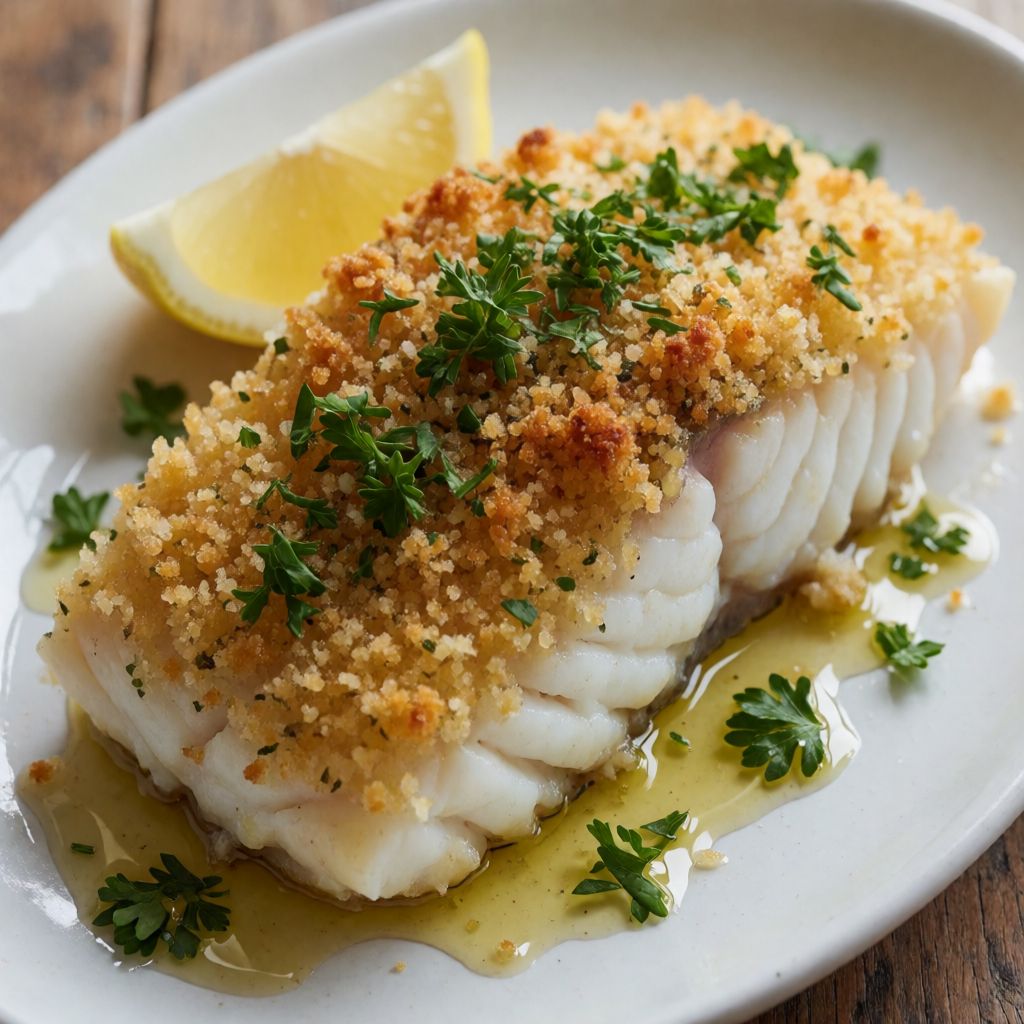
 AI photo
Oven-Baked Cod
A simple oven-baked cod fillet finished with a lemon and parsley breadcrumb crust.
Labels are worked out automatically from the ingredients and can be wrong. Check the packaging if it matters to you.
Ingredients
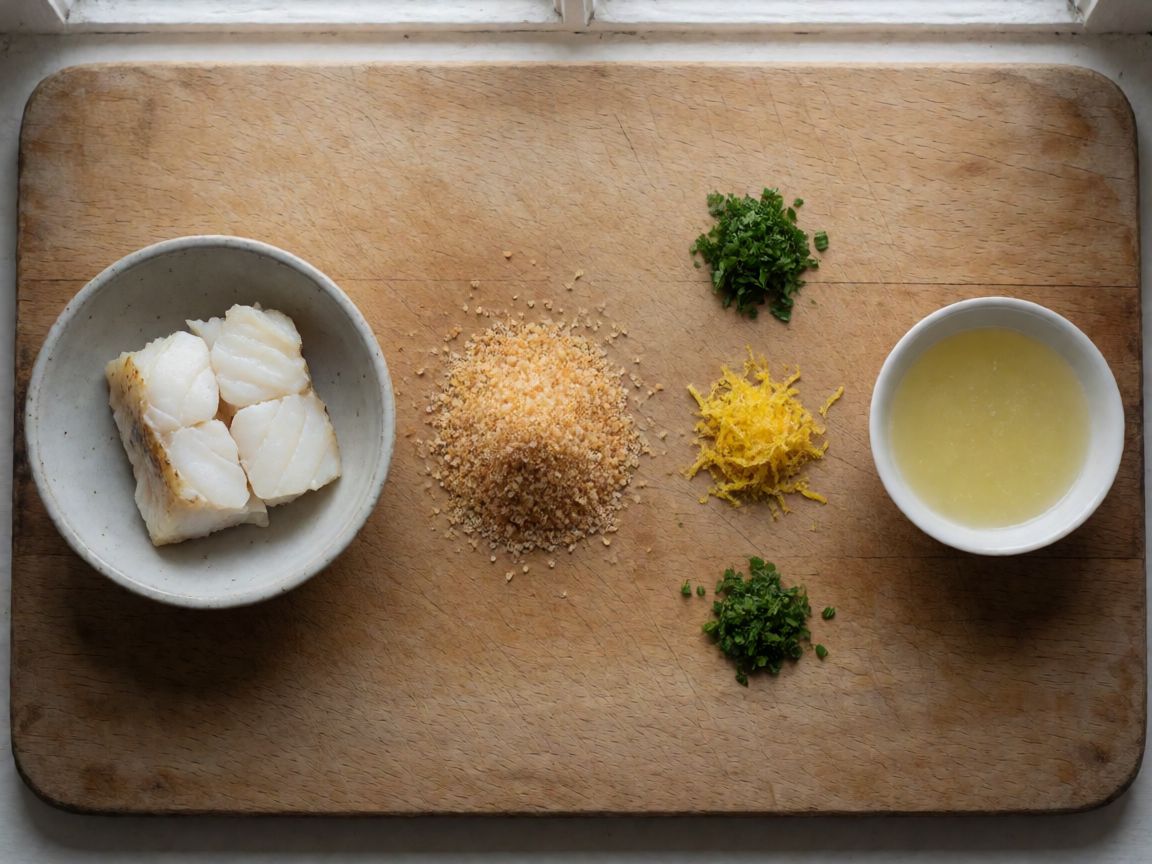
- 500 g Cod
- 80 g Breadcrumbs dried
- 1 pcs Lemon juice
- 1 pcs Lemon zest
- 1 bunch Parsley chopped, to taste
- 20 ml Olive Oil
- 1 pinch Salt to taste
- 1 pinch Black Pepper to taste






Steps
Tip the breadcrumbs into a bowl, add the parsley, lemon zest and lemon juice. Mix well, season with salt and black pepper to taste, and combine thoroughly.
Carefully remove any bones from the cod fillet using tweezers, then check by running your hand over the fillet.
Brush the base of a baking dish with olive oil, lay in the fillet and brush the top with more olive oil.
Cover the fillet completely with the breadcrumb mixture and press down with your hand so it sticks well.
Preheat the oven to 200°C.
Put the dish in the oven and bake the fish for about 20 minutes, checking the internal temperature.
20 min
This is a thin coat of dried crumb, lemon and parsley pressed onto a cod fillet and put into a hot oven until the crumb turns gold and the fish stops being translucent. What decides whether it works is a race: the crumb has to brown before the fish inside turns to wet wool. Cod has almost no fat and no connective tissue to protect it — it is pure quick-cooking muscle, which is why this whole recipe depends on getting it out of the heat at exactly the point the flesh goes from pearl to white, not a minute later.
Some say fish is done when it flakes apart on the fork. No — by the time it flakes easily, it is already past done; the proteins have tightened and squeezed the moisture out, and what you are eating is the dry edge of overcooking, dressed up as a sign of readiness. Look instead at the middle of the fillet through a small cut: the glassy, slightly grey look should have just gone, replaced by an even, milky white, and the juice that runs should be clear, not cloudy with coagulated protein. That is your moment, not the clock.
The oven's 200°C is not there to "cook the fish hard" — it is there to toast crumb in the same window of time the fillet needs to go from raw to just-set, because cod is thin and 500 g spread as a single fillet has very little mass to fight through. If your fillet happens to be thicker at one end (the loin end is always thicker than the tail), that end simply needs a little longer — judge by eye, test by knife-tip, and treat 20 minutes as the earliest you check, not the moment you must pull it out.
Cod itself: buy it as a thick-ish fillet, skin removed, because the whole dish is sold on the fish breaking into big clean flakes, and only a reasonably substantial piece does that — a thin scrap just turns to shreds. The bone check in the method (tweezers, then a hand run over the flesh) exists because cod fillets keep pin bones along the lateral line that tweezers can miss on the first pass and your fingertip finds on the second; skip it and the defect isn't a myth, it's a trip to A&E with a fish bone in the throat, which has actually happened to people who skipped exactly this step. If cod isn't in the shop, or the price has crept up — and it has, because North Sea stocks were fished hard for a century before quotas caught up — reach for any firm white fish that flakes in big pieces and cooks through quickly: haddock, pollock, hake, coley. Coley in particular is the fish the trade sells cheap because its flesh goes slightly grey raw and people assume that means poor quality; it doesn't, it cooks up white and behaves exactly like cod here.
Breadcrumbs, dried: the word "dried" is doing real work. Fresh breadcrumb still carries its own moisture, so pressed onto a fillet it turns gummy instead of crisp — it has nothing left to absorb from the fish as it steams, so it just sits there going soft. Dried crumb is thirsty; it pulls in the juice the cod releases and the oil you brushed on, and that's what lets it crisp rather than turn to paste. Panko works the same way and gives a slightly bigger, crunchier crumb if you want more contrast against the soft flake underneath.
Lemon, juice and zest, doing two different jobs: the zest is for aromatic oil sitting in the peel — grate only the yellow, because the white pith underneath is bitter and brings nothing but that bitterness. The juice in the crumb mix is acid, and acid here is there to cut the richness of the olive oil and balance a crust that is otherwise just fat, starch and salt — without it the crumb tastes flat no matter how golden it goes.
Parsley: a clean, grassy herb that doesn't fight the fish or the lemon — that's the actual criterion, not "parsley" as a fixed requirement. Dill does the same job and leans more towards the classic fish pairing if that's what's in the fridge; chives work in a pinch, though they're quieter.
Olive oil, brushed under and over: underneath, it stops the fillet welding itself to the dish, which matters more than it sounds — a stuck fillet tears apart when you try to lift it, and you lose the crust with it. On top, oil is what lets the crumb brown instead of just drying pale and dusty, because fat conducts the oven's heat into the crumb far better than air does. Any oil with no smell of its own does this job — sunflower, a light vegetable oil — olive oil is just the one with enough of its own flavour to be worth choosing on purpose here.
Salt and pepper go into the crumb mix, not just onto the fish, because cod on its own is nearly flavourless — nearly all the seasoning this dish carries sits in that crust, which is also why pressing it on firmly with your hand matters: a loose scatter of crumb falls off in the dish and takes the seasoning with it, leaving you a well-cooked but underseasoned fillet and a tray of good crumb gone to waste underneath.