
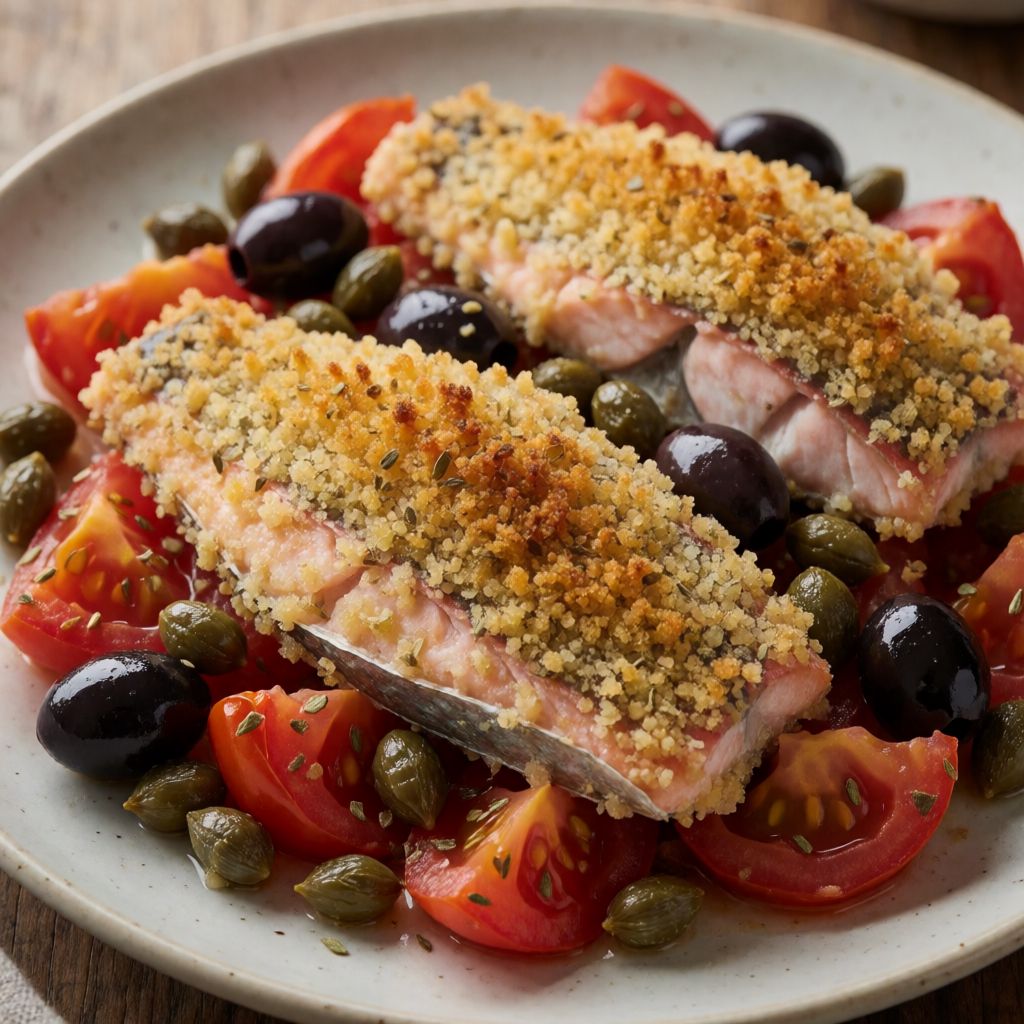
 AI photo
Baked Red Mullet with Breadcrumbs
Red mullet fillets baked under a herby breadcrumb, olive, caper and tomato topping.
Labels are worked out automatically from the ingredients and can be wrong. Check the packaging if it matters to you.
Ingredients
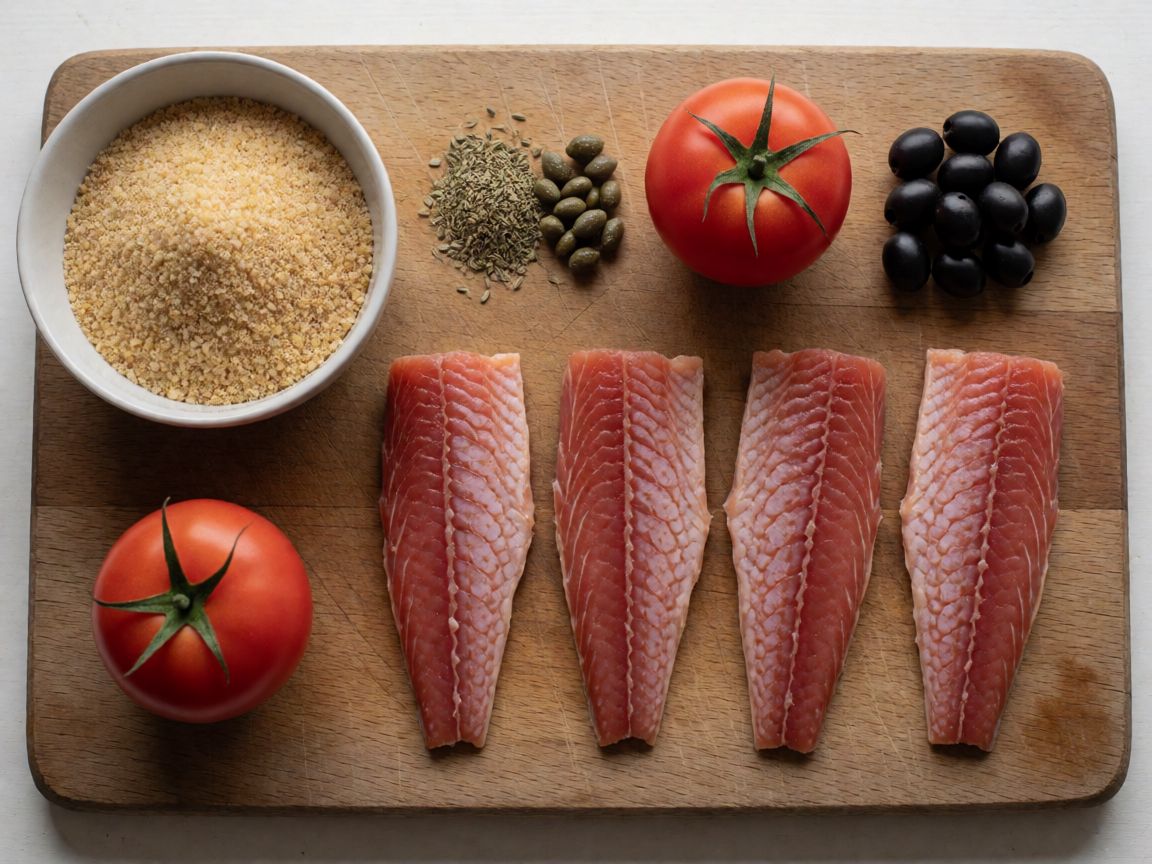
- 4 pcs Red mullet fillet
- 70 g Dried breadcrumbs
- 2 pcs Cherry tomatoes
- Oregano to taste
- Capers to taste
- Pitted black olives to taste
- Olive oil to taste
- Salt to taste







Steps
Rinse the red mullet fillets and arrange them side by side on a baking tray lined with baking paper.
Rinse the cherry tomatoes, pat them dry, remove the juice and seeds, and finely dice the flesh.
Finely chop the capers and pitted black olives.
Combine the capers, olives and cherry tomatoes with the breadcrumbs and stir with a spoon until you have an even mixture.
Generously sprinkle the mixture over the red mullet fillets on the tray, then add oregano and salt to taste.
Drizzle the fillets with olive oil and bake in an oven preheated to 180°C for about 8 minutes. The fish is done when the thickest part reaches 63°C.
8 minSwitch on the grill function for the final minutes of baking for a crunchier crust.
Serve the red mullet immediately after cooking with a fresh seasonal salad.
This is a gratin, not a fried breading – that's the whole mechanism. You press a dry, savoury crumb mix onto raw fish and let the oven do two things at once: dry the crumb into a crust, and gently poach the fillet underneath in its own juices and the olive oil you drizzled over. No egg wash, no flour dredge. The crumb clings because it's damp enough from the diced tomato and oil to hold together, and dry enough to crisp rather than turn to paste.
What decides whether it works is moisture control before it ever goes near the heat. You seed and drain the cherry tomato flesh for a reason: leave the juice in and the crumb steams instead of browning, and you get a soggy cap sitting on fish that's already done. Capers and olives are chopped fine so they scatter through the crumb rather than sitting as wet lumps that do the same damage locally.
Timing is the other half. Red mullet fillet is thin and delicate – eight minutes at 180°C is not a suggestion with room either side, it's close to the ceiling. Push it to twelve because "it still looks pale" and you've turned a fillet that should flake at the touch of a fork into something dry and stringy. A thermometer reading 63°C in the thickest part is the honest way to know, better than counting minutes or poking and hoping.
Start with the fish itself. Red mullet – triglia, barbun, whatever your fishmonger calls it – has a pink-red skin and flesh that separates into soft flakes almost on its own, which is exactly why it can't take long cooking: there's very little connective tissue holding it together. Buy the fillet with skin on if you can, it's your buffer against the crumb sticking straight to raw flesh and it crisps nicely under the grill at the end. Run a finger along the centre line for pin bones – mullet fillets often keep a row of them even after filleting, and nobody wants to find that out mid-bite. If your fishmonger has no red mullet, look for any small, thin, delicate white-to-pink fillet with its skin: red bream, small snapper, even plaice at a push. The criterion is thinness and a short natural cooking time, not the species.
The breadcrumbs need to be dried, not fresh. Fresh breadcrumbs carry their own moisture and under this amount of heat and time they'll never get past "damp" into "crisp" – you'd be fighting the tomato juice with crumb that's already wet before it meets the tray. Dried crumb starts from zero moisture, so it can absorb what the tomato gives off and still have enough dryness left over to colour under the grill. No dried crumb in the cupboard? Toast cubes of stale bread in a low oven until they rattle, then blitz or crush them – that's literally where dried breadcrumbs came from in the first place, a way to use bread that had gone past its day.
Cherry tomatoes here are not for sauce, they're for a small burst of acidity and colour inside the crust – which is why you take out the juice and seeds first. That gel is almost all water with very little flavour of its own; keeping it in just adds the one thing you don't need. Capers and olives do the opposite job: they're both salt-preserved, concentrated, and a little goes a long way. This is coastal pantry economics – capers are pickled flower buds, olives are brined or oil-cured fruit, both ways of keeping a Mediterranean summer's produce edible through winter without refrigeration. Chop them fine so a few briny specks turn up in every bite rather than one mouthful tasting of caper and the next of nothing.
Oregano works dried here, which is unusual advice to give but true: baking at 180°C for eight minutes is gentle and short enough that dried oregano's oil doesn't burn off, it actually opens up with a bit of heat. Fresh oregano, by contrast, would mostly just dry out and go bitter in that time – save it for finishing a salad, not for baking under a crust. Salt the fish and the crumb mix at the last moment, right before it goes in, not while you're prepping everything else on the counter – salt pulls moisture out over time, and you've only just spent effort getting the moisture balance right.
On oil: this isn't a high-heat fry where a neutral oil earns its place by having no flavour to burn off. Here the oil is doing double duty, carrying the crumb's flavour and keeping the fish from drying under direct heat, so any olive oil with a flavour you actually like is the right choice – it won't have time to turn bitter or smoky at these temperatures and this short a bake. If you're out of olive oil, any oil with no smell of its own (a plain sunflower or rapeseed) will do the fish-protecting job, you'll just lose the flavour olive oil was adding.
A word on the grill step, since UK ovens vary more than recipes admit. If yours is fan-assisted, that 180°C runs a touch hotter in practice – many home cooks drop fan ovens by about 20°C against a conventional setting, worth knowing before you set the timer. The grill element in most domestic ovens sits close overhead and comes on fierce; a minute of real attention here beats a minute of faith. You're watching the crumb go from pale gold to a deeper brown, not for a number on the dial. Walk away and it can scorch in the time it takes to lay the table. And once it's out, serve it straight away – that crust is a race against the steam still coming off the fish underneath, which will soften it if you let the plate sit.