
 AI photo
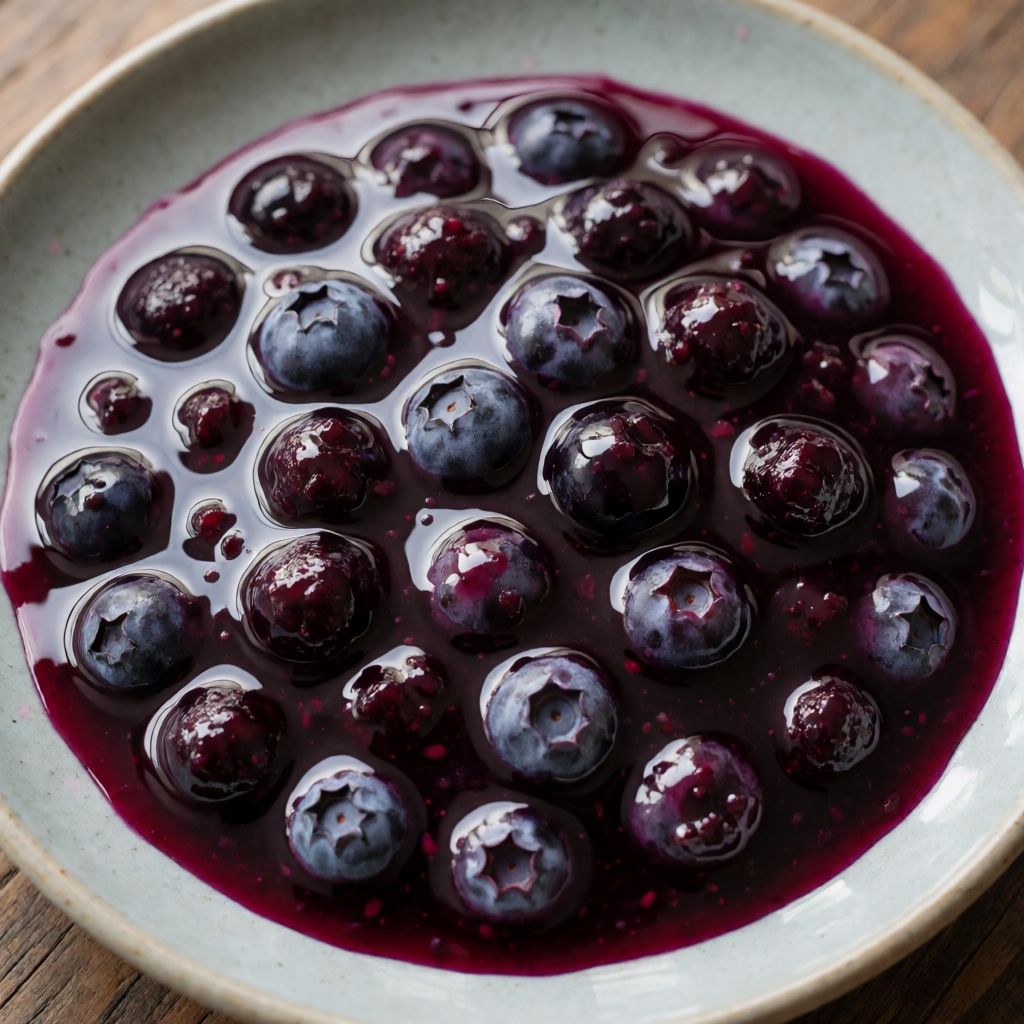
Blueberry Compote
A simple blueberry compote, lightly sweetened and flavoured with vanilla.
Labels are worked out automatically from the ingredients and can be wrong. Check the packaging if it matters to you.
Ingredients
- 225 g Blueberries frozen
- 75 g Sugar
- ½ tsp Vanilla powder



Steps
Put the blueberries, sugar and vanilla into a saucepan and bring to the boil over medium-high heat.
5 minLet it simmer gently, uncovered, for about 10 minutes.
10 minCool the compote to room temperature and transfer it to a sterilised jar.
15 min
A compote is simple mechanics dressed up as a jar of jam: you take fruit, give it sugar and heat, and wait for the juice that leaks out of the berries to thicken into syrup around them. It is not jam — there is no pectin set here, no stage where it snaps into a gel. It stays loose, spoonable, syrupy. That is the whole target, and it is also the only thing that can go wrong: syrup too thin and watery, or boiled down so hard it turns to toffee at the edges of the pan.
What decides it works is not the ten minutes on the label — that is a floor, not a finish line. It is whether the syrup, when you tip the spoon, runs in a slow ribbon instead of a thin stream of coloured water. Frozen berries help you get there faster than people expect. Freezing forms ice crystals inside the fruit, and ice crystals are rough on cell walls — they tear them. So a frozen blueberry, the moment it meets heat, gives up its juice almost on contact, no maceration, no waiting for sugar to draw it out osmotically over an hour. Fresh berries, whole and un-punctured, would make you work harder for the same result.
Some say frozen fruit makes a lesser compote than fresh. No — not here. These berries were picked ripe, at the point the grower actually wanted them picked, then frozen within hours. A "fresh" punnet from a supermarket in a country with a short blueberry season was very likely picked underripe, for the sake of surviving transport, and ripened badly on the way, if at all. Frozen can simply be the more honest fruit.
Blueberries, frozen, 225 g: the only fruit note is that frozen is not a compromise but a tool, already explained — ruptured cells, fast juice. If you only have fresh berries, don't panic and don't just swap gram for gram and expect the same timing: crush a third of them lightly with the back of a spoon before they go in, so you're giving the heat a head start on cell damage the freezer would otherwise have done for you. Either way, the fruit's job is to supply both bulk and acid — blueberries are mild in acidity, which is exactly why sugar at this ratio (roughly a third the weight of the fruit) doesn't need adjusting up or down for tartness the way it would with, say, rhubarb or sour cherries.
Sugar, 75 g: three jobs, not one. It sweetens, obviously. It also pulls water out of the fruit by osmosis, which is part of how your syrup forms in the first place. And it's doing a small preserving job too — not enough on its own to let this sit in a cupboard for a year like a proper high-sugar jam, but enough to buy your sterilised jar a few extra weeks in the fridge over an unsweetened stewed fruit. Any sugar that dissolves cleanly works — granulated is fine, caster is fine, you're boiling it either way so the fine grain of caster buys you nothing here. What you shouldn't swap in without thought is honey or a strongly flavoured syrup — they bring their own taste to a compote that's supposed to taste of blueberry and vanilla, not of themselves.
Vanilla powder, ½ tsp: this is aroma, and aroma is volatile — it leaves with the steam if you give it too much heat for too long, which is a small defect worth naming so you don't accidentally cause it. Powder survives the boil better than extract would, because it isn't carrying alcohol that wants to flash off and take the scent with it. If all you have is a vanilla pod, scrape the seeds in at the same point; if all you have is extract, it's not a disaster, just stir it in nearer the end of the simmer rather than at the very start, so less of it has time to cook away.
The step easy to skip, and the one that actually protects the jar: cooling to room temperature before you fill it. A hot jar sealed on hot compote traps steam inside; that steam condenses on the cool glass above the fruit line as water droplets, and that water is exactly the kind of thin, sugar-free puddle mould likes to start in. Cooling first isn't fussiness, it's removing the one ingredient — residual steam — that invites spoilage.
And a word on patience, because this recipe looks too short to need the word: the ten minutes of simmering is not where most people go wrong, it's the five minutes after, standing there wanting to jar it while it's still warm because the kitchen's done and you want it put away. Let it actually sit until it's properly cool. It's a short wait. It's still a wait.
On quantity: 225 g of blueberries, after it cooks down, fills roughly one small jam jar — so despite what the serving count says, you're not making one portion, you're making a jar that stretches across several breakfasts. Good stirred through porridge or yoghurt at the start of the day, or, if you want to make it do some work after a Sunday roast, spooned over vanilla ice cream as a pudding that cost you ten minutes of actual attention.