
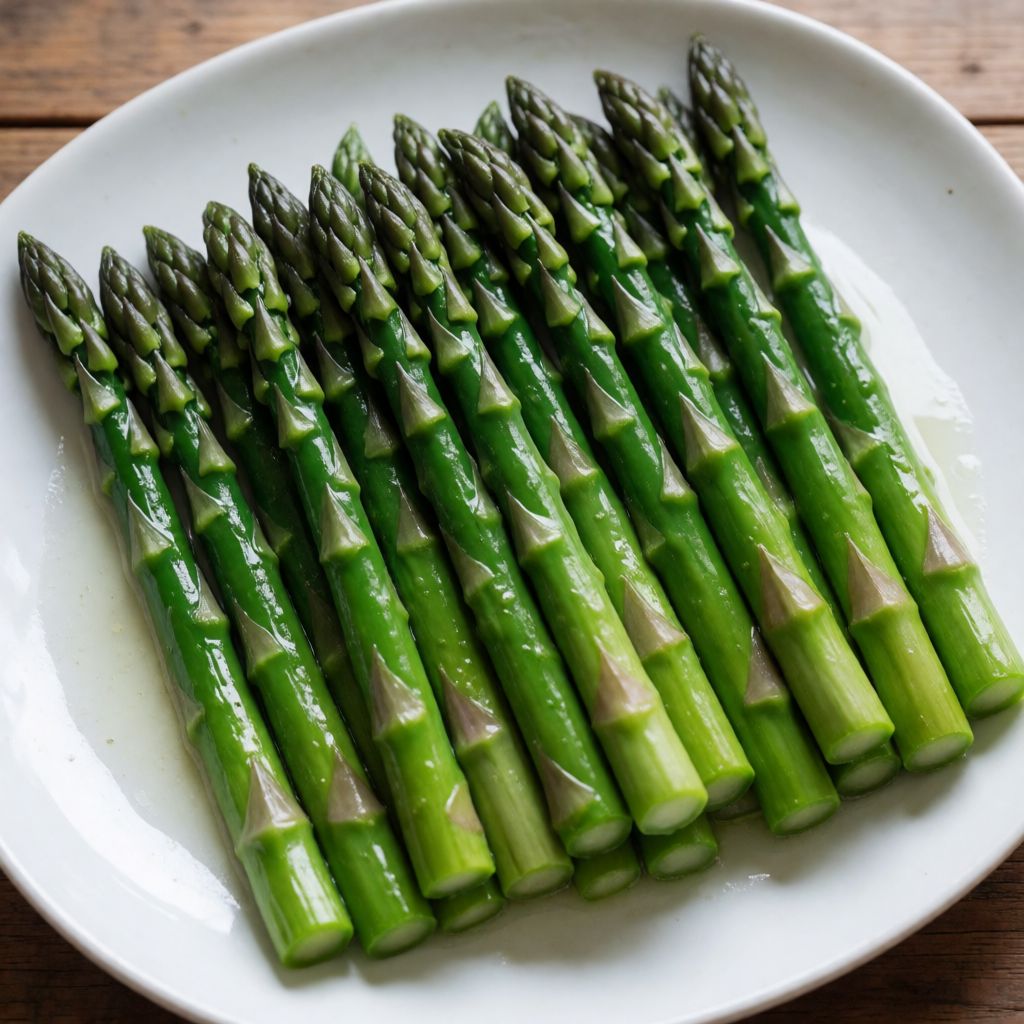
 AI photo
Boiled Asparagus
Asparagus boiled until tender, then plunged into ice water to keep its bright colour.
Labels are worked out automatically from the ingredients and can be wrong. Check the packaging if it matters to you.
Ingredients
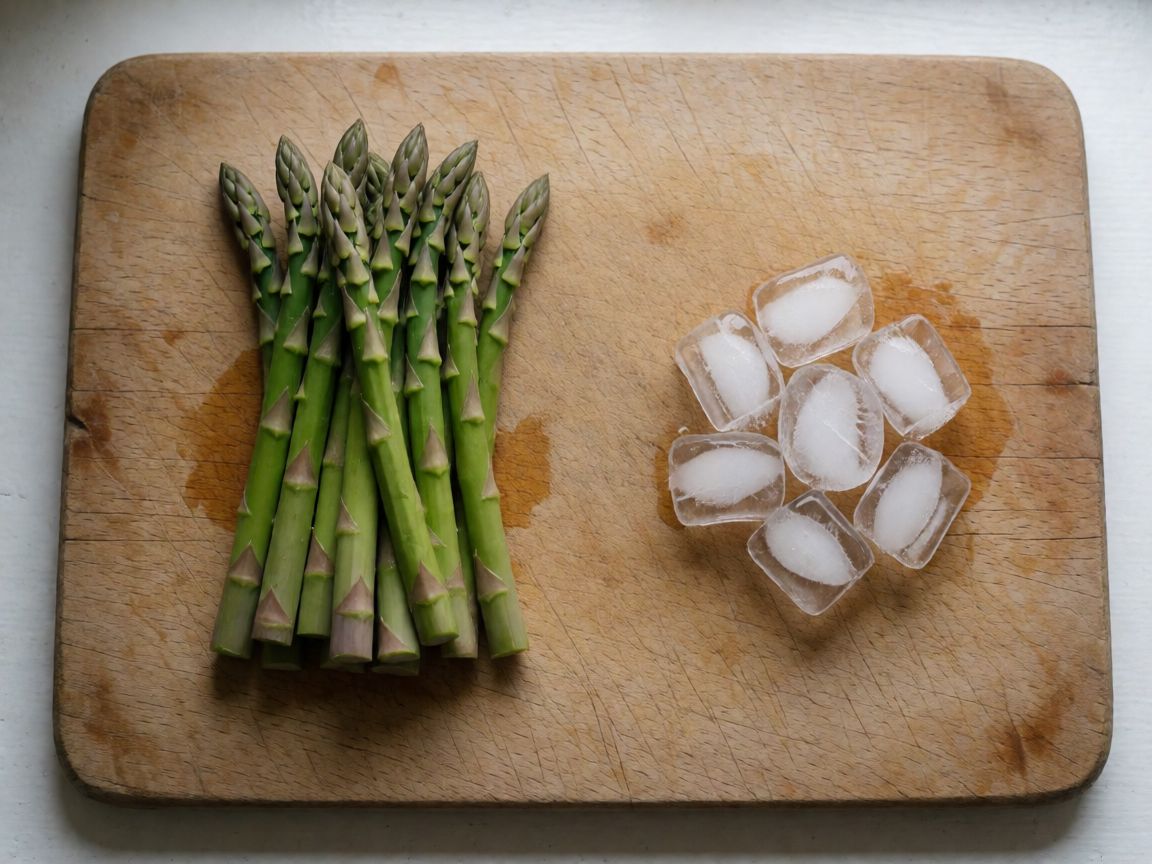
- 500 g Asparagus
- Water enough to cover the asparagus
- Ice cubes for the ice bath
- Vegetable oil to taste, for frying or dressing




Steps
Wash the asparagus and snap off the pale, woody ends. Use a vegetable peeler to remove some of the tougher skin from the lower stalk.
Fill a pan with water and bring it almost to the boil, then add the asparagus.
Boil the asparagus for about 8-10 minutes.
9 minDrain the asparagus and transfer it to a bowl of water and ice cubes to shock it.
Dress the boiled asparagus with a little oil and vinegar, or use it in other dishes.
This is blanched asparagus, cooled fast, dressed with nothing more than oil and something sharp. Nothing hides here — no sauce, no cheese, no clever trick. Which means two small decisions, both made before the water even gets hot, decide whether you end up with vegetable or with soggy green string.
First: where you trim. The base of an asparagus stalk is woody because of lignin, the same stiffening fibre that makes tree trunks trunks. No amount of boiling softens lignin — it just gets hot and stays tough. So you don't guess a length and cut with a knife. You hold the stalk and bend it, gently, and it snaps exactly where the woody part ends and the tender part begins. The stalk tells you the border; you don't impose one.
Second: how fast you stop the cooking. Asparagus carries on cooking for a minute or two after it leaves the water from residual heat alone, and that's exactly the window where bright green slides into dull khaki and crisp slides into mush. The ice bath isn't decoration — it's a hard stop. Shock it the moment it's done, not a lazy minute later while you find a bowl.
Doneness itself isn't a number on a clock. It's a stalk that bends under its own weight instead of snapping, and a colour that's gone vivid, almost glassy green, not the flat grey-green it started as. Nine minutes is a starting guess, nothing more — a pencil-thin spear and a fat one from the same bunch are not the same vegetable in a pot.
Bring the water almost to the boil before the asparagus goes in, not after. This isn't fussiness — it's about not stranding the stalks in lukewarm water while you wait for a full boil to arrive, which cooks them unevenly and softens the tips long before the base catches up. Drop them in just shy of boiling and the whole stalk starts cooking together.
You'll sometimes hear that asparagus needs a tall, narrow pot so the tender tips can steam above the waterline while the tough base boils below it — the classic French asparagus steamer. Some say you can't do it properly without one. You can. That pot earns its keep on thick, hand-thickness French or Dutch spears; the asparagus you'll buy in a British supermarket, bundled and reasonably slim, cooks through evenly lying flat in an ordinary wide pan. Buy the special pot if you want a shelf ornament. You don't need it for this.
On the asparagus itself: look for tight, closed tips — no fanning, no wrinkling along the stalk — and buy whichever thickness you like, just keep a bunch to one thickness so they finish together. British asparagus has a short, proper season, roughly May to June, grown in East Anglia and the Vale of Evesham; it used to be a genuine luxury, which is why it turns up as a starter before the Sunday roast rather than buried as a side — Victorian kitchen gardens grew it as a status vegetable, and the habit of treating it specially outlived the scarcity. Outside those few weeks, what you're buying is flown in from Peru or grown under cover in Spain — perfectly fine, just not the same stalk, and no need to pretend otherwise.
Water is water — there's no need to season it specially here, since the whole point of this dish is the dressing doing the seasoning afterward. Ice for the bath is whatever's in your freezer tray; if you've none, cold running water held over the colander for a minute does the same job, just more slowly and with more of your patience spent at the tap.
For the oil: you want something with no character of its own, so the asparagus carries its own flavour rather than fighting a strong one. A mild sunflower or rapeseed oil does this without any thought required; a grassy, aggressive extra virgin olive oil will argue with the asparagus rather than support it, though that argument is a matter of taste, not error. Vinegar just needs sharpness without sweetness — white wine vinegar is the obvious choice, lemon juice an easy stand-in if that's what's in the cupboard.
And give it the few minutes it needs in the ice bath properly, until it's actually cold through, not just cool on the outside. Patience here isn't virtue for its own sake — a stalk dressed while its core is still warm will wilt the moment the oil touches it, and you'll have spent all that care on the trimming and the timing only to lose it at the very last step.