
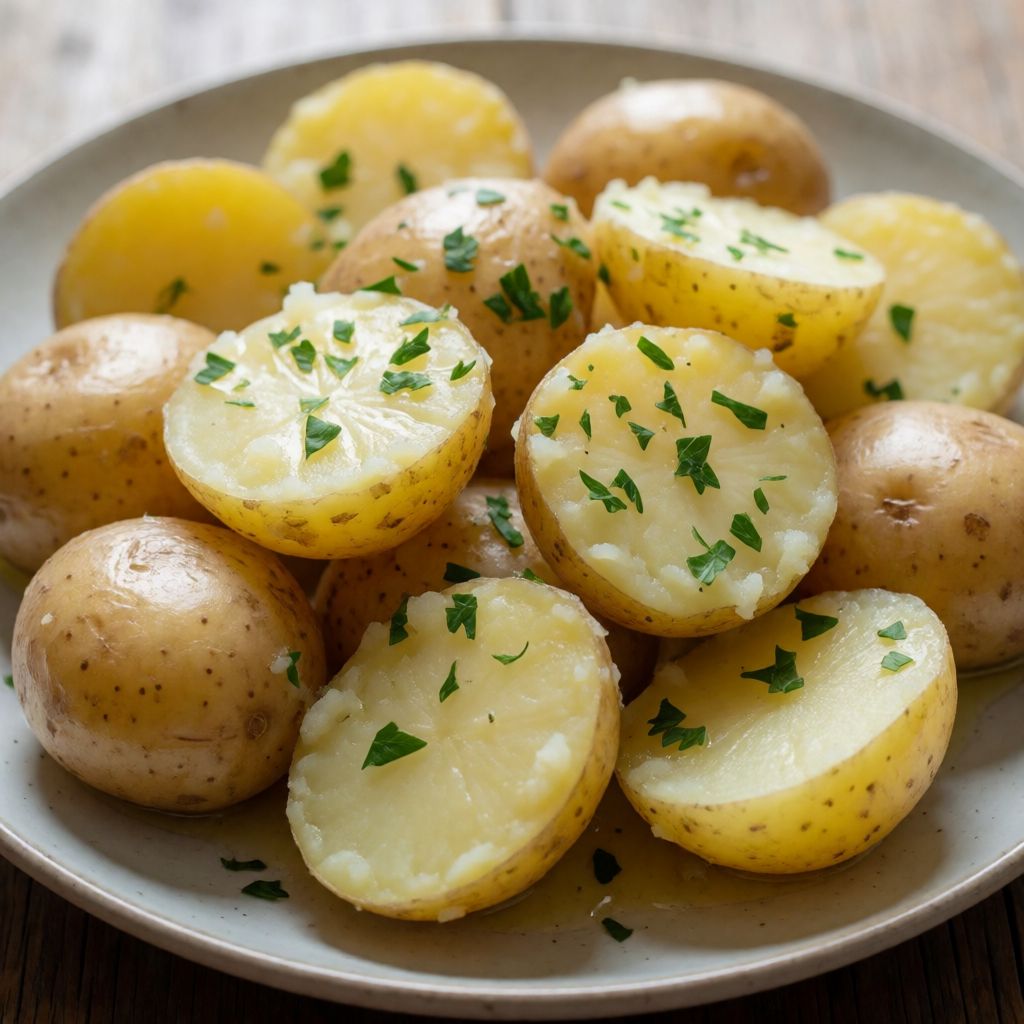
 AI photo
Boiled Potatoes
Simple boiled potatoes finished with olive oil, parsley and a splash of balsamic vinegar.
Labels are worked out automatically from the ingredients and can be wrong. Check the packaging if it matters to you.
Ingredients





Steps
Wash the potatoes thoroughly and place them in a saucepan with cold, unsalted water, leaving a few centimetres of space at the top.
Bring the water to the boil, then cook the potatoes for 20 minutes, reducing the heat once it reaches a boil.
20 minCheck with a fork — it should slide in easily. Choose potatoes of similar size for even cooking.
Drain the potatoes immediately, peel them, and cut into cubes or slices.
Place the potatoes in a bowl, drizzle with olive oil, sprinkle with parsley, and add a splash of balsamic vinegar if you like.
There's no sauce to hide behind here, no spice to rescue a mistake — it's a potato, water, and whatever you drizzle on afterward. Which means every decision you make with the pot shows up on the plate, for better or worse.
Start with cold water, not boiling. Some cooks drop the potato straight into a rolling boil to save a few minutes — don't, because a whole potato is dense, and heat has to travel from the surface to the centre by conduction alone. Drop it into water that's already screaming hot and the outside overcooks, goes soft and waterlogged, long before the middle has had a chance to catch up. Start cold and bring both the water and the potato up together, and the heat has time to move through evenly. That gentle rise is doing the real work — not the boil itself.
Once it's up to the boil, pull the heat back. A furious boil doesn't cook the potato faster, it just knocks it against the sides of the pan and against its neighbours, bruising the skin and letting water force its way in through the cracks — that's where you get the waterlogged, grey-tinged potato nobody wants. A low simmer, water barely moving, does the same cooking with none of the battering. Twenty minutes is the lower bound, not the answer — the fork is the answer. It should go in and come out without resistance, because the starch has had enough heat and water to swell and soften the cell walls. If it still meets a bit of fight, give it more time, not more heat.
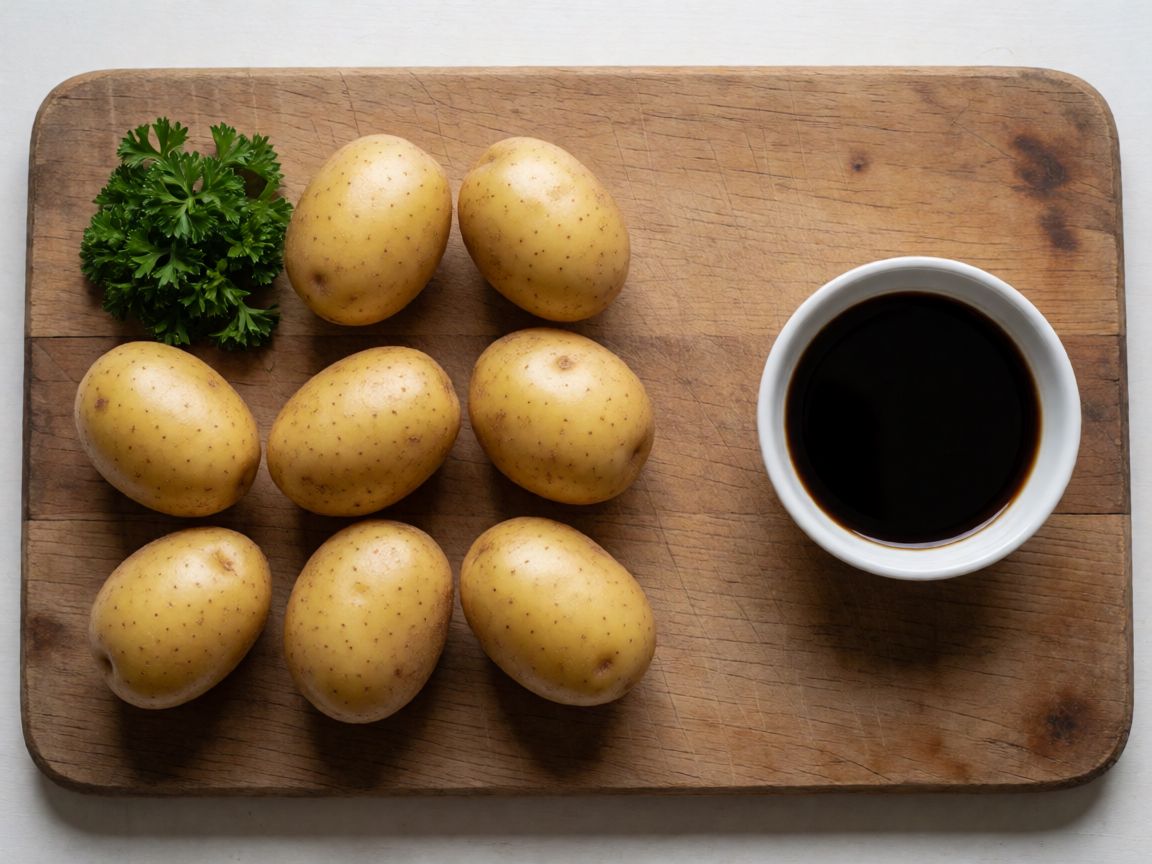
On the potato itself: choose one that holds its shape under heat, not one that falls apart into it. Floury types — the ones bred for roasting and mash, Maris Piper and its kin — collapse at the edges when boiled whole, because their starch grains swell and burst more readily. A waxier potato, Charlotte, Jersey Royal, a new potato in season, keeps its structure through the boil and still gives you a clean cube afterward. Pick potatoes of roughly the same size, too — not out of fussiness, but because heat travel time scales with how far it has to go. A big one and a small one in the same pot means one is underdone while the other's already turning soft. As a rough measure: two potatoes a person, which at an average English greengrocer's size works out to about 150–200g each, so figure 700–800g for four — weigh them if the bag you bought is uneven, since 'eight potatoes' can mean very different things depending on the bag.
The water carries no salt here, and that's not an oversight. Salt in the water is meant to season the potato as it cooks, but with the skin still on, almost none of it gets through — you're salting water, not potato. It makes more sense to season after peeling and cutting, when the surface is actually open to take it. The skin, meanwhile, is doing a job of its own: it keeps the flesh from leaching starch and whatever flavour it has straight into the water, and it comes away afterward in one motion once the potato's cooked, instead of wasting flesh the way raw peeling does.
Parsley wants to be fresh and added at the end, not cooked — heat and time both dull a soft herb fast, turning the green grey and the flavour flat. If you've none, dill or chives do the same job: something green, a little grassy, that doesn't try to compete with the potato. Chop it close to serving, not hours ahead, because bruised parsley bleeds and browns.
The olive oil here isn't the usual 'any neutral oil will do' — it's doing the opposite job. With nothing else seasoning the dish, the oil is the flavour, so pick one that actually tastes of something: a decent extra virgin, fruity or peppery, whichever you like drinking off a spoon. A flavourless refined oil would just coat the potato without adding anything, and in a dish this plain, that's wasted.
Balsamic vinegar is there to wake the whole thing up — starch is heavy and a bit dull on its own, and a splash of acid cuts through that. If you've no balsamic, any vinegar with some character, or a squeeze of lemon, does the same work; it's the sharpness that matters, not the bottle.
And a word on where this sits in a Sunday kitchen: boiled potatoes exist because the oven's busy with the roast and the hob isn't. That's the whole reason this dish is simple — it was never meant to compete for attention, just to sit quietly on a ring while something grander happens above it. Treat the time you give it the same way: patience, not watching, is most of what it needs.