
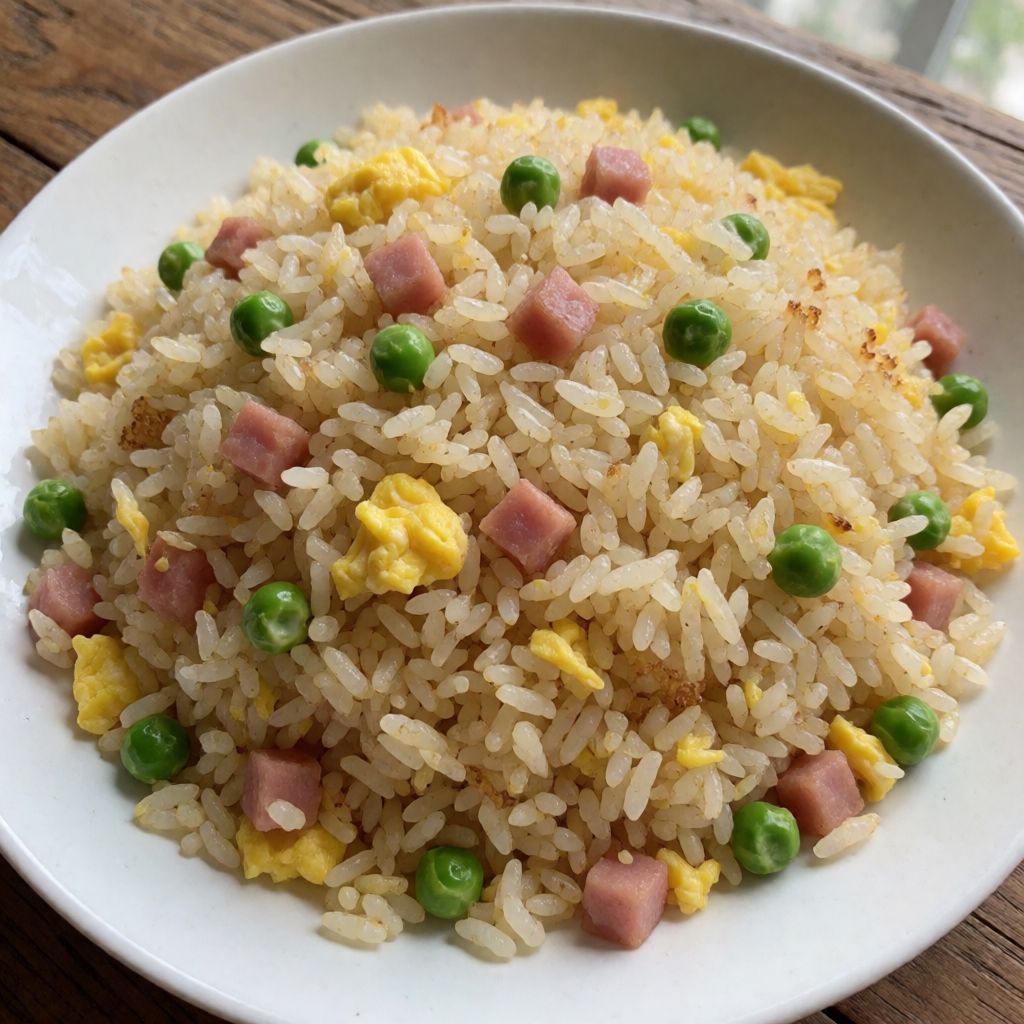
 AI photo
Cantonese-Style Rice
A simple Cantonese-style fried rice with egg, peas and diced ham.
Labels are worked out automatically from the ingredients and can be wrong. Check the packaging if it matters to you.
Ingredients
- 320 g Basmati Rice
- 200 g Ham cut into cubes
- 3 pcs Eggs
- 120 g Peas
- 5-6 tbsp Peanut Oil
- Salt to taste





Steps
Bring a large pot of salted water to the boil, cook the basmati rice until just underdone, then drain it al dente.
Tip the rice into a bowl and stir from time to time until it is completely cool.
15 minCrack the eggs into a bowl and beat lightly with a pinch of salt.
Heat a couple of tablespoons of peanut oil in a wok, pour in the eggs and stir with a spatula until half set.
Cook the peas in a separate pan with a tablespoon of peanut oil for 10-15 minutes, seasoning with salt to taste.
Combine the peas with the eggs, stir together and return to the heat.
Warm through for a few minutes so the flavours combine, then add the cooled rice.
Stir-fry the rice over high heat until it is lightly golden.
Add the diced ham, fry for a little longer and serve at once.
This is a using-up dish, not a from-scratch one — Cantonese fried rice was built around two things a kitchen already had: rice cooked the day before and a scrap of meat too small to serve on its own. Everything about the method defends that economy. The whole dish stands or falls on one thing: whether the grains stay separate in the pan or turn into a sticky mass. That's decided long before the pan gets hot — it's decided by what you do to the rice after it's boiled.
Warm rice is full of steam it hasn't let go of yet, and starch on the surface that's still soft and glue-like. Put that straight into a hot pan and the steam turns to more moisture, the starch turns to paste, and you get clumps, not grains. So you cook it underdone, drain it, and then — this is the part people skip — you let it sit and cool, stirring now and then so it doesn't cool into one solid cake. Fifteen minutes doing nothing looks like wasted time. It isn't. It's the step that decides the texture of everything that follows, and there's no shortcut for it: patience here is an ingredient, same as the rice.
On ingredients, then, with the substitutions as a rule rather than a shopping list.
Rice: the point is a long grain that cooks up dry and separate rather than clingy — jasmine is the traditional choice in Canton for exactly this reason, basmati does the same job and is what's in most British cupboards anyway, so no argument there. What you don't want is a short, round, starchy grain bred for risotto or pudding — it wants to be sticky, and you'd be fighting its nature the whole time.
Peanut oil: chosen because it carries heat well and has almost no smell of its own, so it doesn't compete with the egg and ham. The actual rule is simpler than the ingredient — any oil with no character of its own and a reasonably high smoke point will do: sunflower, plain vegetable oil, groundnut. Leave the olive oil for salads; its flavour has no business here and it smokes before the pan's hot enough anyway.
Ham: this is the frugality at the centre of the dish, and it travels well into a British kitchen, because you already have the same habit under a different name — Monday's bubble and squeak made from Sunday's leftovers is the same instinct. Cantonese cooks used whatever cured or roasted meat was left in the larder, cut small so a little goes a long way. Leftover roast ham, gammon, even the last scrapings off a joint all work; what you're after is meat that's already cooked and salted enough to season the rice around it, added last and only warmed through, because more heat than that just dries it to leather.
Eggs and peas need less said about them — the eggs want to be fresh enough to set softly rather than weep water into the pan, and frozen peas are not a compromise here, they're the normal choice; they go into the pan already measured and never need picking over.
Salt is the only seasoning in this dish, which tells you something: it's not built to carry sauce or spice, it's built to taste of what's in it — rice done right, egg done right, ham doing the talking. Four people, one wide pan, and the only real risk in the whole thing is impatience with that cooling rice.