

Meat & fish
Ham
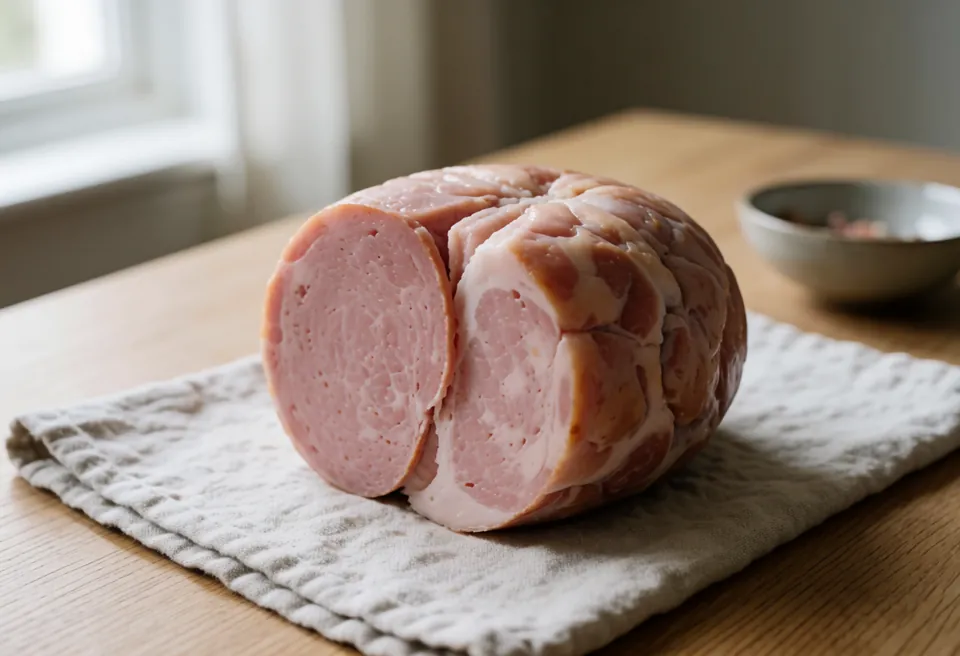
Ham is cooked or baked pork meat sliced thin. It's used for sandwiches, canapés, salads, and as a filling for baked goods.
164 kcal per 100 g
Nutrition per 100 g
164 kcal
| Protein | 16.6 g |
|---|---|
| Fat | 8.8 g |
| Carbs | 3.6 g |
| Fiber | 1.3 g |
Source: USDA FoodData Central, 2026-09-21. Per 100 g of product.
Good to know: Ham
Let's talk about ham, and let's talk honestly.
Real ham is a leg of pork, cured with salt and time — often with sugar, smoke, or a curing salt added for flavour and keeping quality, but salt is always the heart of it. Time does the rest, letting the cure settle deep into the meat, not just sit on the surface.
Choose ham the way you choose a good friend — by looking closely. The flesh should look firm and moist, not dry at the edges, not weeping water. The slices shouldn't feel sticky or slimy under your fingers, and the colour should stay bright, not dull. Smell it. Good ham smells clean, a little sweet, like meat and salt and nothing else. If it smells sour or sharp, put it back.
Some people say all ham is raw and must be cooked before you can eat it. No! Plenty of ham, cooked or dry-cured, is ready to eat straight from the fridge. Read the label — it will tell you plainly. And yet how many kitchens have a knife that went from raw chicken straight to the ham, or a plate of ham left out on the counter all afternoon because "it's just ham"? Any meat, ready to eat or not, needs clean hands and a cold fridge. Respect it like meat, because that's exactly what it is.