Meat & fish
Lamb
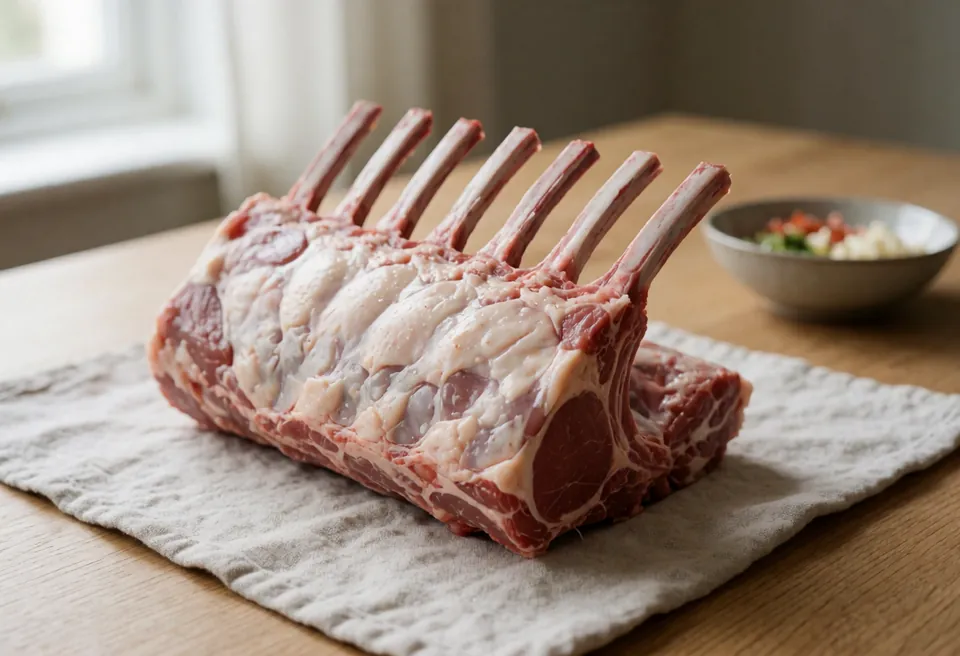
Lamb is the meat of a young sheep, milder and more tender than mutton. It's used for grilling skewers, pilaf, stews, and meatballs.
282 kcal per 100 g
Nutrition per 100 g
282 kcal
| Protein | 16.6 g |
|---|---|
| Fat | 23.4 g |
| Carbs | 0 g |
| Fiber | 0 g |
Source: USDA FoodData Central (approximate, based on a similar product), 2026-09-21. Per 100 g raw (per USDA FDC).
Good to know: Lamb
Let me tell you about lamb, and why so many cooks get it wrong before it even hits the pan.
Lamb is meat from a young animal, more tender and delicate than mutton from an older sheep. Press a chop with your finger and feel how it gives — fry it quick and hot, and it stays juicy and pink at the centre. But not every part behaves the same way: pick up a shoulder or shank and you feel the extra sinew under your fingers, and that part still wants a long, slow braise before it turns soft.
Choose it by look and smell: the flesh should be a clean light red, not grey or yellowed. Give it a sniff — it should smell clean and fresh. If the smell makes you recoil, put it down.
Now, the misconception. Some people say lamb always tastes "gamey" and must be drowned in garlic, cumin, and lemon to hide it. No! Fry a small, plainly salted piece and taste it before you judge — let your own tongue decide, not the spice jars.
The mistake this leads to: cooks over-season young lamb into tasting like something it isn't, burying 282 kcal and 23.4 g of fat per 100 g raw under spices that don't belong there. Let the meat speak. Salt, heat, maybe a little rosemary — that's enough.