
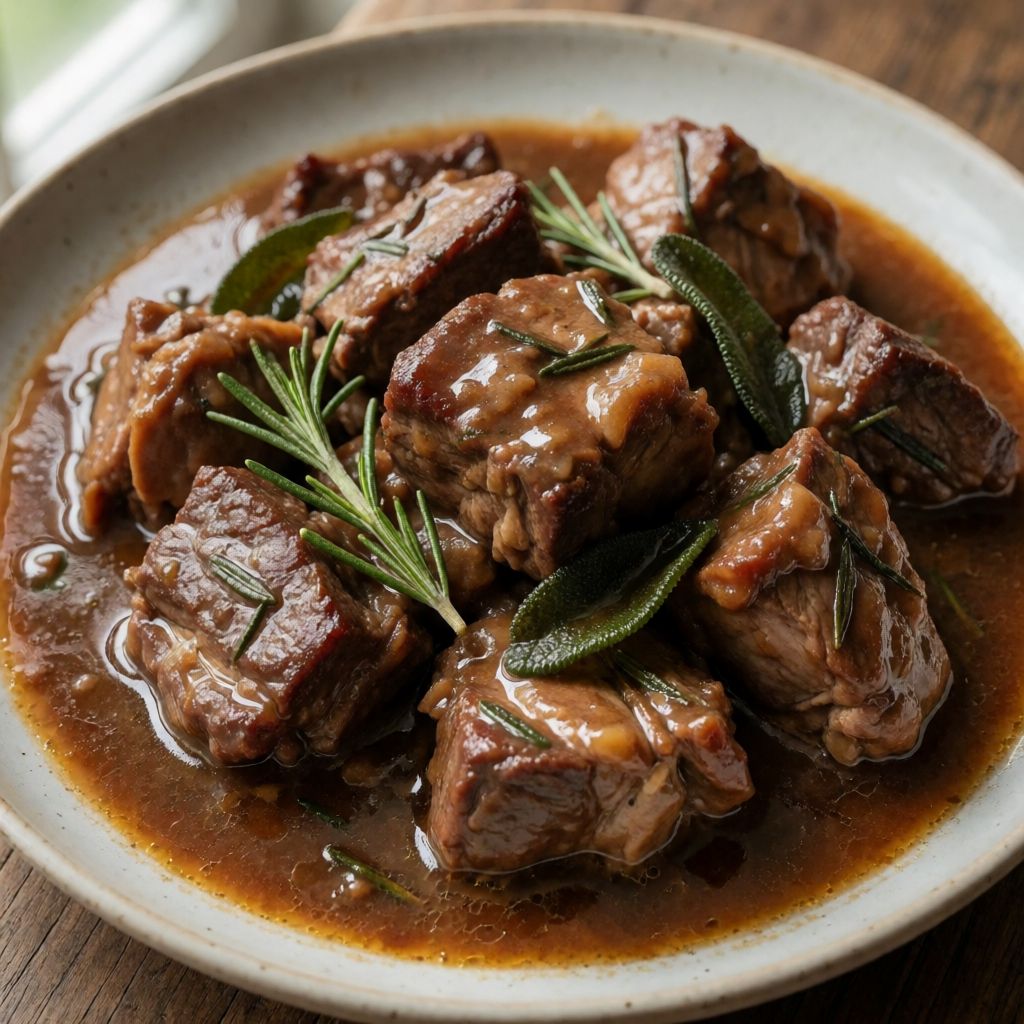
 AI photo
Braised Lamb Stew
A slow-braised lamb stew finished with a bright lemon and mint dressing.
Ingredients
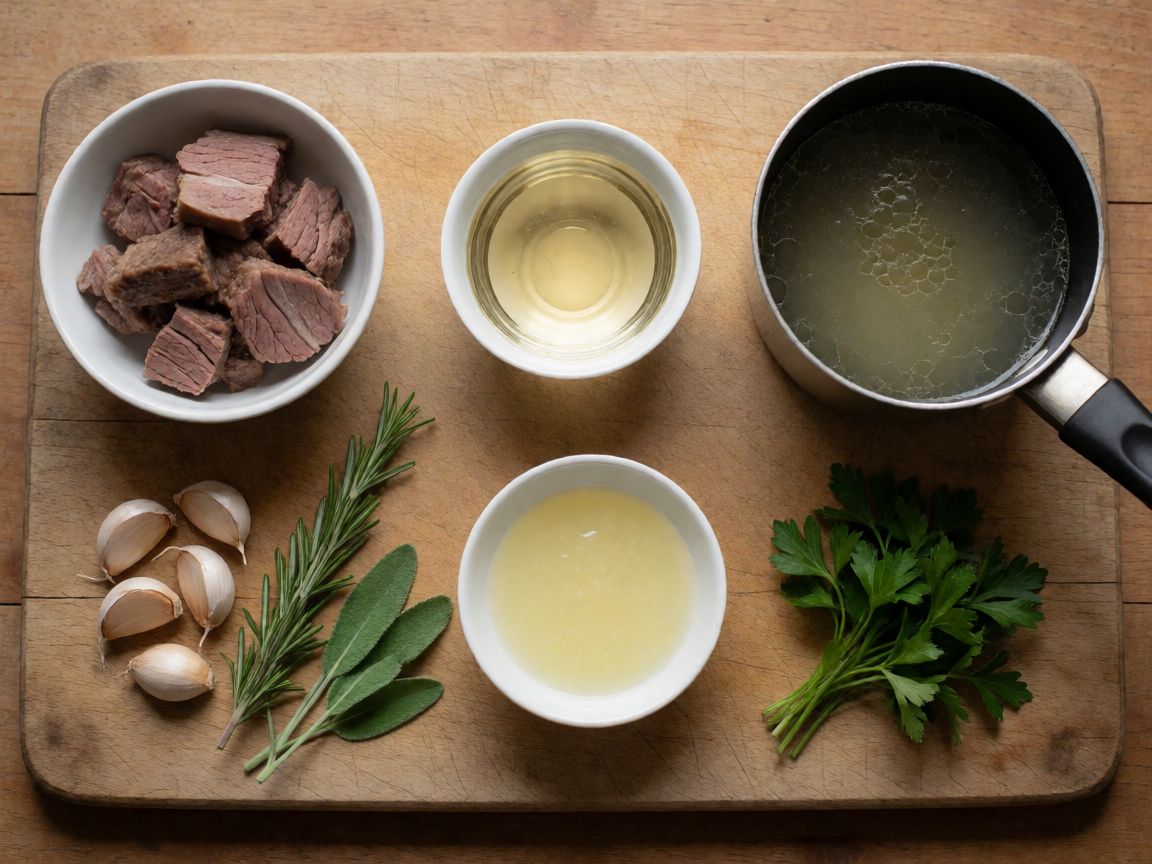
- 1 kg Lamb
- 4 clove Garlic
- 1 pcs Rosemary sprig
- 5 pcs Sage leaves
- 250 ml White wine
- 1 l Vegetable stock
- 1 pcs Lemon juiced
- Olive oil to taste
- Parsley to taste
- Mint to taste
- Salt to taste
- Black pepper to taste












Steps
Prepare the vegetable stock following the basic recipe. Finely chop the rosemary and sage.
Heat a little olive oil in a large pan, add the garlic and fry for a few minutes.
Add the chopped herbs and cook for a further few minutes to release their aroma.
Add the lamb and sear the pieces over high heat on all sides until evenly browned.
Pour in the white wine and let it bubble away.
Add one ladle of stock and let it be fully absorbed by the meat.
Add three more ladles of stock, cover with a lid and simmer on low heat for at least 40 minutes.
40 minCheck the meat is cooked through and season with salt and black pepper to taste.
Squeeze the lemon and finely chop the mint leaves.
Mix the lemon juice, mint and a little olive oil, whisk briskly with a fork until emulsified, then pour over the meat.
Turn off the heat, cover the pot with a lid and let the dish rest before serving.
This is a lamb shoulder braise dressed, at the very end, like a salad. Two different cooking logics stacked on top of each other: ninety minutes of low heat breaking down tough meat into something a fork pulls apart, and then thirty seconds of raw lemon, mint and oil thrown on top to wake the whole thing back up. If you skip that second part you still have a good stew. With it, you have this dish.
What decides whether it works is not the lamb itself — it's what you do in the first ten minutes, before any liquid goes in. Brown the meat properly, on real heat, in batches if your pan is crowded, and you build a dark crust on the bottom of the pan that becomes the whole backbone of the sauce once the wine and stock hit it. Skip that, or crowd the pan so the meat steams instead of browns, and you get grey lamb in beige water — edible, forgettable.
Some say searing "seals in the juices." It doesn't — cut the meat open and you'll find juice running out same as ever. What searing actually does is the Maillard reaction: sugars and proteins on the surface cooking into hundreds of new flavour compounds that a boiled or steamed surface never makes. That crust is also what you deglaze with the wine — the brown stuck-on bits are not mess, they're flavour you paid for with heat, and the wine's job is to get them back off the pan and into the sauce.
The ladle-by-ladle stock is the part people rush past, but it's doing real work. Dump in all the stock at once and the lamb just sits in a pool of it, boiling rather than braising, and the liquid stays thin because it's got a litre to spread through. Add it a ladle at a time, letting each one get mostly absorbed before the next, and you're forcing the meat to cook in a small, increasingly concentrated amount of liquid each round — the sauce thickens from the inside out instead of needing a long reduction at the end. It's the same logic as making a risotto, just applied to meat instead of rice.
Lamb shoulder is the right cut here, not leg — leg is lean and roasts well because it cooks fast and dries out if you don't watch it; shoulder is laced with connective tissue and fat, which is exactly what low, wet heat is for. That collagen needs time and gentle heat to turn into gelatine — boil it hard and the proteins seize and toughen before the collagen's had a chance to melt, which is the real reason a rushed stew comes out chewy, not because the lamb was "bad meat." Forty minutes is the floor, not a target: you'll know it's there when a piece yields to a fork without a fight, not by the clock. If your lamb shoulder still fights back at forty minutes, give it more time rather than more heat.
The wine doesn't need to be expensive — it needs to be something you'd be happy drinking a small glass of, since whatever's unpleasant in the bottle concentrates rather than cooks away. If you've none open, a splash of cider vinegar loosened with a little extra stock will do the acid job, though you lose the fruit. The stock itself just needs to taste of something before it goes in; thin, underseasoned stock gives you a thin, underseasoned sauce no matter how long you simmer it, because reduction concentrates whatever's already there, good or bland.
Rosemary and sage go in early, fried briefly in the oil before the meat, because their aromatic oils need heat to release into the fat — thrown in raw at the end they taste sharp and medicinal rather than rounded. Mint, by contrast, goes in raw and late, chopped fine and whisked with lemon juice and oil into a loose, bright dressing — cooked mint turns flat and a bit muddy, and the whole point of this last step is contrast: a cold, sharp, green note cutting through ninety minutes of rich, soft, brown. Olive oil is the right oil for this one on flavour grounds, not just tradition — you want its own taste both in the base and in the dressing, so don't reach for a neutral oil here the way you might for frying onions; save that swap for dishes where the oil is meant to disappear.
The rest before serving isn't laziness — it's the sauce and the fat relaxing back into the meat instead of pooling under it on the plate, and the gelatine firming very slightly so it coats a spoon rather than running off it. Five or ten minutes under the lid does it; you'll taste the difference against a bowl served the second it comes off the heat. Lamb shoulder bought whole and braised slow is, historically, the cheap cousin of the leg that goes in the Sunday oven — this is what a British kitchen did with the cut nobody wanted to roast, long before anyone called it a recipe.