
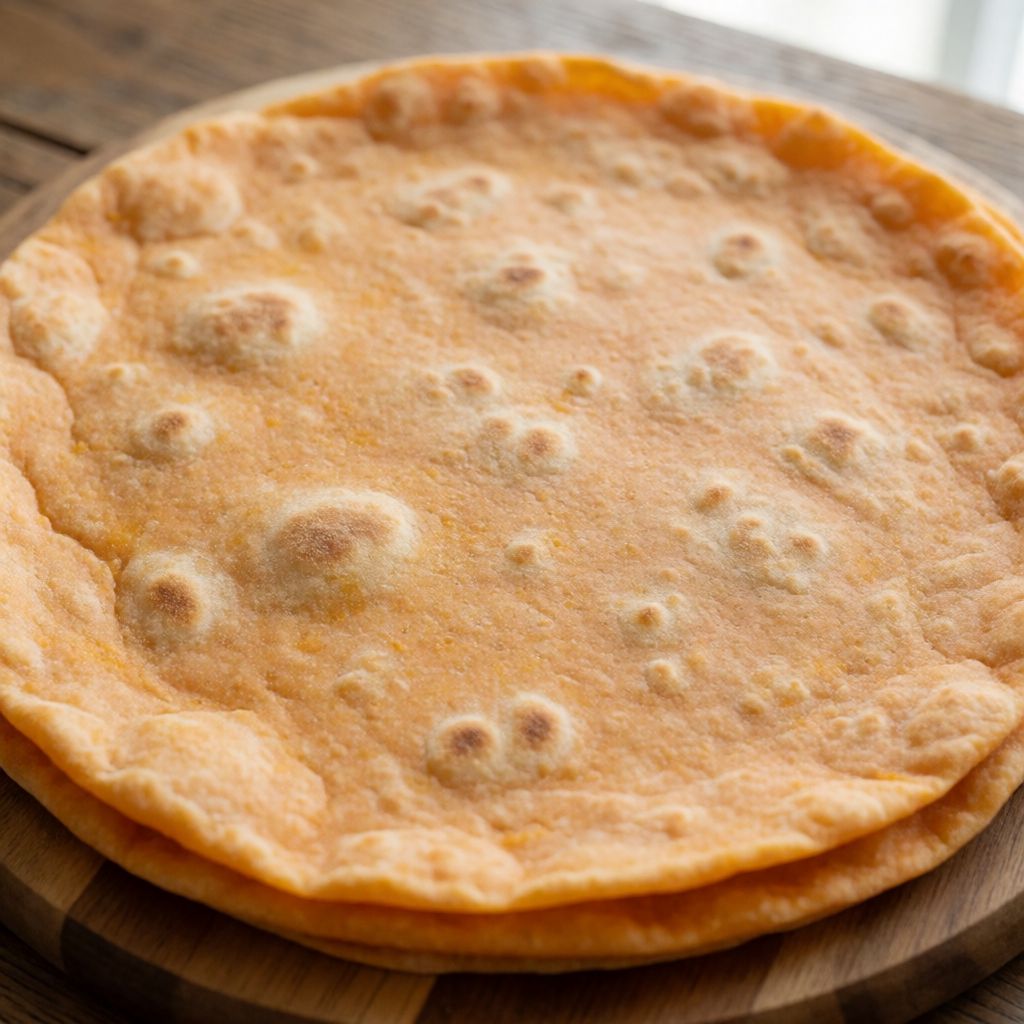
 AI photo
Gluten-Free Carrot Piadina Without Lard
A gluten-free flatbread made with grated carrot and rice flour, cooked in a pan without lard.
Labels are worked out automatically from the ingredients and can be wrong. Check the packaging if it matters to you.
Ingredients



Steps
Grate the carrot and place it in a bowl, then add a pinch of salt, the olive oil and the rice flour.
Pour in the water and knead by hand into a smooth ball of dough.
With the pan off the heat, brush it with a little oil and place about half of the dough in it.
Flatten the dough with your hands into an even, round shape of uniform thickness.
Cook covered with a lid.
5 minCarefully flip the piadina and cook for about 4 more minutes.
4 minFill to taste with tomato slices, cooked ham and lettuce.
Fold in half to close the piadina and serve.
Piadina is a flatbread from Romagna, the kind farm women used to cook on a hot clay disc called a testo, fill with whatever was in the larder, and fold shut to eat standing up. No oven, no yeast, no waiting for anything to rise — that is the whole point of it, and it is why this gluten-free, lard-free version still behaves like the original even though half its ingredients have changed.
What decides whether it works is not the filling, it is the dough holding its shape without the one thing flatbread usually relies on: gluten. Wheat dough stretches and springs back because gluten forms an elastic net. Rice flour has none of that — it is inert starch, nothing more. So the carrot is not there for colour or a nod to healthy eating, it is doing the structural job gluten would normally do. Its moisture and its fine fibre bind the rice flour into something that holds a round shape and doesn't crack when you flip it. Grate it too coarsely and you get weak spots — shreds with air gaps around them, and the dough tears right there when you turn it.
Some say piadina needs lard to be piadina — no, because lard was never sacred, it was just the cheapest fat on hand in a region that slaughtered pigs every autumn. Olive oil replaces it here perfectly well as a binder and a non-stick agent, you only lose the particular short, flaky tenderness that a solid fat gives when it melts in the heat. That's a trade, not a failure.
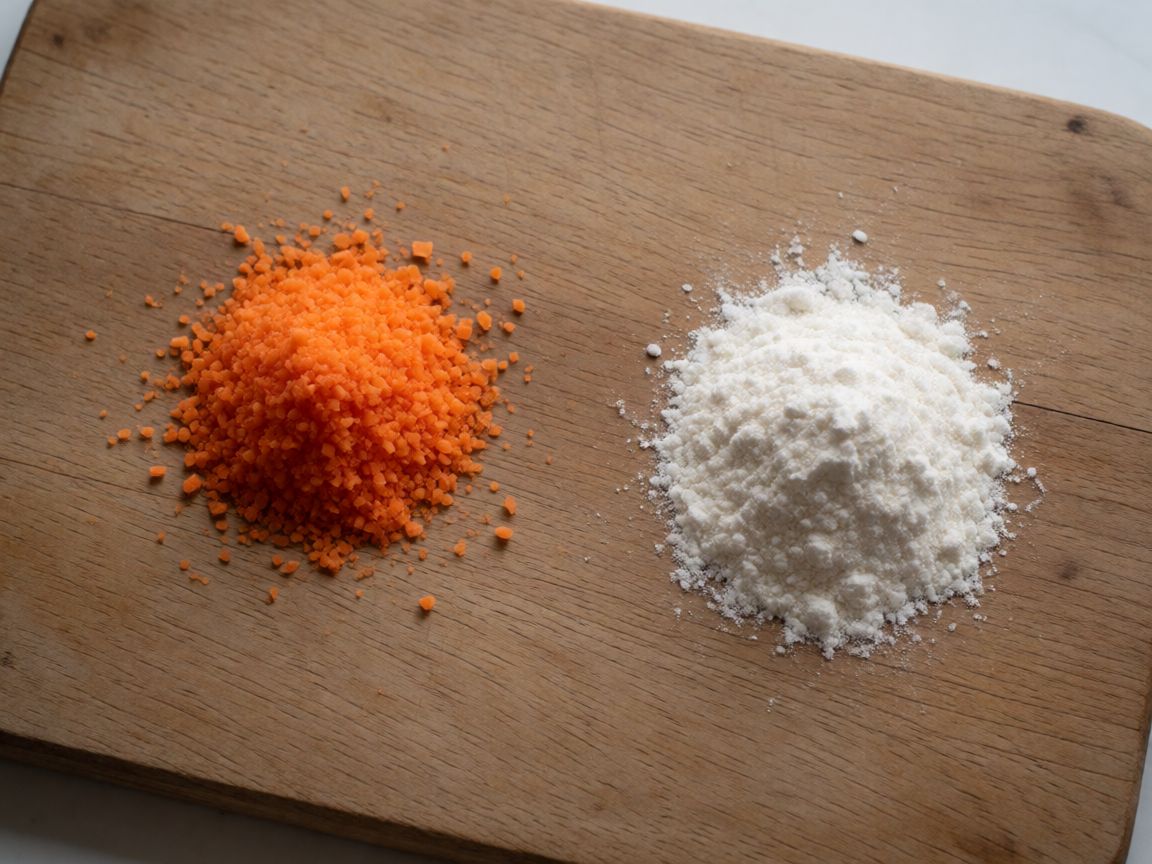
Carrot: 150 g is the load-bearing ingredient here, not a garnish. Grate it fine and on the day you use it — carrot loses moisture as it sits, and this dough depends on that moisture to come together without extra water. If your carrot feels dry or woody, add a splash more water; if it's young and juicy, hold some water back. There's no good substitute that keeps the dish's identity — courgette is too wet and will make a slack, tearing dough; beetroot would work on the same principle (moisture plus fine fibre) but you'd be making a different, redder piadina, which is a fair thing to do on a Tuesday, just don't call it the same recipe.
Rice flour: choose flour, not rice starch — they look alike on a shelf but starch absorbs water differently and will give you a gummier result. Fine, pale rice flour behaves close to neutral, which lets the carrot's sweetness come through instead of fighting a strong-tasting flour for attention. If you've only got a gluten-free blend with xanthan gum in it, you can use it, but expect a slightly more elastic, less fragile dough — not wrong, just not this.
Olive oil: here it needs to be mild, not the kind you'd drizzle over a salad and talk about for ten minutes. The rule for any fat in a dough like this is simple — it should carry no smell of its own, because its job is lubrication and a bit of richness, not flavour. A light olive oil or a flavourless sunflower oil both do the job; a robust extra virgin will sit over the carrot's sweetness like a loud guest at a quiet dinner.
Water: three tablespoons is a starting point, not a law, because carrots vary and your flour's day-to-day thirst varies too. Add it gradually while kneading — you want a ball that holds together under your hand without cracking at the edges and without being sticky enough to cling to your fingers. Too wet and it won't hold a round shape in the pan; too dry and it tears on the fold.
Salt: a pinch, worked straight into the dough rather than sprinkled on top afterwards, because it needs to season the carrot's natural sweetness from the inside, not sit on the surface where you'd only taste it in patches.
For the filling — tomato, ham, lettuce — the only mechanical point worth making is to add it while the piadina is still warm and pliable, because a gluten-free flatbread stiffens faster than wheat dough once it cools, and a stiff one cracks instead of folding cleanly in half. Everything else about the filling is up to what's in your fridge; piadina was never fussy about that, it was invented to use up whatever there was.