
 AI photo
Shredded Carrot Salad
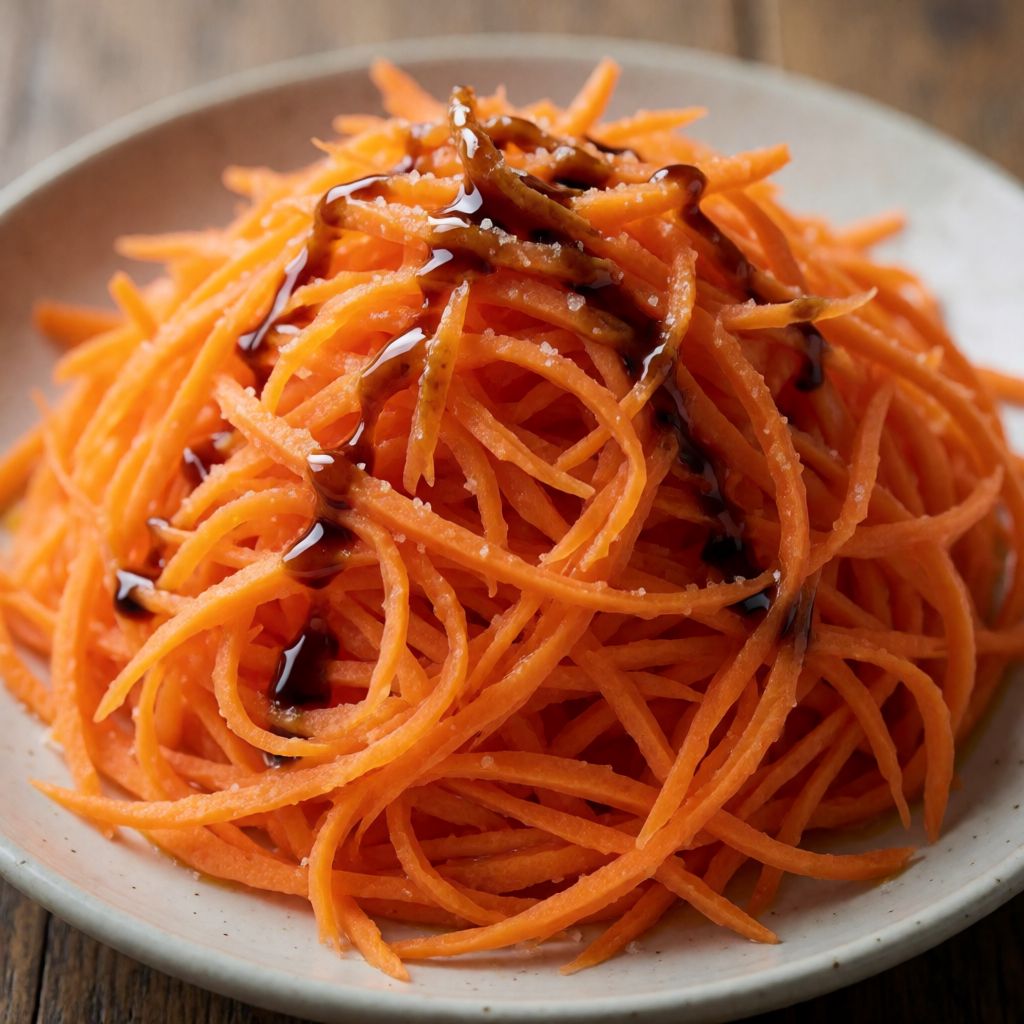
A simple, fresh carrot salad shredded into thin strips with olive oil and a touch of balsamic vinegar.
Labels are worked out automatically from the ingredients and can be wrong. Check the packaging if it matters to you.
Ingredients



Steps
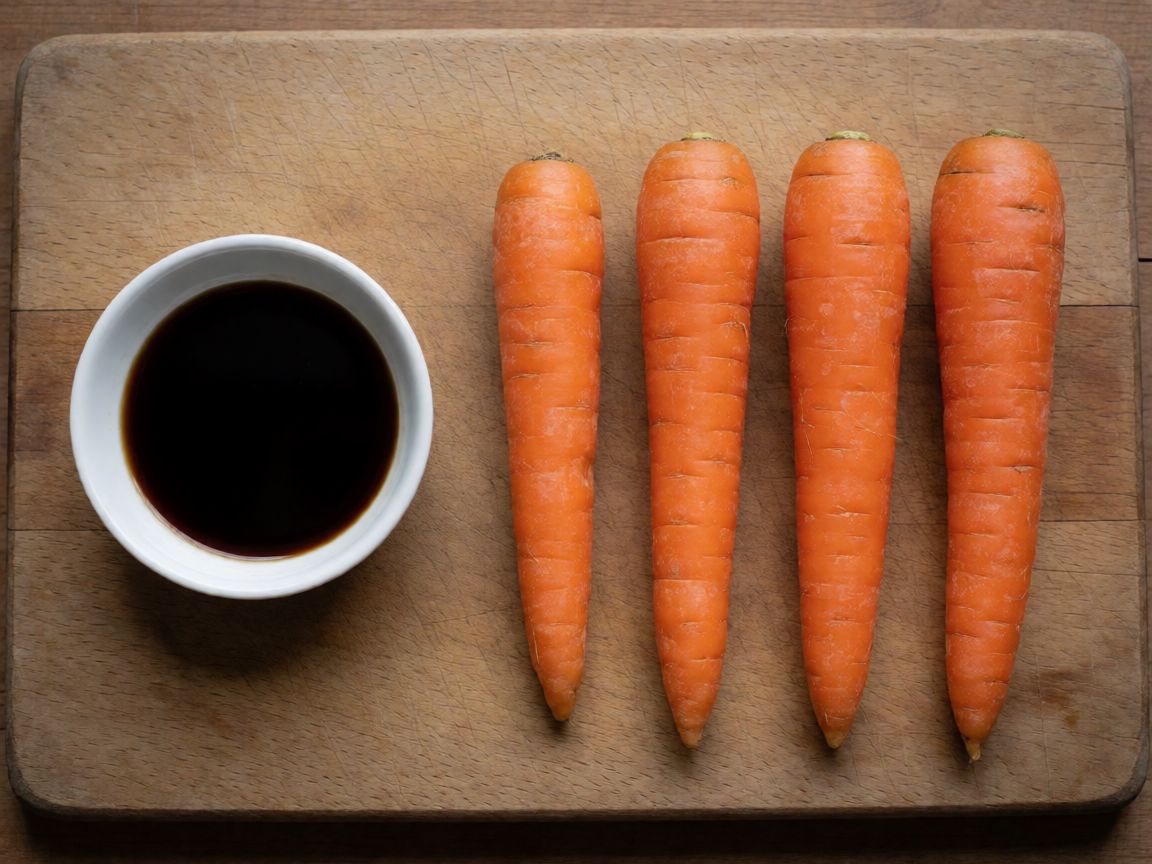
Cut off both ends of the carrots, then peel the outer layer with a peeler or knife.
Grate the carrots on the coarse side of a grater, or cut into thin strips with a knife.
Transfer the carrot to a bowl, add the salt, olive oil and, if you like, a little balsamic vinegar.
Stir well and let it sit for a few minutes so the carrot softens and takes on the flavours.
This is not a cooked dish at all — it's raw carrot given a few minutes to change character without any heat touching it. The whole mechanism is salt and time: salt pulls water out of the carrot's cells, that water carries the carrot's own sugar and flavour with it, and what you end up stirring together is carrot dressed in its own juice plus the oil. No stove, no pan, no waiting for anything to brown — which is exactly why it works as a side on a day when your hob and oven are already busy with a roast.
What decides whether it's good is not the method but two choices most people skip past: how you cut the carrot, and whether you give it those few minutes.
Grate it coarse and you tear open more cell walls at once — more juice comes out faster, the texture goes soft and a little slick, closer to a quick pickle. Cut it into thin knife strips instead and you keep more structure — it stays with a bite, closer to a slaw. Neither is wrong; they're different salads wearing the same name.
Skip the resting time and you get something that looks the same but tastes like oiled carrot shavings sitting next to each other, not through each other. The wait is not decoration — it's where the salt actually does its job.
Carrot is the entire dish, so don't buy it for looks alone. Supermarket carrots are picked young and then kept in cold storage for much of the year — by the time most of us buy them they've lost a little moisture and concentrated their sugar, which actually works in your favour here: a slightly older, firmer carrot grates into a drier shred that takes up the salt and oil instead of drowning in its own water. A carrot pulled straight out of the ground in June, full and wet and sweet, is lovely eaten raw on its own but gives you a soupier salad — still fine, just know what you're getting.
Peeling isn't fussiness. The skin and the thin layer under it carry a slightly bitter, soil-flat taste that never softens the way the flesh does, salted or not — it just sits there raw inside a dish that's meant to feel gentle. Cut the ends off first so the peeler has a flat edge to start from instead of skating off a round tip.
Salt here is not seasoning, it's the engine. A pinch worked through shredded carrot draws water out by osmosis — the cell walls leak, and what leaks out is sugar-sweet carrot liquor, not plain water. That's the "softens and takes on the flavour" line in the recipe: the carrot is marinating in its own juice. Rush this and the oil just sits on the surface of dry shreds; give it the few minutes and the oil has something to actually cling to and blend with. Some say you should salt a salad right before it reaches the table so it stays crisp — fine advice for lettuce, wrong logic here, because softening is the whole point of this one, not a flaw to dodge.
Olive oil is doing flavour work, not just carrying the salt around — it's meant to taste of something next to a vegetable that's naturally a bit flat raw. Use any oil with its own clean taste you actually like: a fruity rapeseed oil, easy enough to find in a British kitchen, does the same job if the olive oil's run out. What you want to avoid is an oil that's purely neutral and just greasy-tasting — that adds slip but no flavour, and this salad has nowhere else to get flavour from.
Balsamic vinegar, if you use it, puts back the acidity raw carrot doesn't have much of, and a little sweetness alongside it — balsamic is one of the few vinegars carrying both at once. Swap it for red wine vinegar or a squeeze of lemon if that's what's open, but you'll lose the sweetness balsamic gives for free, so make it up with a small pinch of sugar.
Four carrots, a couple of good glugs of olive oil — call it two tablespoons to start, you can always add more — one pinch of salt, and a splash of vinegar if you're using it: that feeds four as a side, sat next to a roast rather than carrying the plate on its own. Make it while the oven's still doing the real work and let it sit in the fridge for a while — it only gets better for the wait.