
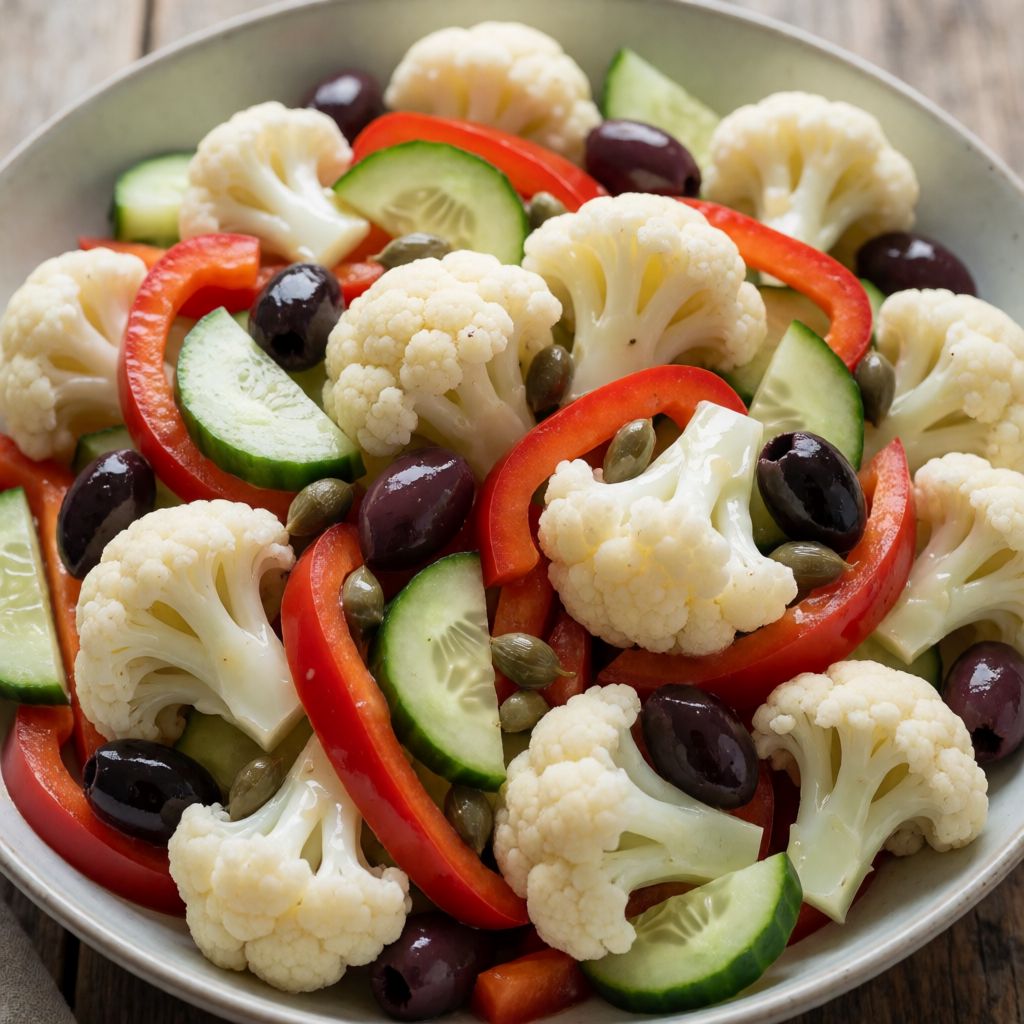
 AI photo
Neapolitan Cauliflower Salad
A classic Neapolitan salad of cauliflower with olives, capers, pickled peppers, cucumber and anchovies.
Labels are worked out automatically from the ingredients and can be wrong. Check the packaging if it matters to you.
Ingredients
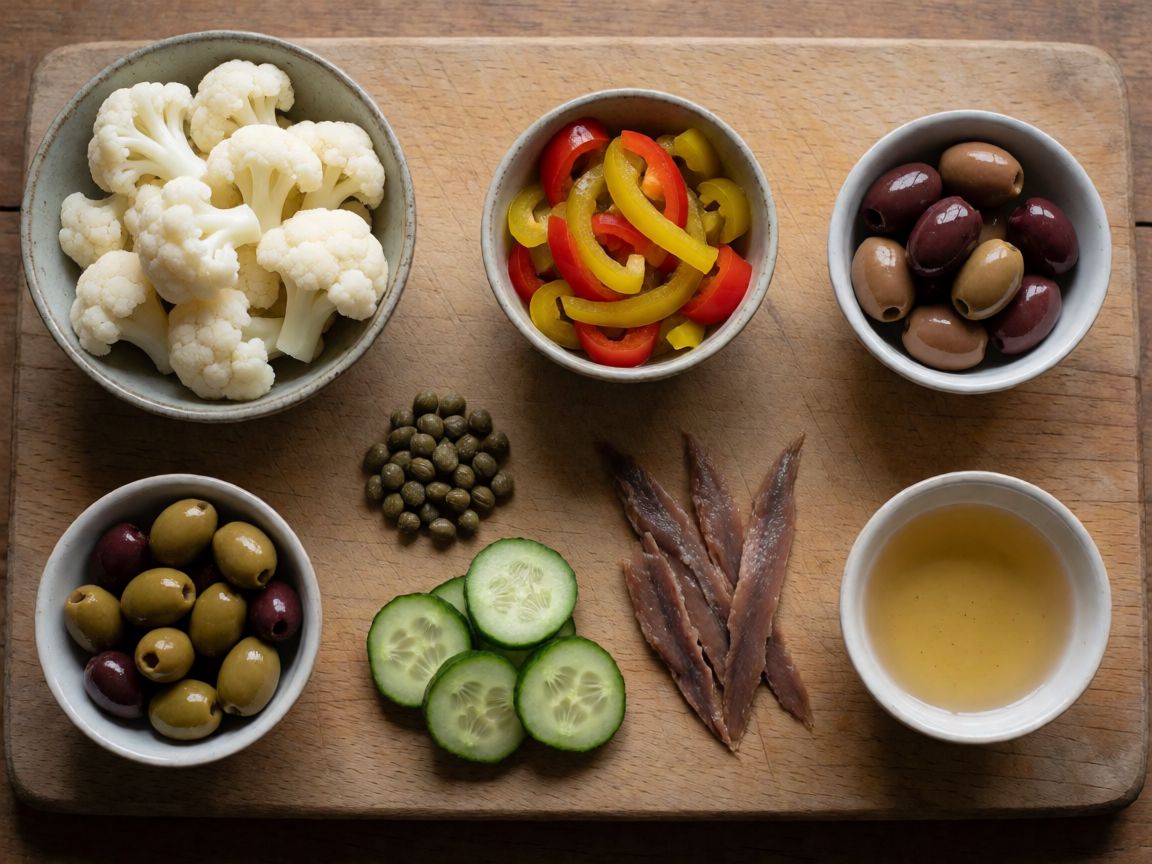
- 750 g Cauliflower
- 125 g Pickled peppers
- 90 g Green olives
- 90 g Gaeta olives
- 30 g Capers or salted capers
- 75 g Cucumber
- 50 g Anchovies
- Olive oil to taste
- Red wine vinegar to taste
- Salt to taste








Steps
Pit the black and green olives using a special tool or a knife.
Wash the cucumber, trim the ends and cut into thin strips.
Rinse the pickled peppers and cut into strips.
Put a pot of water on the heat, add salt and bring to the boil.
Break the cauliflower into florets, removing the hard parts and outer leaves.
Plunge the florets into the boiling water for a few minutes, so they stay crunchy.
3 minRemove the cauliflower from the water and immediately transfer it to a bowl of ice, to stop the cooking.
Leave to cool for a few minutes, then drain and transfer the cauliflower to a large bowl.
Add the olive oil, capers, chopped olives, pickled peppers, anchovies and cucumber.
Drizzle everything with red wine vinegar and mix well before serving.
This is a cold, briny salad built around one decision: how far you let the cauliflower cook. Everything else — olives, capers, anchovies, pickled peppers — is there to throw salt and acid at a vegetable that, on its own, tastes of not much. Get the cauliflower right and the salad holds together; overcook it and you've made soup with bits in.
Some say cauliflower should be boiled until it "gives" easily, the way you'd do it for a mash or a gratin. No — here you want the opposite of soft. You want it to still squeak slightly against your teeth. That's why it only gets a few minutes in boiling water and then goes straight into ice. The brief cook knocks the raw, sulphurous edge off the floret; the ice stops that momentum dead before the inside turns chalky and the outside turns grey-green. Skip the ice and the florets keep cooking in their own heat for another few minutes on the counter — you'll have crunchy outside, mush in the middle, which is the usual way this salad goes wrong in a home kitchen.
Southern Italian salads like this one are built on preserved things because, historically, that's what was in the larder year-round: olives cured in brine, anchovies salted down, peppers pickled in vinegar, capers packed in salt. None of it needed a fridge or a growing season. The cauliflower is the one fresh, seasonal element dropped into a base that was always there — which is also why the dish doesn't taste "cooked", it tastes assembled.
Start with the cauliflower itself, because the dish is named after it and everything else is seasoning. Buy one with a tight, pale head and leaves still hugging it — that's freshness, not just looks; a head that's spreading and going yellow at the edges has been sitting and will cook unevenly, soft at the tips before the stalk end is even warm. Break it into florets by hand where you can rather than cutting with a knife; it tends to snap along its own natural lines, giving you pieces of a similar thickness, which matters when you're timing a short boil by eye rather than by the clock.
The ice bath isn't an extra step to skip when you're in a hurry — in a British kitchen without a kazan or a big catering pot, it's doing the job that a flash-chiller does in a restaurant. A bowl of cold water with ice cubes from the freezer door is enough; you don't need a dedicated ice bucket. If you've no ice to spare, cold tap water and a few extra minutes of sitting will do something similar, just less sharply — the point is stopping residual heat, by whatever cold water you've got.
Olives: the recipe asks for two kinds, a green one and Gaeta, which are small, wrinkled, black-purple olives cured in brine rather than oil. If you can't find Gaeta specifically, any black brine-cured olive with a soft, winey flavour will stand in — just avoid the ones cured in oil and herbes de Provence, which bring a different, more perfumed character that doesn't belong here. The point of using two kinds isn't decoration — it's two different notes of salt and bitterness so the salad doesn't read as one flat seasoning.
Anchovies and capers are both salt-preserved and both there to do the job a dressing usually does — give the bland cauliflower a savoury backbone. If you're using salted capers rather than the ones in brine, rinse them properly or you'll get a mouthful of pure salt rather than the herby sourness you actually want. Anchovies dissolve a little as you mix, which is fine — that's seasoning happening in the bowl rather than in a jar beforehand.
Pickled peppers and cucumber bring crunch and acidity that's fresh rather than fermented, a contrast to the brininess of everything else — this is also why the cucumber goes in raw and thin-cut rather than cooked or salted down. Any firm pickled pepper works; even a jar of standard supermarket pickled peppers, well rinsed of their sweeter brine, will do the job, since what you want from them is tang and bite, not a particular variety.
Oil and vinegar go in to taste rather than measured, because you're not building a vinaigrette, you're finishing a salad that's already salty and sharp from its own ingredients. Use an olive oil you'd happily eat on bread — this isn't the place for a neutral oil, since the salad has so few ingredients that each one is tasted on its own. Patience here isn't about long cooking; it's about tasting as you add the vinegar at the end, rather than tipping it all in at once and hoping.