
 AI photo
Chia Pudding
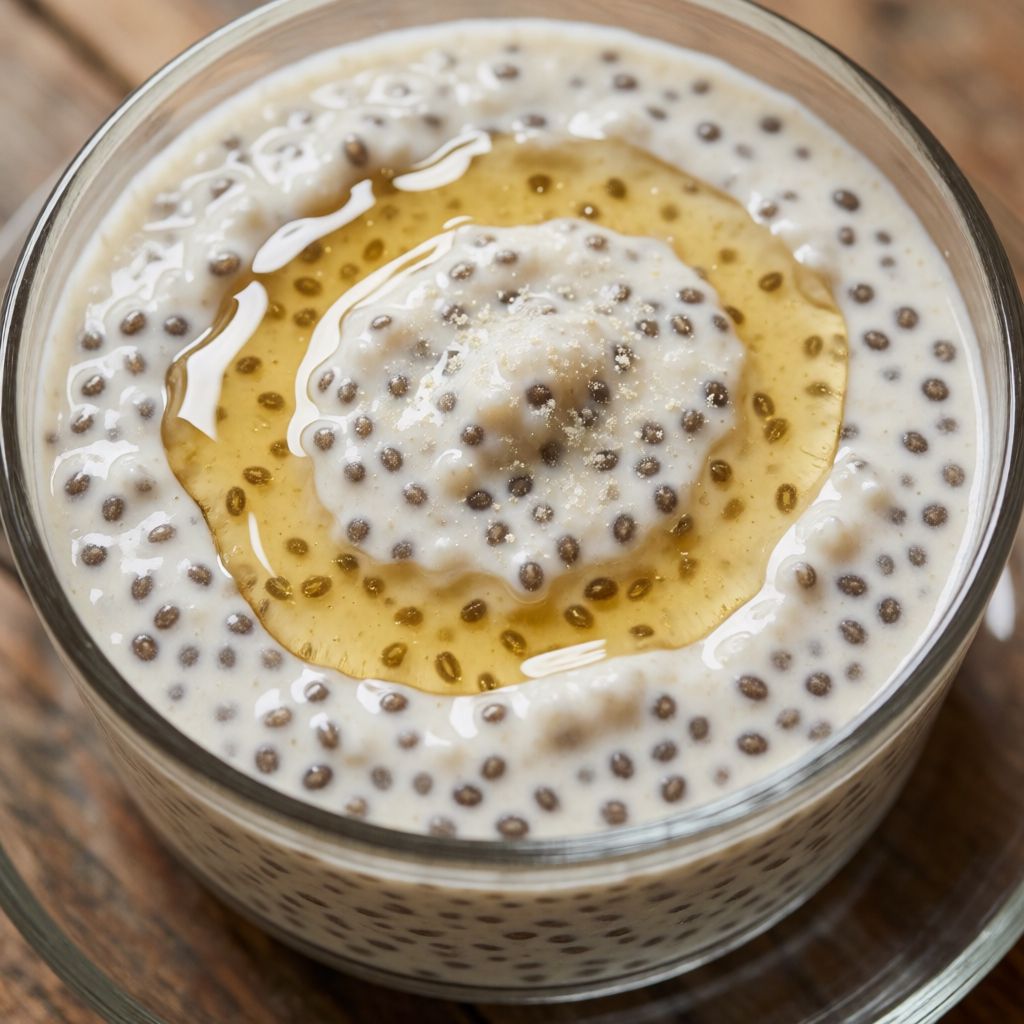
A quick, make-ahead chia pudding layered with Greek yogurt and a touch of honey.
Labels are worked out automatically from the ingredients and can be wrong. Check the packaging if it matters to you.
Ingredients
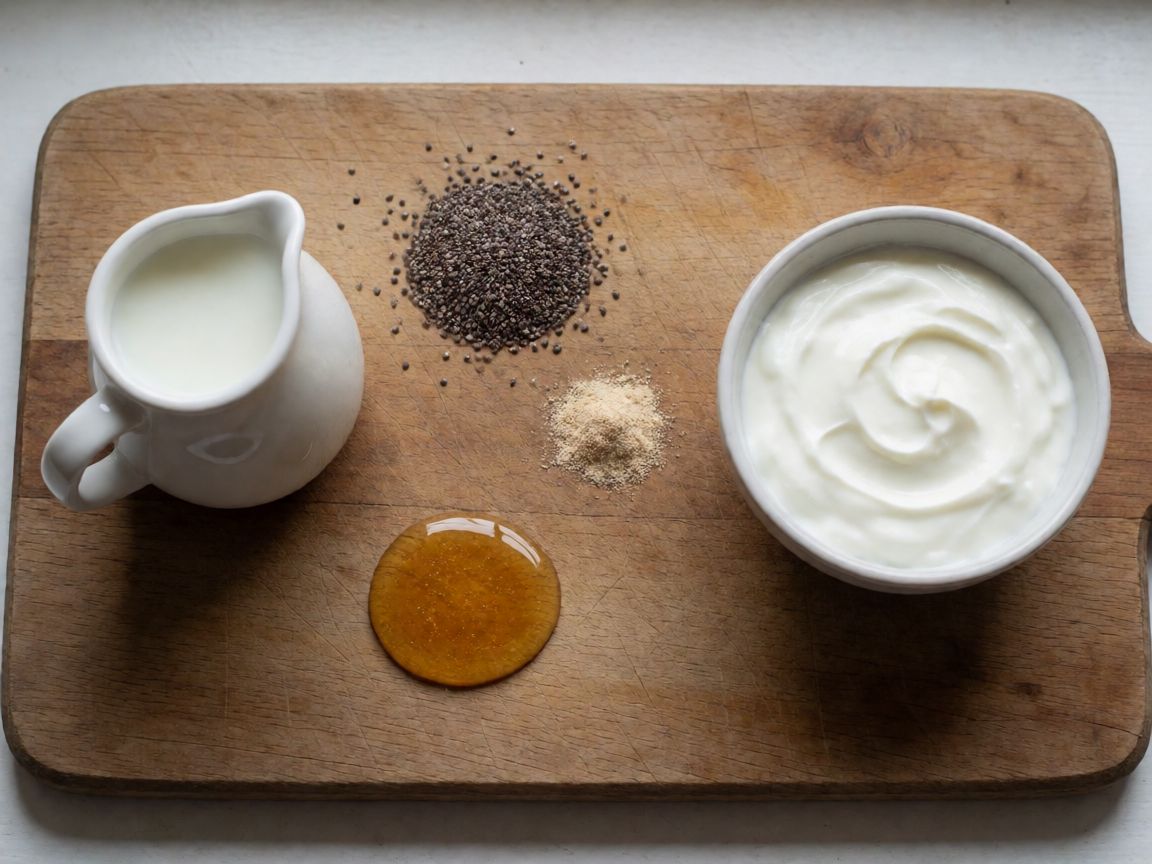
- 100 ml Almond Milk
- 1 tbsp Chia Seeds
- 1 pinch Vanilla Powder
- 200 ml Greek Yogurt 10%, or skyr
- 1 tsp Honey


Steps
Mix the almond milk with the chia seeds and vanilla, and stir well.
Leave in the fridge for 30 minutes, or overnight.
30 minStir the chia mixture well and combine with the Greek yogurt or skyr.
Add honey to taste.
Enjoy the chilled chia pudding with rhubarb compote, fresh berries, banana and peanut butter.
This isn't pudding in the custard sense — nothing coagulates from egg or heat. What happens is simpler and more interesting: each chia seed is wrapped in a soluble fibre coat that drinks in liquid and swells into a clear gel, roughly ten times its own weight. Enough seeds swelling together and you get a spoonable mass without a stove ever being switched on. The whole dish is built on that one fact.
What decides whether it works is dispersion, not time. If the seeds clump when you first stir them into the milk, they gel into little frogspawn lumps with dry seeds trapped inside and a thin puddle of unabsorbed milk around them. Stir properly at the start — really work it, scrape the bottom of the bowl — and the seeds hydrate evenly, so the whole thing sets as one soft mass instead of lumps in water.
Some say chia pudding needs the fridge to "set", the way a custard needs heat to set. No — the cold does nothing chemical here. It only slows the milk from turning and keeps the texture a touch firmer because warmth makes the gel looser. You could leave it at room temperature and it would still swell; you just wouldn't want to eat dairy left out that long.
Time is a floor, not a target. Thirty minutes gets you a usable gel — seeds swollen, no more free liquid sitting on top. Leave it longer, up to overnight, and more water works its way in, the texture goes from "slightly bitty" to properly smooth. There's no reward for rushing it, and no harm in forgetting about it till morning.
Almond milk does one job: it's the thin liquid the chia seeds swell into before anything thick joins the bowl. Thin matters — if you tried to hydrate the seeds straight in yogurt, the yogurt's own body would stop the seeds spreading out and dispersing evenly, and you'd be back to the lump problem. Any milk thin enough to pour and stir freely will do the same job — oat, rice, soya, or dairy milk if you don't care about keeping it plant-based. The almond flavour here is background, not structure, so don't hunt for a specific brand.
Chia seeds themselves: buy them whole, not ground — ground chia has already started breaking down its gel-forming coat and won't swell the same way, and loses it faster on the shelf too. Black or white seeds behave identically; the colour is cosmetic. There's no real substitute that does the same mechanical trick — flaxseed swells too, but it's slimier and tastes of itself, so it changes the dish rather than replacing it quietly.
Vanilla powder is purely a sense thing, not a mechanism — it's there so the almond milk smells of more than almond milk. A scrape of vanilla pod or a drop of extract does the same work; use what's in the cupboard.
The yogurt or skyr goes in after the chia has already gelled, and that order matters for the same dispersion reason as the milk: it's folded through a mass that's already set, not asked to carry the seeds itself. Ten percent fat Greek yogurt gives you enough body to hold its shape on a spoon and enough acidity to cut the honey; skyr does the same with slightly more tang and less fat. Thinner yogurts work but the pudding goes looser — fine if you're eating it from a glass with a straw-width spoon, less fine if you want it to sit proudly under berries.
Honey is seasoning, not structure — add it to the yogurt before folding, taste, adjust. Maple syrup or date syrup behave the same way if honey isn't to hand; the only real criterion is that it's liquid enough to stir through without hunting for pockets of it later.
This makes one serious portion for one person, or a light one for two sharing a glass each with fruit on top. Scale the milk and chia up together — keep roughly a tablespoon of seeds to every 100ml of milk, since that ratio is what gives you gel rather than soup or stone. Everything else — yogurt, honey, vanilla — scales to taste, because none of it is doing the chemistry; it's just what the gel gets to carry.