
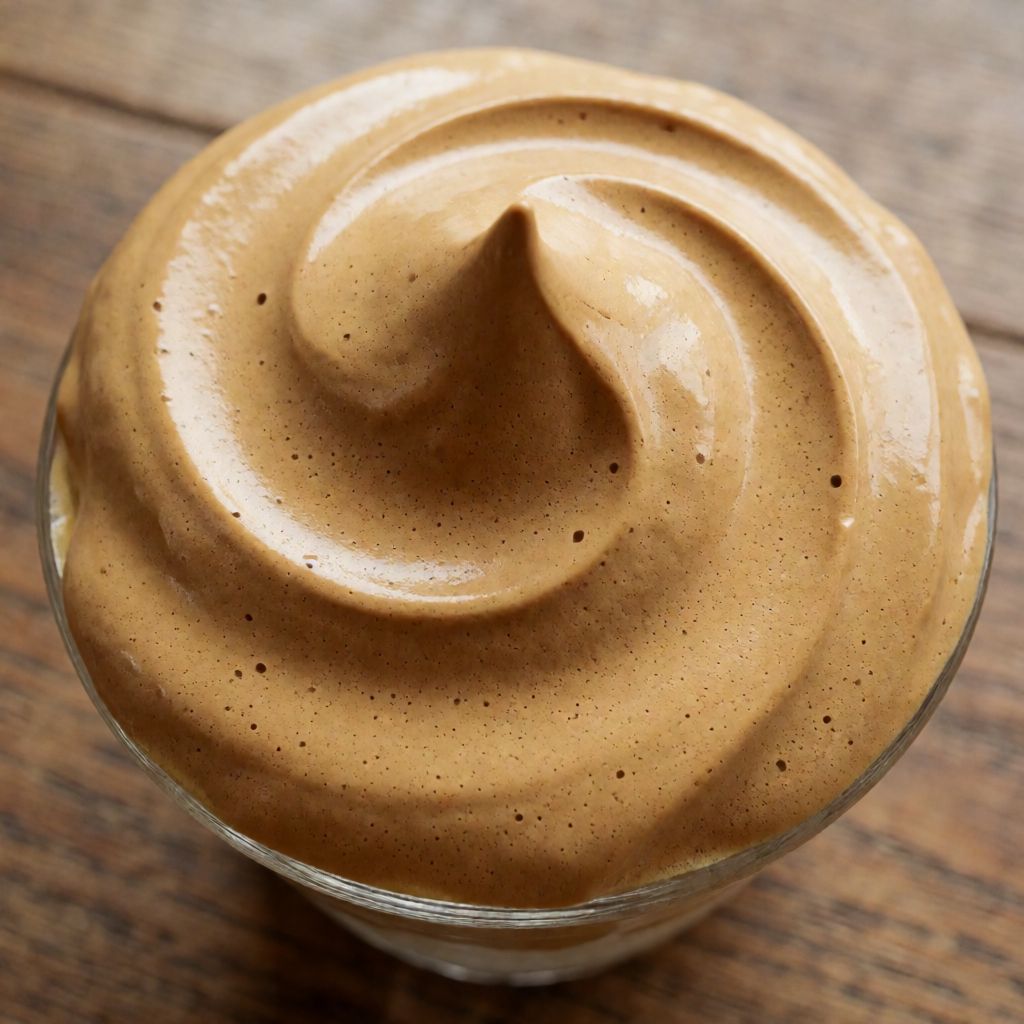
 AI photo
Whipped Coffee Cream
A simple whipped coffee cream made with just instant coffee, sugar and chilled water.
Labels are worked out automatically from the ingredients and can be wrong. Check the packaging if it matters to you.
Ingredients
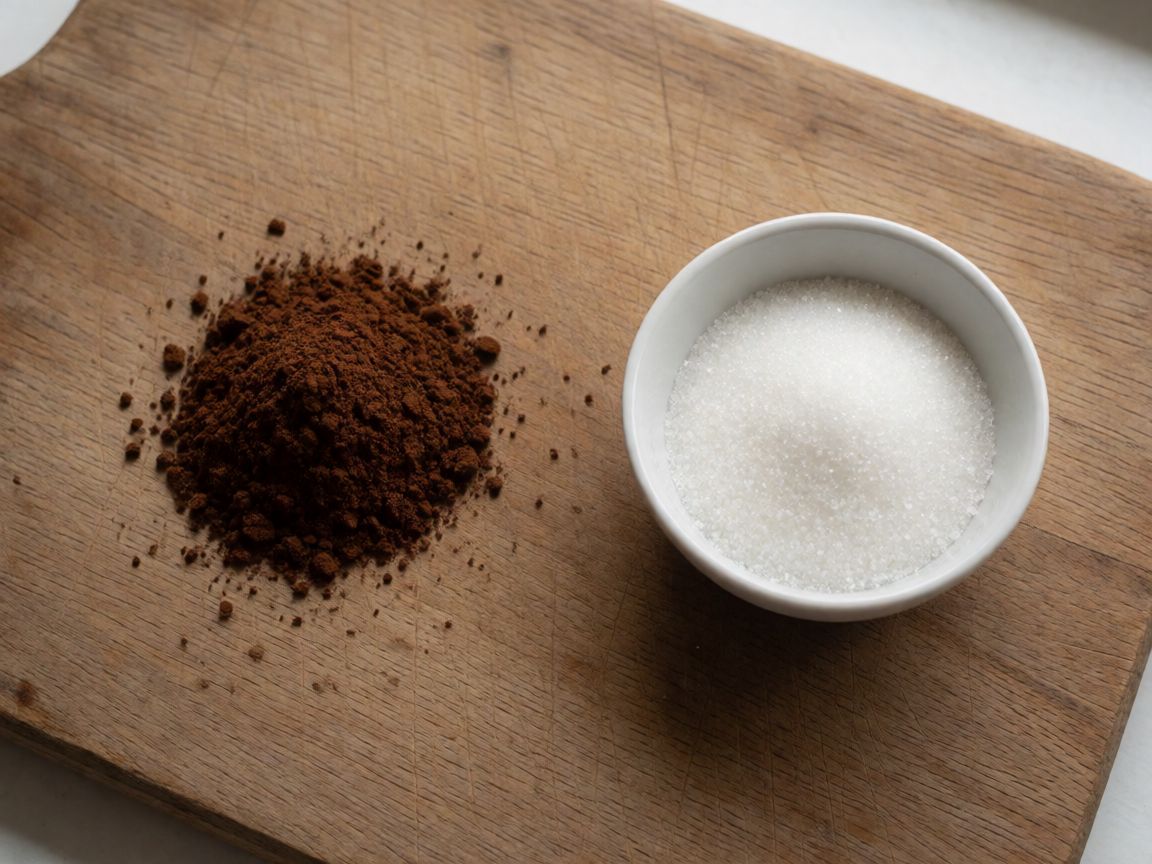



Steps
Put the water in the freezer for 15 minutes.
15 minIn a bowl, combine the instant coffee with the sugar and pour in the chilled water.
Whisk with an electric mixer until the ingredients dissolve and come together into a pale, fluffy cream.
Spoon the cream into glasses or small bowls and serve.
This is not a coffee you drink, it's a coffee you spoon — a foam built from three things that have no business becoming cream: instant coffee, sugar, cold water. No dairy, no egg, no gelatine. The whole trick is air, and whether your whisk manages to trap enough of it before it gives up and runs back out as liquid.
What decides whether it works is not time but whether you've beaten long enough for it to go from brown liquid to something pale that stands on its own, holding a soft peak like shaving foam. People now call this "dalgona coffee" — it went round the world in the lockdown spring, when cafés were shut and people discovered that three tins from the cupboard could be whisked into something that looks suspiciously like the foam cap on a flat white, given a mixer and twenty spare minutes and nowhere else to be.
Myth to break: that you need hot water to "activate" the coffee — no, because here cold is correct and heat is the mistake. Hot water dissolves the sugar and coffee almost at once, and once they're dissolved there's nothing left for the whisk to catch hold of — the mixture stays thin and shiny instead of building a scaffold of tiny bubbles. Cold water resists dissolving. It forces you to keep whisking, and that's the whole point: every extra minute of mechanical battering beats more air in, while the half-dissolved sugar and coffee grains act like thousands of tiny hooks holding each bubble where it landed.
Instant coffee is the only kind that works, and for a specific reason: it's freeze-dried or spray-dried granules, already stripped of oil, already fully soluble, and carrying some of the same surface-active compounds that give espresso its crema — the stuff that lets a bubble wall hold instead of popping. Ground coffee, however fine, brings oil and insoluble fibre, and oil is death to foam: it breaks the skin of a bubble the instant it touches it. So don't try to "improve" this with real coffee — the improvement is what ruins it. Want more coffee flavour, reach for a stronger or darker instant blend, not a different kind of coffee altogether.
Sugar can be plain white granulated or caster, whichever's in the cupboard; caster dissolves a touch faster because the crystals are smaller, so if your mixer is on the weak side, caster gets you there sooner. Skip icing sugar — the anti-caking starch in it can dull the foam instead of helping it — and skip soft brown sugar, whose molasses brings moisture and colour that fight the pale look that tells you it's ready. The sugar isn't only sweetness: those undissolved crystals are doing mechanical work, tiny abrasive seeds the whisk shears against to build structure. Coffee and water alone, however hard you whisk, will never foam like this.
The fifteen minutes in the freezer isn't there for ceremony, it's there to slow the dissolving down, as above. You don't need the water frozen solid — cold enough that the glass feels properly icy in your hand, maybe a skin of ice starting at the edge, is enough. Actual ice chips are a different problem: they won't spread evenly through the mix, so part of your foam ends up gritty and cold while the rest doesn't.
On kit: a hand-held electric mixer on its highest setting is the realistic choice on a UK worktop — a stand mixer works too if you own one, but this is a small-bowl job, nothing that needs a machine taking up a corner of the kitchen. By hand with a balloon whisk it can be done — people did exactly that through lockdown boredom — but expect fifteen to twenty minutes of proper arm work rather than the five a mixer gives you. That's the real price of skipping the gadget: not failure, just more patience spent.
Serve it the way tea already gets served in most houses here — spooned over cold milk in a glass, or over hot milk if you want it to sit proud on top like a latte, the same logic as the skin on a cup of tea with milk, just coffee foam doing the floating this time instead of dairy. Ten servings from fifty grams of coffee sounds generous until you remember each glass only wants one good spoonful on top — this is a topping as much as a drink, and a little goes a long way.