
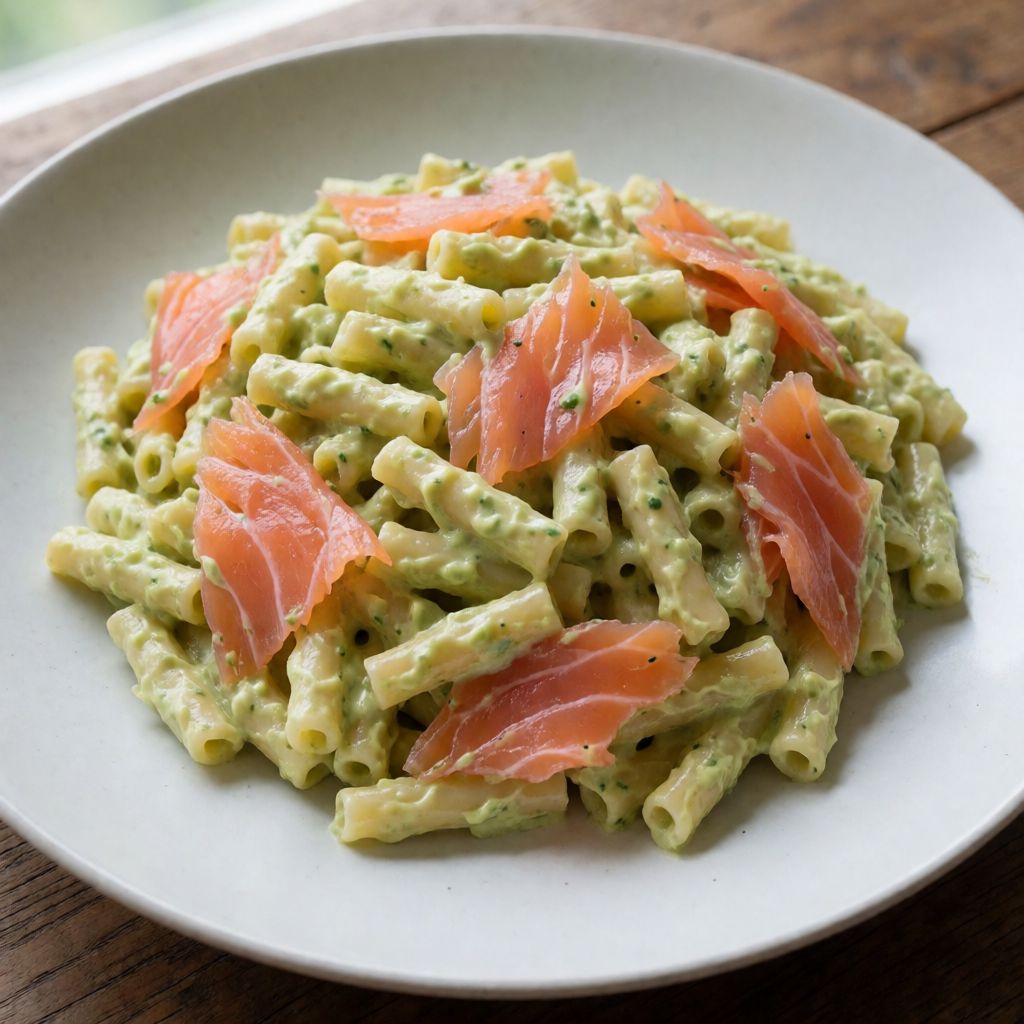
 AI photo
Cold Pasta with Avocado and Smoked Salmon
A refreshing cold pasta dish combining creamy avocado and smoked salmon, perfect for a light summer meal.
Labels are worked out automatically from the ingredients and can be wrong. Check the packaging if it matters to you.
Ingredients
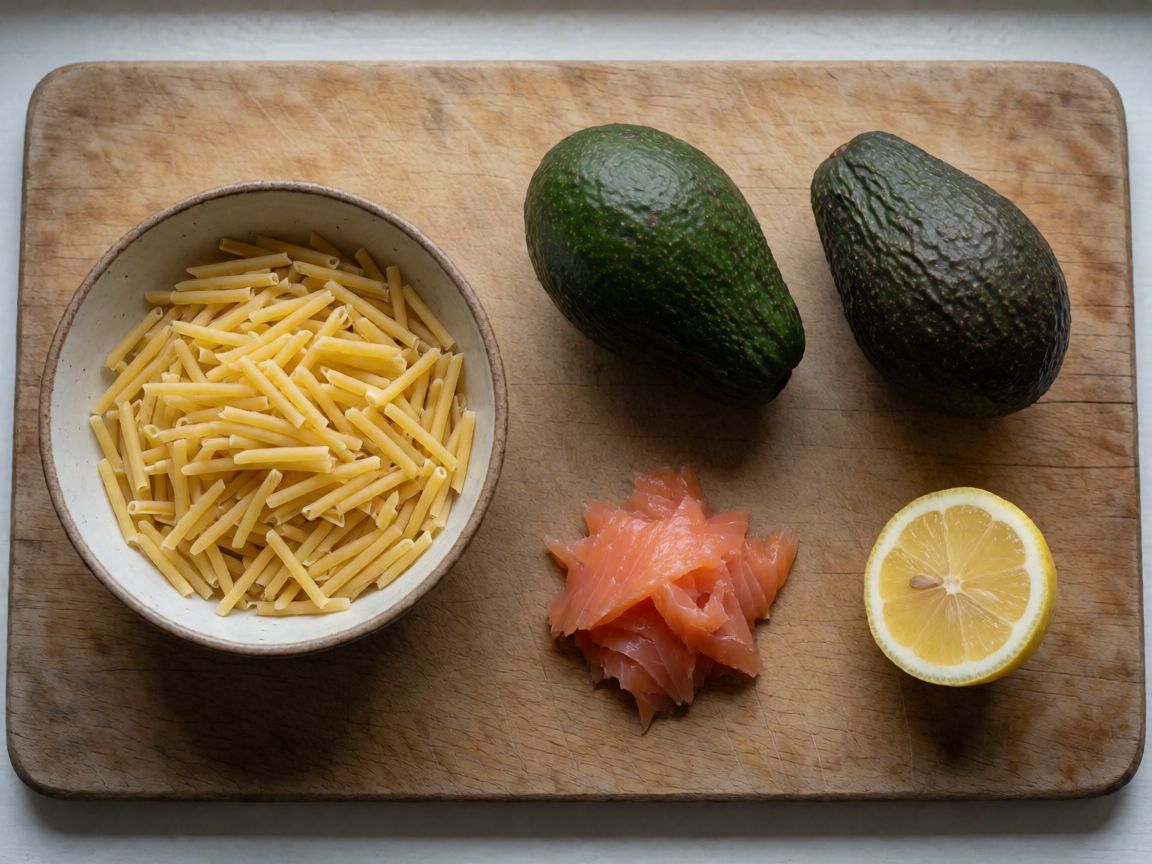
- 400 g Short pasta
- 2 pcs Avocado
- 200 g Smoked salmon
- 0.5 pcs Lemon
- Olive oil to taste
- Salt to taste






Steps
Bring a pot of water to the boil, season with salt and cook the pasta according to the time on the packet.
Rinse the pasta under cold running water to stop the cooking, then transfer it to a bowl.
Toss the pasta with olive oil, mix well and leave to cool.
Peel the avocado, remove the stone and cut it into large chunks.
Blend the avocado with a blender, add the juice of half a lemon and season with salt.
Blend for a few seconds until you get a smooth, even cream.
Spoon the avocado cream over the pasta, add the smoked salmon and mix well.
Serve the cold pasta with avocado and salmon.
This isn't an Italian primo with a simmered sauce, it's a cold-kitchen dish — cook the pasta once, then dress it like a salad and eat it at room-cool, not fridge-cold. What decides whether it works has nothing to do with the avocado being trendy or the salmon being expensive. It's temperature control at two points: when the pasta stops cooking, and when the avocado stops being green.
Start with the pasta. Every Italian grandmother will tell you never to rinse pasta — and she's right, for a hot dish with a sauce that needs the starchy, slightly rough surface to grip onto. Here the rule doesn't apply, because there's no clinging sauce, there's a cream you spoon on top. Pasta left to sit in its own heat keeps cooking from residual warmth even off the stove, and the starch on its surface keeps gelling as it cools — that's what welds plain cold pasta into one sticky lump in the bowl twenty minutes later. The cold tap does two jobs at once: it stops the cooking dead, and it washes the loose starch away so each piece stays separate. This is the one place where rinsing is correct, not careless.
Pasta: any short shape with ridges, curves or a hollow — fusilli, conchiglie, penne — works better than something smooth, because the avocado cream needs somewhere to sit rather than slide straight off onto the plate. 400 g for four people is a lighter hand than you'd use for a hot sauced dish, and that's deliberate — avocado and salmon are both rich, the pasta here is the carrier, not the main event. Salt the boiling water properly, not timidly: this is your only chance to season the pasta from the inside, since nothing penetrates it again once it's cooked and cooled. The water should taste like a mild sea, not like you've forgotten the salt entirely.
Avocado: buy it a few days ahead if you can, and let it ripen on the counter rather than in the fridge — cold slows ripening to a crawl. If you only have a hard one on the day, there's no real fix; a blender will just chop it, not cream it, because the starches haven't converted and the cell walls are still rigid. Two avocados for four people is generous enough that the cream coats rather than merely dots the pasta.
Lemon: the job is acid, not citrus flavour for its own sake. Half a lemon's worth of juice is the criterion — any clean, sharp acid without its own strong personality will do the same job, lime at a pinch, even a thin splash of white wine vinegar if that's what's in the cupboard. Skip balsamic — it'll fight the green colour and the delicate salmon.
Smoked salmon: what you want is the cold-smoked kind, cured with salt and smoke at low enough temperature that the flesh never actually cooks — that's why it folds into cold pasta with its silky, almost raw texture intact rather than flaking apart. That slow cold smoking is also why it isn't cheap: it's days of labour and temperature control, not minutes over a flame, a method British smokehouses built a whole trade economy around on the back of salmon runs, long before freezers made it possible to hold fish that long any other way. Hot-smoked salmon will work too, but it's firmer and flakes rather than folds — a different texture, not a mistake, just know which one you're buying. Fold it in only once the pasta has actually cooled, because its fat is delicate and warmth turns it oily and limp rather than keeping it clean.
Oil: olive oil here is a lubricant, not a flavour statement — its job is to coat the warm pasta so the pieces don't fuse as they cool, filling the gap left once you've rinsed away the starch. Any oil with no strong smell of its own does the job; a mild olive oil, a light rapeseed oil, whatever doesn't argue with the salmon.
Last thing: don't rush the cooling, and don't make the avocado cream an hour before you need it and leave it sitting uncovered — that's exactly the window in which it turns an unappetising brown ring at the edges. Make it close to serving, press some cling film straight onto the surface if it has to wait at all, and let the pasta actually cool before you bring the two together. None of this is hard, it just doesn't forgive being hurried.