
 AI photo
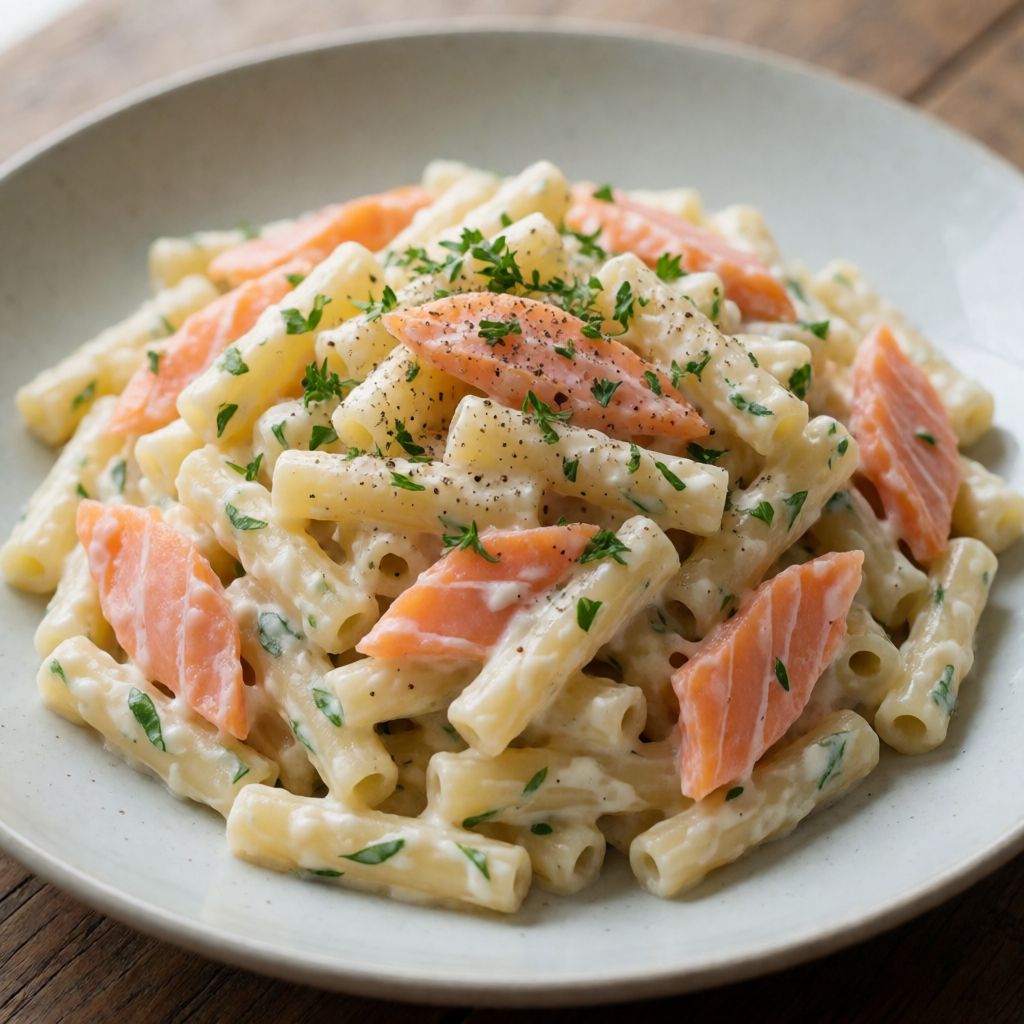
Cold Pasta with Salmon
A refreshing cold pasta salad with smoked salmon and creamy ricotta, flavoured with parsley and olive oil.
Labels are worked out automatically from the ingredients and can be wrong. Check the packaging if it matters to you.
Ingredients
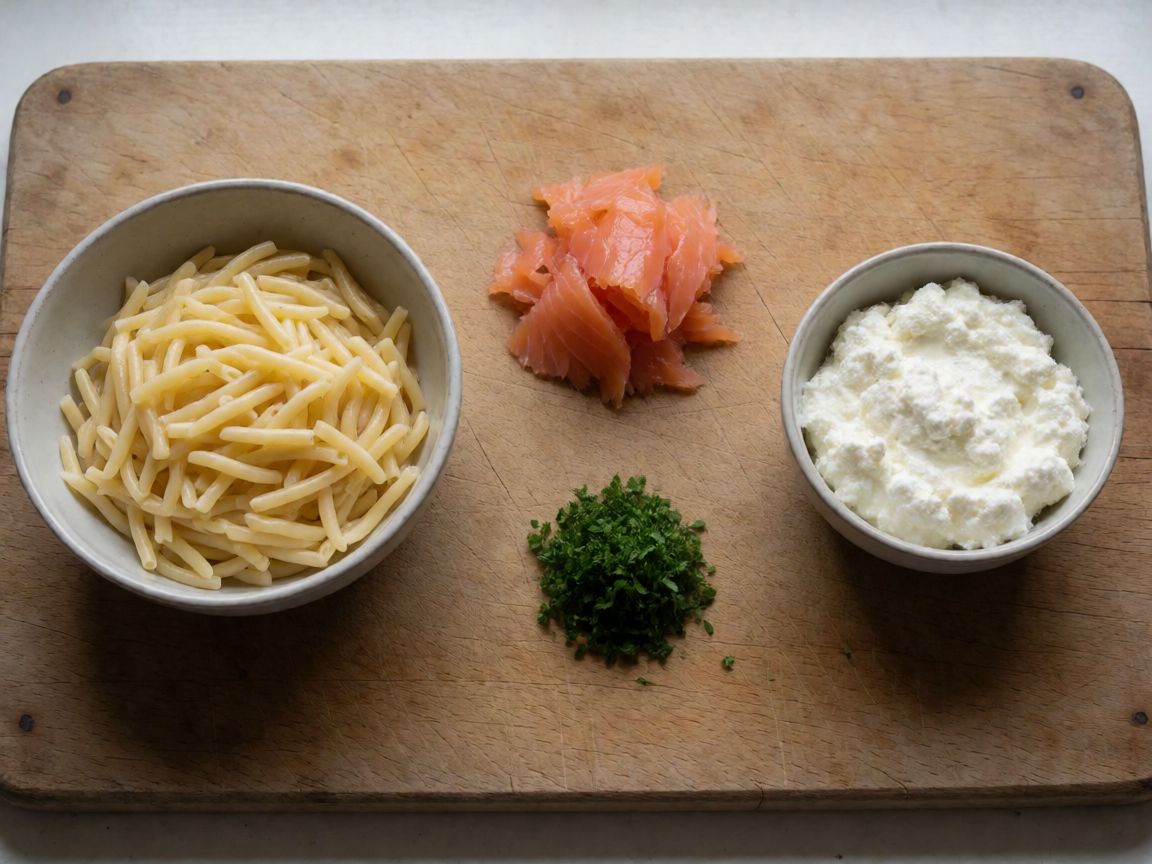
- 400 g Short pasta
- 300 g Smoked salmon
- 400 g Ricotta softened
- Parsley to taste
- Salt to taste
- Black pepper to taste
- Olive oil to taste







Steps
Prepare the dressing: cut the smoked salmon into strips, then chop it finer, and put it in a bowl with the softened ricotta.
10 minSeason with salt and pepper, add the olive oil and mix. Flavour with chopped parsley.
5 minBring a large pot of water to the boil, salt it, and cook the pasta according to the time on the packet.
12 minDrain the pasta when al dente, reserving a little of the cooking water; tip it into a bowl, add olive oil and leave to cool.
5 minLoosen the dressing with a spoonful of the reserved cooking water, add it to the pasta and mix well.
3 minServe immediately or store in the fridge.
This is a dish built backwards from how we usually think about pasta: everything that would normally happen in a hot pan happens cold, in a bowl, with a spoon. The "sauce" is never cooked — it's an emulsion of ricotta, smoked salmon, oil and a splash of the pasta's own starchy water, held together by fat and starch rather than by heat. That's the whole engineering problem of the dish, and once you see it, every step makes sense.
What decides whether it works isn't the salmon or the cheese — people assume the quality of those two decides everything, but the real fork in the road is earlier: whether you oil and cool the pasta before the dressing goes anywhere near it. Skip that, and the starch on the surface of the pasta re-sets as it cools, strand to strand, tube to tube, and you get a solid clump that no amount of dressing will separate afterwards. People then blame "that's just how pasta salad is" — no, it isn't; that's a fixable mistake, not a property of the dish.
The second fork is the spoonful of pasta water stirred into the ricotta-salmon mix before it meets the pasta. Ricotta on its own, straight from the tub, is thick and short — it will sit on the pasta in lumps rather than coat it. The starch suspended in that cloudy cooking water does the same job flour does in a béchamel: it lets fat and liquid hold hands instead of separating. Thin the dressing properly and it clings; skip it and you get wet clumps of cheese sitting next to dry pasta.
Short pasta is not a style choice here, it's structural. You want a shape with a surface the cold dressing can grip — ridges, tubes, shells — because a thick, unheated sauce won't cling to something smooth the way a hot, thin sauce clings to spaghetti. Penne, fusilli, conchiglie all do the job; tagliatelle will just slide the dressing off onto the plate.
Smoked salmon comes in two different animals wearing the same name. Cold-smoked salmon is cured, not cooked by heat — it stays silky and almost raw, which is why you can cut it into ribbons that keep their shape in the dressing. Hot-smoked salmon is actually cooked through by the smoke and breaks into flakes instead. Either works, but you'll get a different dish — ribbons running through the pasta versus flecks scattered in it — so know which one you're buying rather than being surprised later. And don't pay fillet prices if you don't need to: smoked salmon offcuts, sold cheaper at delis and supermarket counters precisely because they're not pretty enough for a platter, chop up exactly the same once they're in strips. You're destroying the shape anyway, so let the fishmonger keep the pretty bits for someone paying for looks.
Ricotta's job is to carry fat and a mild dairy taste without fighting the salmon's smoke and salt — so the criterion for a stand-in is a soft, fresh, mild curd cheese, nothing aged or sharp. Quark will do, but it's tangier, so taste before you add any extra salt — and go easy on salt generally, since smoked salmon arrives already cured and seasoned, you're adding on top of that, not starting from zero. Cottage cheese works if you blitz it smooth first — left lumpy, it reads as a different texture entirely. Whatever you use, make sure it's not sitting in a pool of its own whey in the tub; a watery cheese won't take up the oil, and the dressing stays thin instead of coating the pasta.
Parsley here is doing real work, not decoration: its raw, grassy bitterness cuts through the fat of the ricotta and oil the way a squeeze of acid would in a hot dish. Use it fresh — dried parsley has lost the oils that give it that smell, so it won't do the same job, it'll just be green specks with nothing behind them.
Olive oil goes in twice for two different reasons: once into the dressing for richness, once tossed with the drained pasta purely to stop the strands sealing to each other as they cool. For that second job, any oil with no strong smell of its own will do, since it's acting as a barrier, not a flavour. For the first, you're eating the oil raw with no heat to mellow it, so its taste is fully present in the finished dish — use an olive oil you'd be happy to taste off a spoon, or, if that feels like an extravagance, a cold-pressed rapeseed oil, common on UK shelves, which brings its own faint nuttiness and is just as happy eaten raw.
One honest point about the hob: a big pot of water at a proper rolling boil, salted until it tastes like the sea, matters more here than for a hot pasta dish, because there's no simmering sauce afterwards to rescue underdone pasta — al dente has to be right the first time, tested by biting a piece, not by trusting the packet clock, which is only ever a starting guess. And give the finished bowl an hour in the fridge before you eat it if you can — the dressing needs time to actually settle into the pasta rather than sit on top of it. Patience isn't politeness here, it's the last ingredient, and it costs nothing but waiting.