
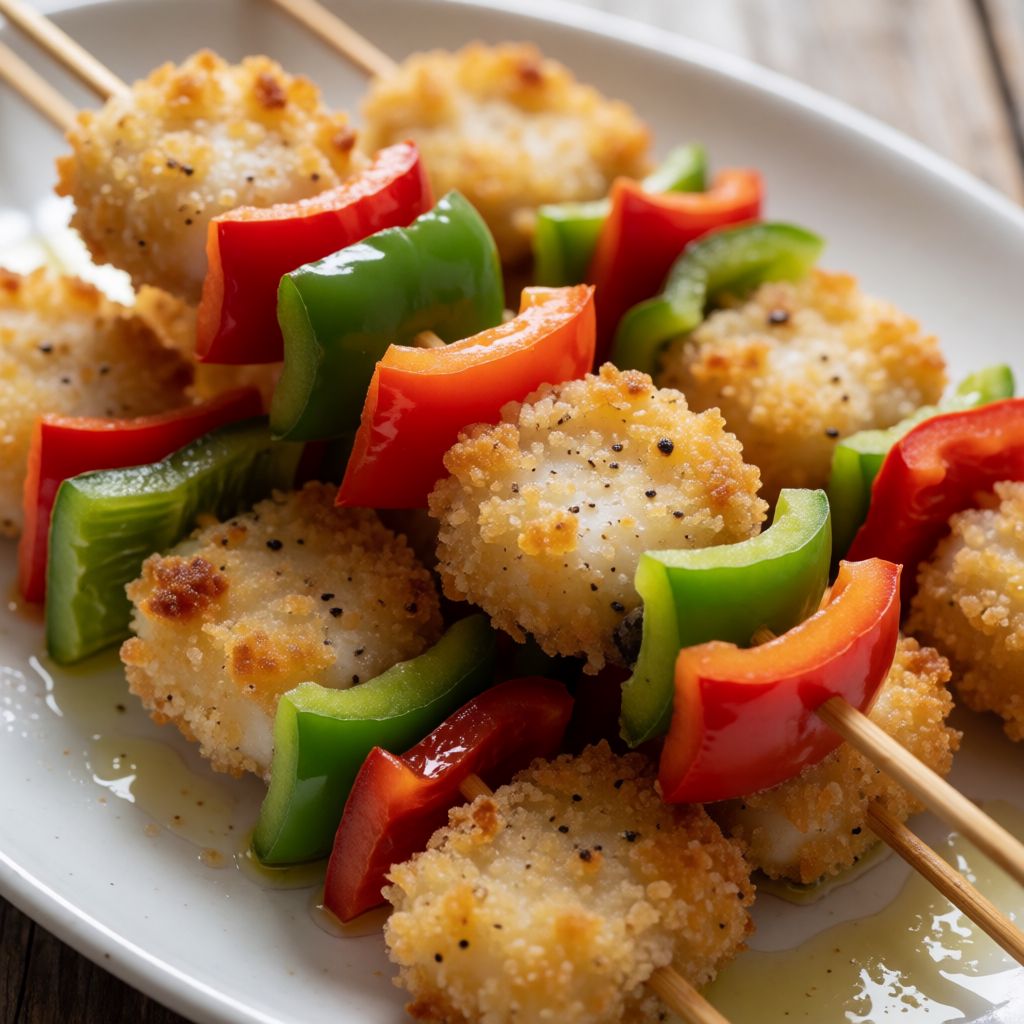
 AI photo
Crispy Cuttlefish Skewers
Crispy baked cuttlefish and pepper skewers coated in a herby breadcrumb crust.
Labels are worked out automatically from the ingredients and can be wrong. Check the packaging if it matters to you.
Ingredients
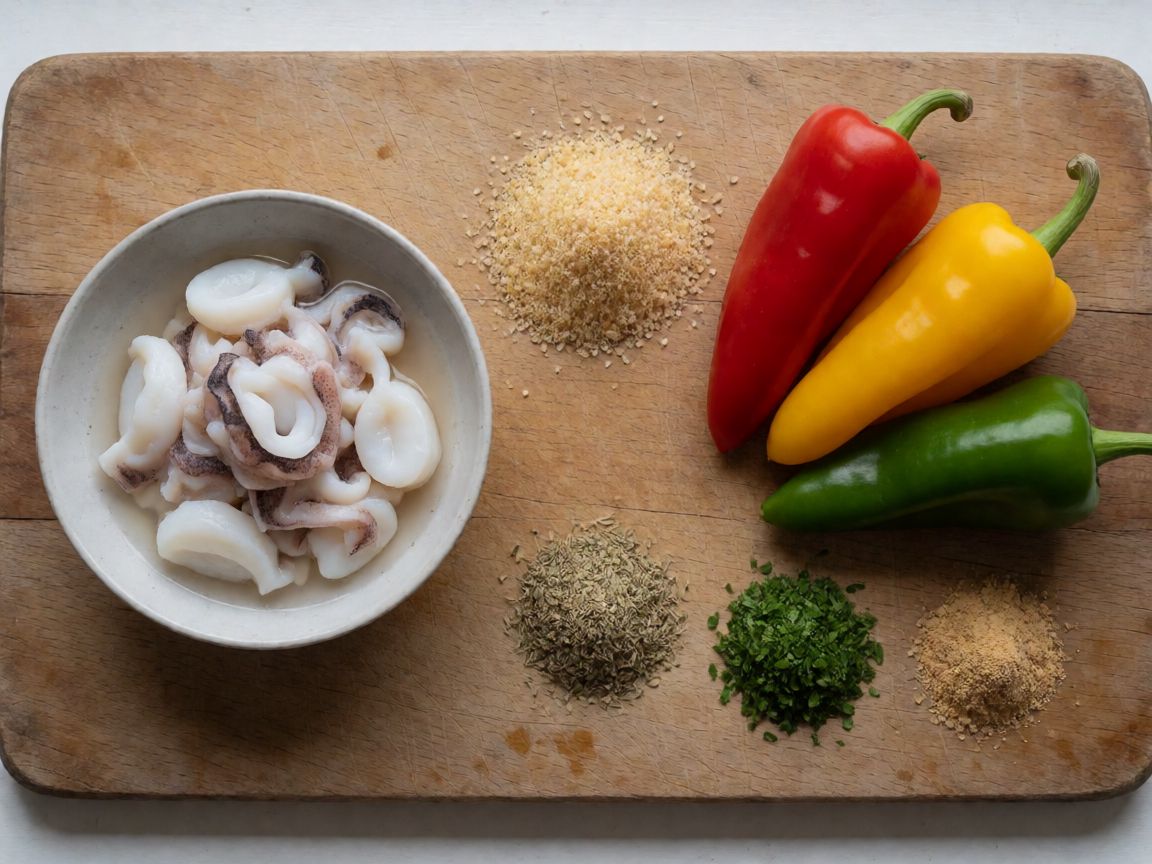
- 1 kg Cuttlefish
- Olive Oil to taste
- 3 pcs Bell Pepper
- Salt to taste
- Black Pepper to taste
- 3-4 tbsp Breadcrumbs dried
- 1 tbsp Marjoram
- 1 tbsp Parsley
- 1 tsp Ground Ginger dried








Steps
Wash and dry the bell peppers, remove the seeds and white membranes, then cut into pieces.
Thread onto skewers, alternating cuttlefish with pepper, and place on a parchment-lined baking tray.
Mix the breadcrumbs, ground ginger, salt, pepper, parsley and marjoram.
Add the olive oil to the mixture and stir well.
Spread the coating over the skewers and bake at 180°C. Doneness: 63°C at the thickest point.
28 min
This is squid's tougher cousin threaded on a stick with pepper, dressed in a herby crumb, and put in the oven instead of a frying pan. It reads like a kebab and behaves like neither meat nor fish — cuttlefish is almost pure muscle, no fat to render, no collagen to melt down into softness over time. That single fact decides everything else about how you treat it.
What decides whether it works is speed. Cuttlefish flesh is short, tightly packed fibre full of water. Heat makes those fibres contract — fast at first, then slower — and every bit of contraction squeezes water out. Keep the heat going too long and you get a dry, rubbery peg of protein with a nice crumb sitting uselessly on top. Some say cuttlefish "needs long cooking to tenderise" — no, because there's no tough connective tissue here for long heat to break down, unlike a Sunday roast joint that rewards hours in the oven. Cuttlefish has the opposite logic: it's tender raw, and your job is only to firm it up without squeezing it dry. That's why the recipe gives you a core temperature, 63°C, rather than a clock. The oven timer tells you when to start checking, not when to stop cooking.
Cuttlefish itself: buy it already cleaned if you can, frozen rings or tubes are fine here and actually convenient, since you're cutting it into skewer-sized pieces anyway. If you're cleaning it yourself, the one thing that matters is drying it properly afterwards — pat it with paper, don't rush this. Wet flesh means the crumb coating slides off into a paste instead of clinging and crisping. Some kitchens avoid washing cuttlefish at all, worried that water toughens it — no, washing doesn't touch the texture, overcooking does; dry it well after, that's the only condition.
Salt goes into the crumb mix, not directly onto the raw flesh ahead of time. Salt pulls water out by osmosis, and cuttlefish gives up water easily — salt it too early and you've started the drying-out process before it's anywhere near the oven. Put the salt in the coating and it does its job on contact, at cooking time, where you want it.
Breadcrumbs need to be properly dry — stale bread blitzed and left out, or a packet of dried crumbs, not fresh soft ones. Fresh crumb carries moisture of its own, and moisture plus the olive oil in the mix is exactly how you end up with a soggy cap instead of a crisp one. Panko works the same way and crisps even more reliably if you want insurance against a lukewarm oven. The criterion is dryness, nothing more mystical than that.
Olive oil here is a binder and a crisping agent — it coats the crumb so it browns rather than scorches, and carries the herbs' flavour onto the surface. Any oil with no smell of its own that can take oven heat will do the same job; you lose the faint fruitiness olive oil gives, nothing else.
Marjoram and parsley are the gentle, green notes; ground ginger is the one unexpected thing here, a warm, slightly peppery top note that cuts through the oiliness of the crumb and the mild sweetness of the squid — don't skip it thinking it's decorative, it's doing real work against blandness. If you haven't got marjoram, oregano sits in the same family and covers for it; ground ginger has no real substitute that gives the same lift, so either use it or accept a flatter, more one-note crust.
Bell pepper on the skewer isn't just there for colour between the chunks of cuttlefish — it spaces the pieces out so the hot air in your domestic oven, which has far less raw power than a kazan's open fire, can actually get at every side of the crumb instead of just the top. It also softens and gives up a little sugar as it cooks, which balances the plainness of the squid. Cut the pieces close to the size of your cuttlefish chunks, so one side of the skewer isn't done while the other's still firm — matching sizes is the whole trick, not a rule for its own sake.