
 AI photo
Eggs in Tomato Sauce
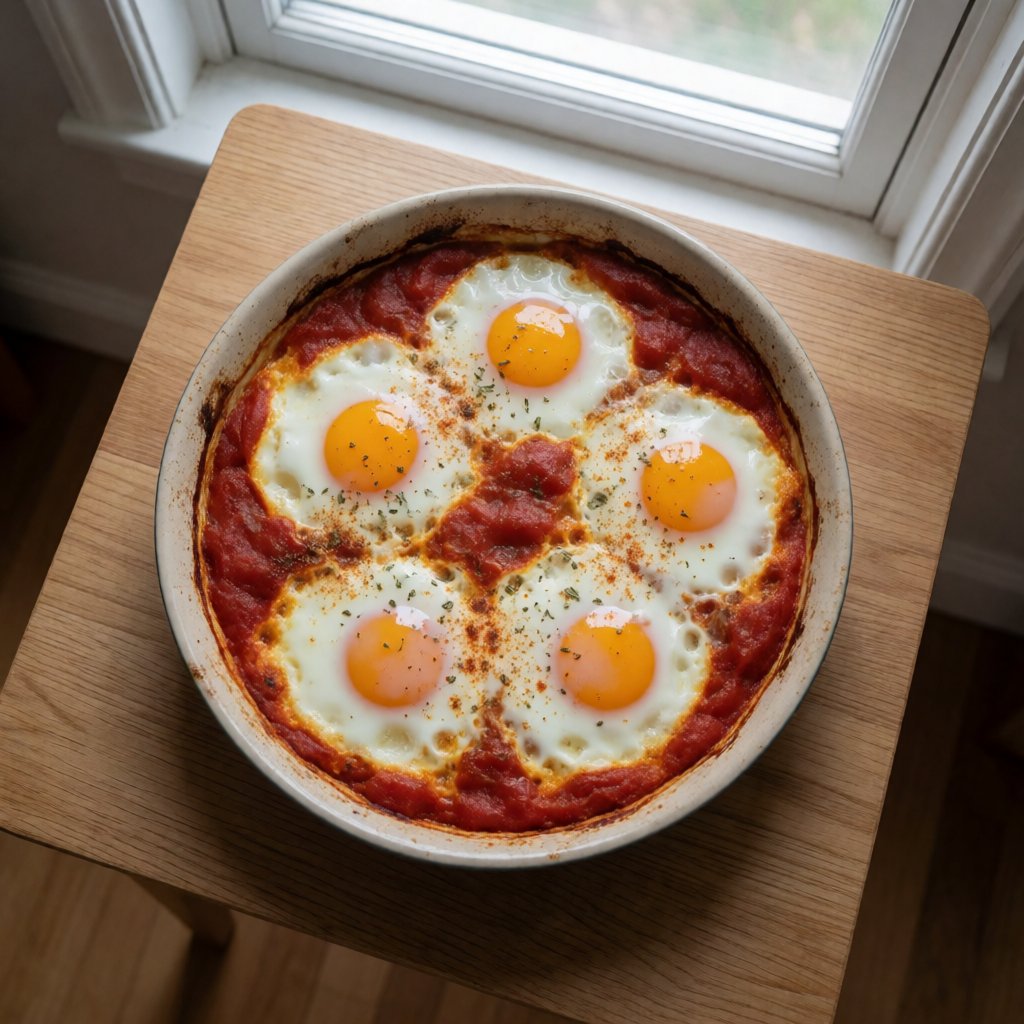
A simple, comforting dish of eggs baked in a spiced tomato sauce until the whites are set and yolks soft.
Labels are worked out automatically from the ingredients and can be wrong. Check the packaging if it matters to you.
Ingredients







Steps
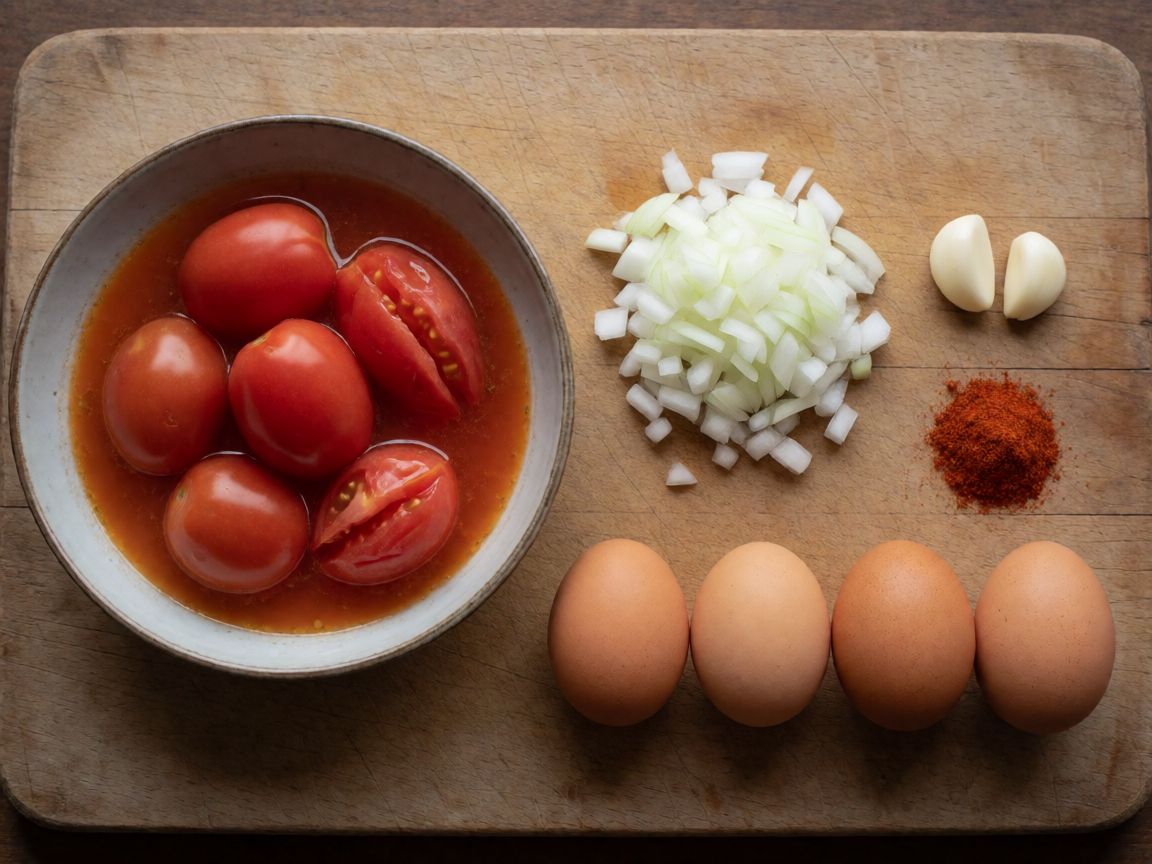
Finely chop the onion and mix it with the tomatoes, garlic, oil and spices in a baking dish.
Put the dish in the oven at 200°C for 15 minutes, until the sauce is hot.
15 minMake 4 hollows in the sauce, crack in the eggs, and bake for another 10 minutes until the whites are set and the yolks are still soft.
10 minRemove the dish from the oven.
This is baked eggs sitting in a pool of tomato stew — not shakshuka exactly, but a close cousin, the same idea stripped to two moves: make a hot sauce, lower eggs into it. One dish, into the oven twice, out once.
What decides whether it works is reduction and the hollow. In that first fifteen minutes the tomatoes and onion have to lose enough water that the sauce goes from watery to something with body — thick enough to hold an egg rather than let it sink and poach loose in a puddle. The hollow you press into the sauce before cracking the egg in isn't fuss, it's function: without it the white spreads thin across the whole surface and never gathers enough in one place to set properly in the middle.
Some say a tomato sauce needs a fried onion to taste right. Not this one — the onion goes in raw-chopped, straight from the board, and softens over the full twenty-five minutes of oven heat the same way it would in a slow braise, just more gently. Frying it first buys you nothing here except another pan to wash, in a dish whose whole point is that there's only one.
Doneness is where the white and the yolk disagree with each other. The white goes from glassy and slipping about to matte and holding its shape; the yolk stays loose enough to run the moment you break it. That's the clock. Ten minutes is where you start looking, not where you stop.
Tomatoes in their own juice means tinned, and that's not a shortcut, it's the sensible choice. Fresh tomatoes only work here if they're the kind you get in July, heavy and sweet; the pale, watery ones from a British supermarket in February will never reduce properly in fifteen minutes, they'll just thin the sauce further. Tins solved exactly this problem a century ago — consistent acid, consistent sweetness, no weather involved — which is why they became the default rather than a compromise.
The onion is finely chopped for a reason that has nothing to do with taste and everything to do with surface area: smaller pieces meet the heat on more sides and soften inside the time you've got. Cut it thick and leave it at 200°C for fifteen minutes and it'll still have bite — people tend to blame the oven for that, but it's the knife.
The oil isn't there to fry anything, since nothing gets fried. It's there to carry fat through a sauce that's otherwise lean, because paprika's colour and flavour are fat-soluble — bloomed in oil it tastes rounded, stirred into a dry or watery mix it tastes like dust. The criterion for which oil: anything with no smell of its own, so sunflower or a light vegetable oil, not a heavy extra-virgin olive oil, which has its own opinion and will argue with the paprika instead of carrying it. Garlic goes in raw too, and mellows across the full twenty-five minutes exactly as the onion does — no pre-frying needed, same logic, same patience doing the work instead of a hot pan.
For paprika, look for sweet and mild — it's there for colour and a gentle background warmth, not heat. If you only have a hot chilli powder, use less of it and expect a sharper dish; if you reach for smoked paprika, know you're making something deeper and a little different, not a straight swap.
Four eggs for two people is generous rather than exact — two each, cracked straight from the fridge, which is fine, since they go into a sauce that's already hot and finish gently in the oven. The business of bringing eggs to room temperature matters for frying in a bare pan, where a cold egg can crack from the shock of the metal; it doesn't apply here, the sauce is the buffer.
None of this needs a kazan. A wide, shallow ovenproof dish does the job, or an oven-safe frying pan if that's what's in the cupboard — wide enough that four hollows stay four hollows and don't run together into one. And you won't need a lid or a plate standing in for one: the oven is already a closed box of heat, which is the one advantage this method has over doing the same dish on the hob, where you'd be covering the pan to get the same effect.
·