
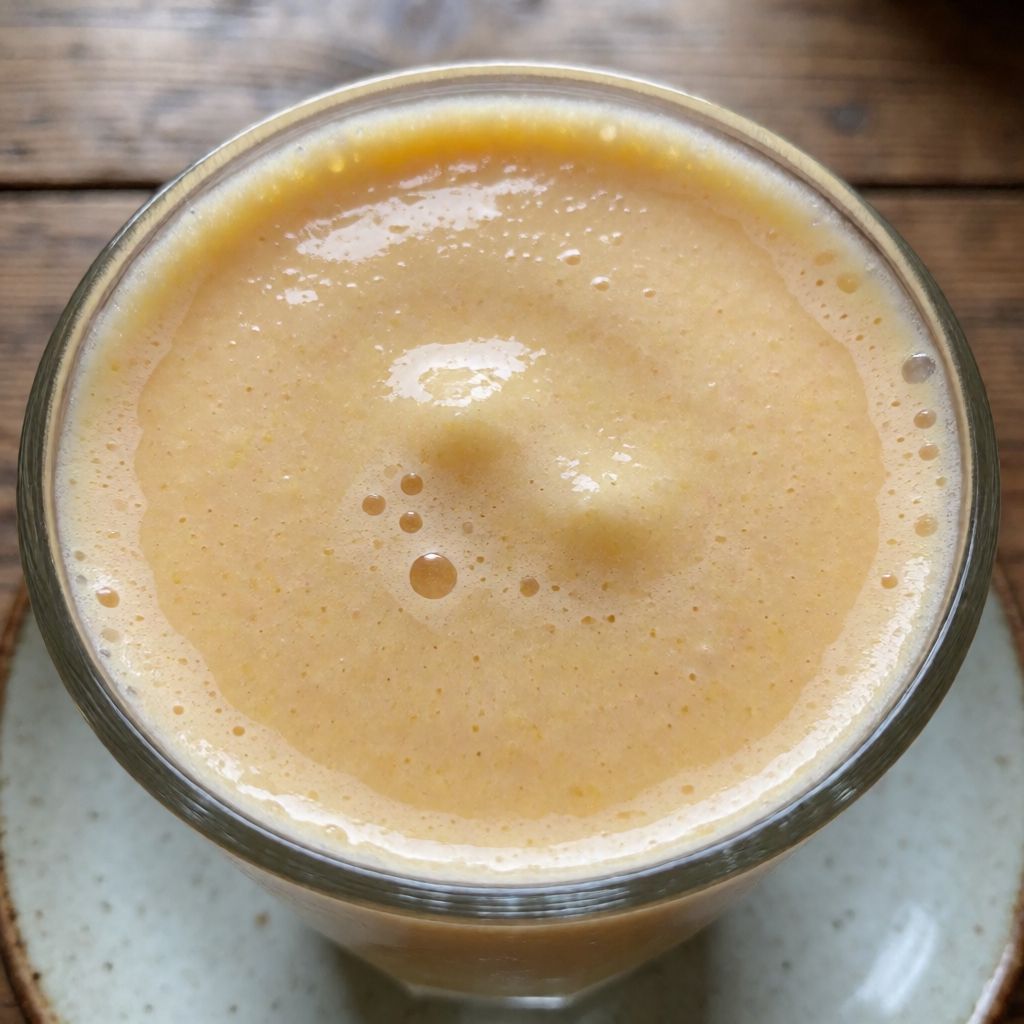
 AI photo
Fruit Smoothie
A quick fruit smoothie with banana, apricot and peach, blended with ice for a refreshing homemade drink.
Labels are worked out automatically from the ingredients and can be wrong. Check the packaging if it matters to you.
Ingredients
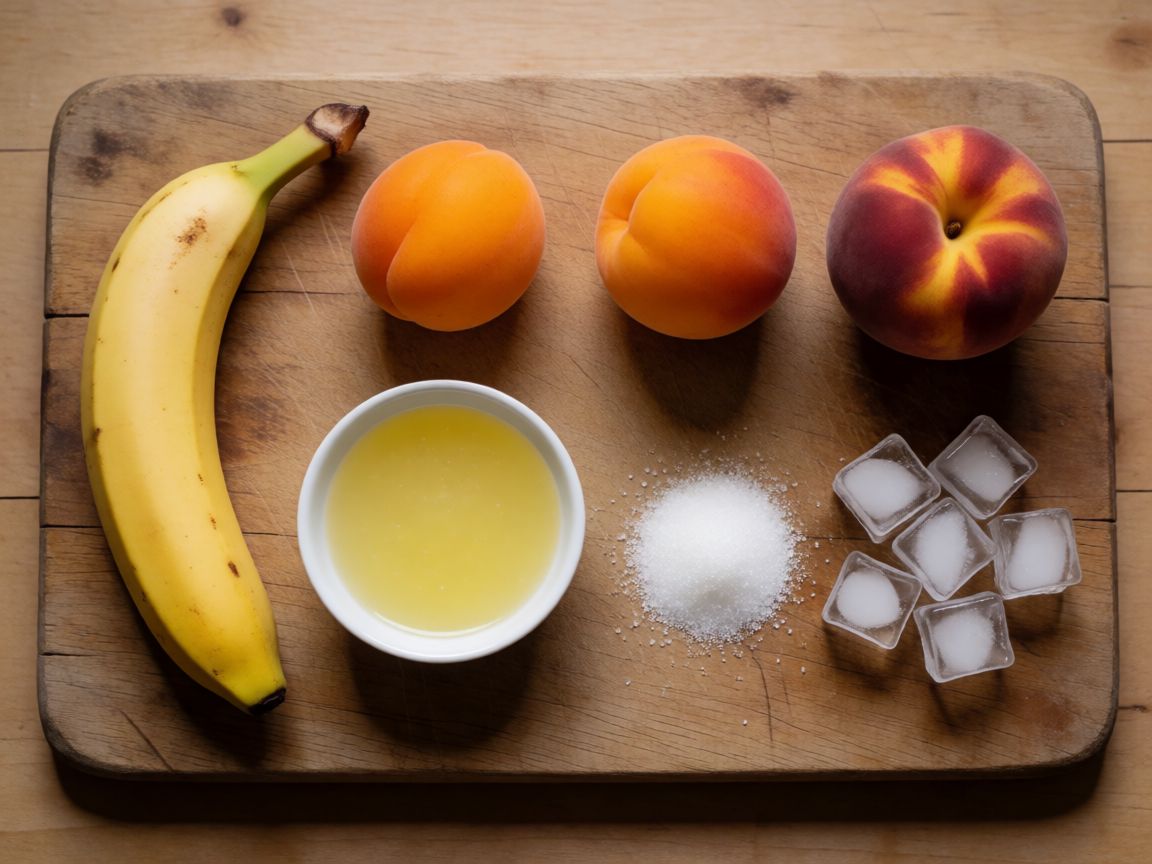
- 1 pcs Banana
- 2 pcs Apricot
- 2 pcs Peach
- 8 tbsp Water
- Lemon juice to taste
- 2 tsp Caster sugar
- 6-8 pcs Ice cubes







Steps
Choose seasonal fruits: apricots, peaches and banana.
Wash and peel the fruits.
Put all the ingredients into a blender and blend until smooth.
If needed, add a little more cold water to reach the desired consistency.
This is not a recipe so much as a ratio: soft fruit, a little acid, a little sweet, and enough liquid to let the blades through. Banana carries the body — its starch and pectin are what turn fruit pulp into something you can drink rather than chew. Apricot and peach bring the perfume and the sourness that stops the drink tasting like bananas with extra steps.
What decides whether it works is not the blender, it's the fruit on your worktop before it ever goes in. A hard peach bought cold from a supermarket shelf has no juice to give and no sweetness to balance the lemon — you'll taste woolly flesh and sourness, nothing else. Ripeness is the whole recipe here; everything after that is mechanics.
Some say a smoothie needs yoghurt or milk to feel "creamy" — no, that's a milkshake wearing a smoothie's name. A ripe banana already does the creaminess job on its own, through its own starch; dairy is a different drink with a different job.
The lemon juice isn't there for taste alone — cut peach and apricot flesh start browning within minutes, the same way an apple does, and that browning tastes as flat as it looks. Acid stalls it. Add it as you cut, not as an afterthought once everything's already in the blender.
Banana: look for skin starting to speckle brown, not pure yellow — that's when the starch has converted to sugar and the flesh will purée without a gritty, chalky edge. One banana, about 120g peeled, is enough for two here; it's structural, not the star of the drink.
Apricot and peach: in the UK these arrive imported for much of the year, picked firm so they survive the journey, and they often go soft on the windowsill without ever going sweet — ripening properly needs warmth and time the fruit didn't get on the tree. Buy a few days ahead and wait until each one gives slightly under your thumb and smells of itself from across the kitchen; that smell is the real test, not the date on the punnet. If you can't find ripe ones, frozen stone fruit is a fair substitute — it's usually frozen commercially at peak ripeness, and a blender doesn't care that it arrived frozen rather than fresh.
Water: eight tablespoons, roughly 120ml, isn't there to dilute flavour — it's there so the blades have something to push against. Drop a blender onto solid fruit with no liquid and it just spins uselessly around a dense lump at the bottom; add liquid gradually, only as much as it takes to get everything actually circulating.
Lemon juice and sugar: treat both as corrections, not fixed ingredients. Lemon fights the browning and sharpens a flavour that blending otherwise flattens; sugar balances whatever sourness the fruit itself didn't ripen out of. Taste after blending, not before — fruit varies too much week to week to trust any teaspoon count blindly, including the one in front of you.
Ice: six to eight cubes chill the drink without watering it down the way extra water would, but cold also mutes sweetness on the tongue — which is partly why the sugar is there at all. Add it at the end, and blend only until no fleck of peach skin or banana string is visible and the mixture holds on a spoon rather than pooling into liquid at the edges — that's doneness here, not a stopwatch.
Patience belongs on this ingredient list too, oddly enough. The real work in this drink happened days earlier on the worktop, waiting for fruit to actually ripen. Rush that part and no amount of blending buys it back.