
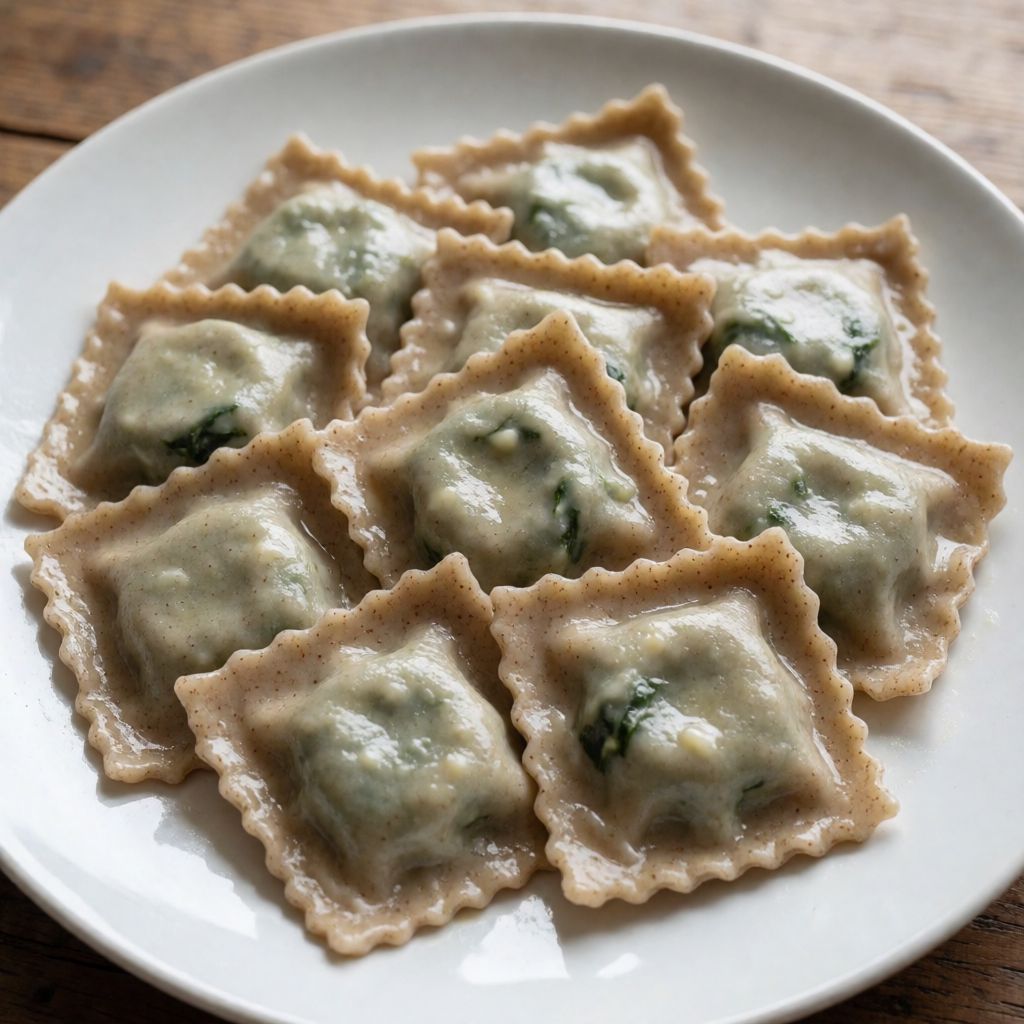
 AI photo
Gluten-Free Ravioli: A Simple Everyday Recipe
A simple everyday recipe for homemade gluten-free ravioli filled with ricotta and spinach, made with buckwheat flour.
Labels are worked out automatically from the ingredients and can be wrong. Check the packaging if it matters to you.
Ingredients
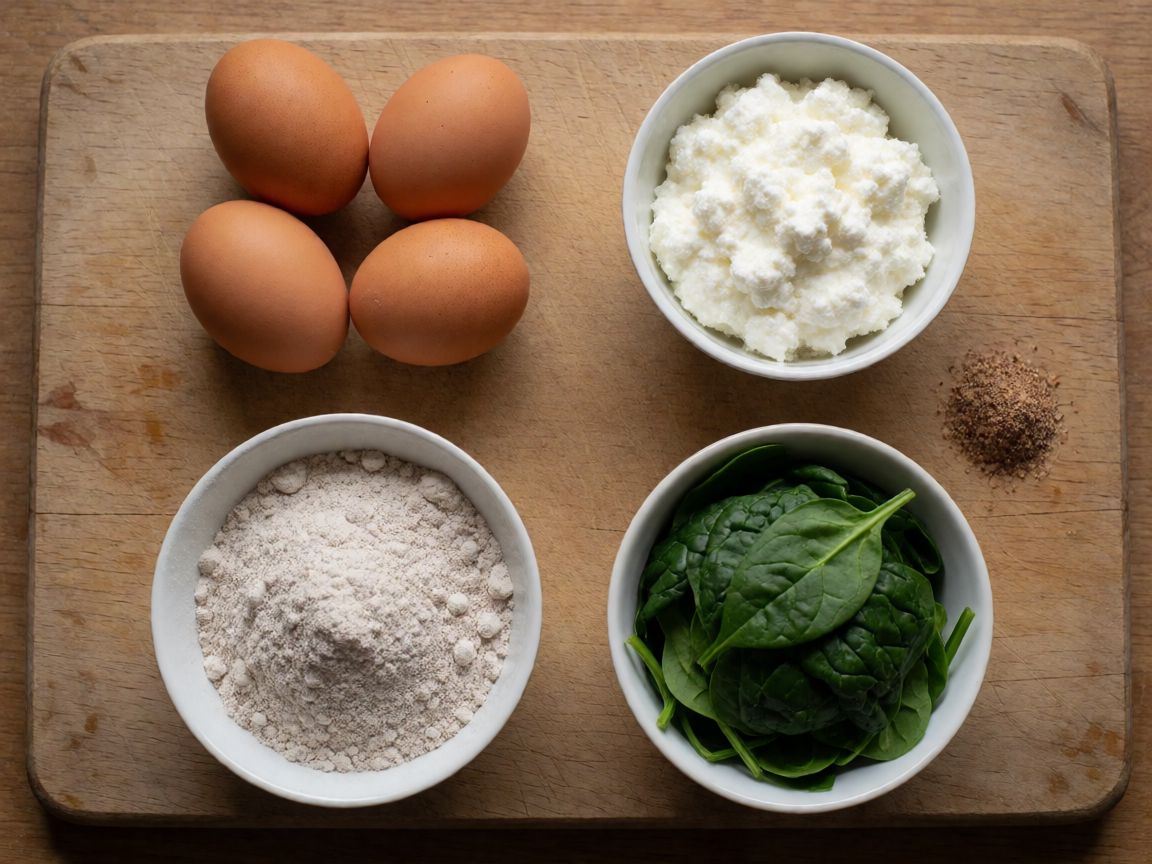







Steps
Pile the gluten-free flour on a work surface, make a well in the centre for the 4 eggs, add a pinch of salt and start kneading the dough.
Depending on the flour blend, add a little water to make the dough easier to work with.
Shape a smooth, soft dough, place in a bowl, cover with cling film and leave in the fridge for about 30 minutes.
30 minDust the work surface with flour, break off pieces of dough and roll them out with a rolling pin to a thickness of 1-2 mm.
Using a ravioli mould or round biscuit cutters, cut out bases for the filling.
Boil the spinach, squeeze out excess water, chop finely and mix with the ricotta, nutmeg and salt.
Place a little filling on the bases, press the edges of the ravioli together firmly and seal with a fork around the edge.
Lightly dust the ravioli with flour so they don't stick together while cooking.
Bring water to the boil, add salt and cook the ravioli for a few minutes.
Taste one ravioli to check the dough is cooked, then drain in a colander.
This is ravioli built on a dough that has no gluten in it — buckwheat flour instead of wheat. That single fact runs the whole recipe, because gluten is what normally holds pasta together, lets you stretch it thin and keeps it intact in boiling water. Take it away, and the dough has to be held together by something else entirely: egg protein and starch, nothing more. So some say gluten-free pasta is just "the same recipe, different flour" — no, it isn't, because the physics of the dough changes completely, and every step after kneading is really a workaround for that missing stretch.
What decides whether this works is not kneading skill, it's patience with fragility. Buckwheat dough doesn't develop elasticity the way wheat dough does, however long you work it — there's no gluten network to build. So the rest in the fridge isn't there to "relax the gluten" like in classic pasta; there's none to relax. It's there so the flour finishes drinking in the water and egg, evenly, so the dough stops being crumbly at the edges and starts behaving like one piece instead of wet sand. Skip that rest and you'll fight the dough at the rolling pin, patching cracks instead of rolling sheets.
Eggs are doing a job gluten normally does — binding the dough into something that holds a shape instead of crumbling. Use eggs at room temperature, standard medium ones; cold eggs make the dough stiffen unevenly as you knead, and you'll end up adding water to fix a problem the egg should have solved on its own.
Buckwheat flour is the whole point here, not a substitution for wheat but its own tradition — in the mountain valleys of northern Italy, wheat barely grew, buckwheat did, and pasta got made from what the land actually gave people, not from what a recipe book demanded. If you can't find pure buckwheat flour, any proper gluten-free blend with some starch in it (rice, maize, potato) will behave similarly enough — just know that blends vary a lot, which is exactly why step two tells you to add water "depending on the flour." There's no fixed amount because there's no fixed flour; you're reading the dough, not a measuring cup.
Water is there only to finish what the egg started — enough to bring the crumbs into one mass, no more. Add it in small amounts and stop the moment the dough stops crumbling; too much and you've thinned out the only binding you've got, and the dough turns sticky and unworkable instead of soft.
Ricotta should be the firm kind, well drained — the stuff that holds its shape on a spoon, not the watery version sold loose in some supermarkets. Wet ricotta will seep moisture into the filling and from there into the dough seam, softening exactly the spot you need to stay sealed. If ricotta isn't to hand, any fresh, mild curd cheese low in whey — cottage cheese pressed through a sieve, for instance — does the same structural job.
Spinach gets boiled, then squeezed — and that squeeze is not optional theatre, it's defence against the same enemy as the ricotta choice: water in the filling. Spinach holds an enormous amount of liquid after cooking; skip the squeeze and you're effectively making a filling that leaks the moment it hits heat, however well you sealed the edges. Frozen spinach works fine and is sometimes easier, precisely because it's already been through that cycle once — just squeeze it harder, it'll surprise you how much more water comes out.
Nutmeg isn't decoration, it's there because ricotta and spinach are both rich and slightly flat on their own, and a little warmth cuts through that richness rather than sitting on top of it as flavour. Any warm, slightly bitter spice does the same work in a pinch — a touch of white pepper, say — but nutmeg is the one that doesn't fight with dairy, which is why it's stayed the standard pairing rather than some rule carved in stone.
On a British hob, in an ordinary flat, none of this needs a kazan or a pasta machine — a wide pan of well-salted boiling water and a rolling pin are enough, though if your arms tire rolling buckwheat dough by hand (it takes more push than wheat dough, having less give), a hand-crank pasta machine will save you effort, not improve the result. Dust your board generously and don't let rolled sheets sit uncovered while you fill the rest — gluten-free dough skins over and cracks faster than wheat dough does, another small defect with an obvious cause.