
 AI photo
Lemon and Garlic Parsley Seasoning
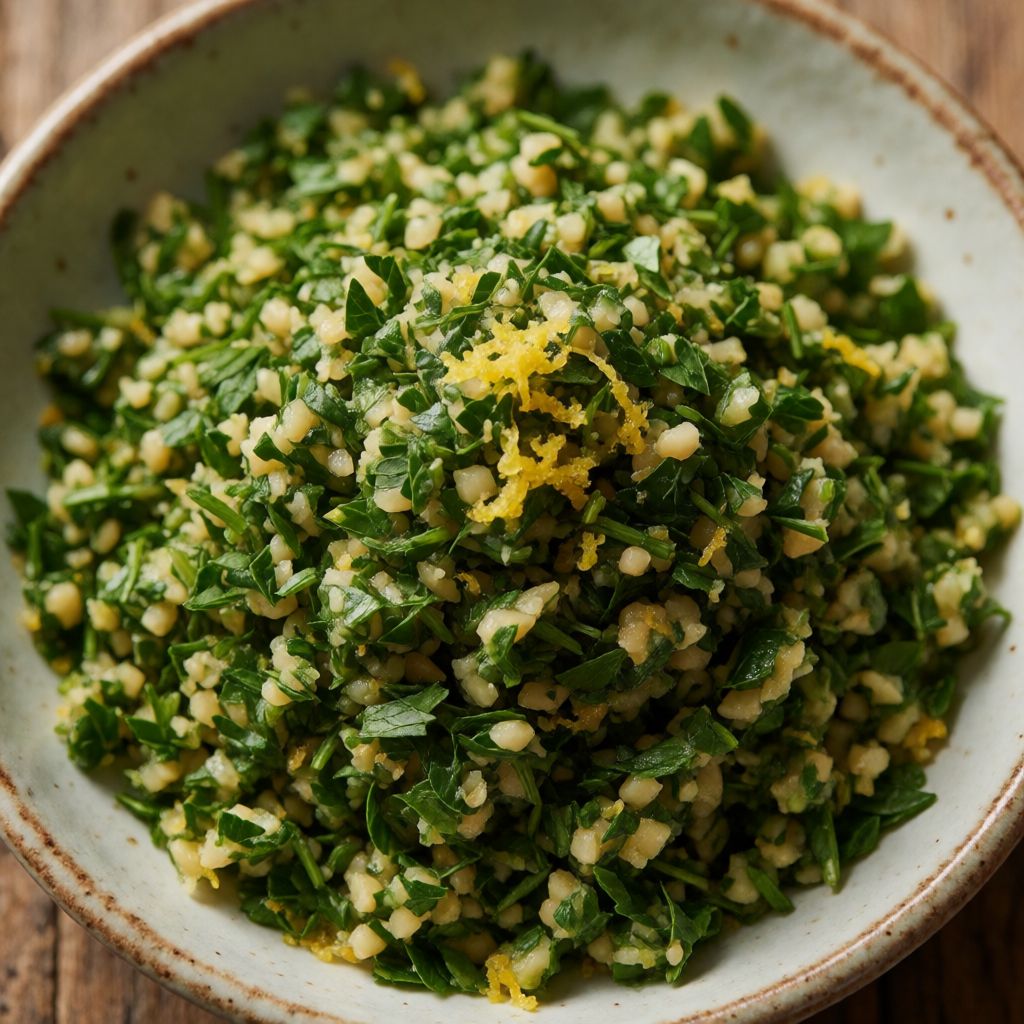
A simple fresh seasoning of parsley, garlic and lemon zest, finely chopped to sprinkle over dishes.
Labels are worked out automatically from the ingredients and can be wrong. Check the packaging if it matters to you.
Ingredients



Steps
Chop the parsley, garlic and finely grated lemon zest together on a large chopping board until everything is very finely chopped.
5 minTransfer to a bowl and use as a sprinkle.
This isn't cooked at all — zero minutes on the hob, on purpose — so it isn't really a dish, it's a weapon you aim at something else: the Sunday roast, a piece of fish, boiled potatoes that need waking up. Parsley, garlic, lemon zest, all chopped together raw. What decides if it works is simple: fine enough, fresh enough, used soon enough.
The reason the three go onto the board together rather than one at a time isn't fashion, it's chemistry doing your work for you. Every cut releases a bit of juice and a bit of oil — garlic's sulphur compounds, the lemon peel's citrus oil, parsley's own green bitterness — and when the knife keeps slicing through all three at once, those juices rub into each other on contact. The garlic gets coated and buffered before it has time to turn harsh on its own; the zest oil gets caught in the damp parsley instead of drying out on the board. Chop them separately and you get three flat flavours sitting next to each other. Chop them together and you get one sharp, round one.
Some say a food processor gives you a finer, more even result. No — because a spinning blade doesn't cut, it bruises. It presses the cell walls before it breaks them, which pushes the juice out early and turns your bright green sprinkle into a wet, dark, slightly cooked-tasting paste before it's gone anywhere near heat. A knife shears. It opens cells only where it passes, so the parsley stays dry-looking and separate, each fleck still itself, and the flavour releases where you want it — on the plate, in the mouth — not on the board ten minutes earlier.
On the garlic: two cloves for this much parsley is a seasoning, not a punch. Pick cloves that are firm with no green shoot showing inside — that shoot is the clove trying to grow, and it carries a bitter, slightly soapy edge you don't want raw. If garlic genuinely isn't to hand, there's no honest substitute for this job; garlic powder has lost the raw bite that's the whole reason it's in there, so it's not a swap, it's a different, flatter seasoning. Better to make less and keep it real.
On the lemon: it asks for organic zest specifically because you're eating the skin, not the juice. Conventionally grown citrus is routinely coated and treated on the outside to survive shipping and sitting on shelves, and that residue sits exactly where you're about to grate. Some say a hot-water scrub before zesting sorts this out — no, because the coating is built to shed water, and whatever's soaked into the peel itself doesn't come off with a rinse. For juice it barely matters; for zest, where the whole point is skin, it does. If you can't get an unwaxed or organic lemon, use the zest of an unsprayed orange instead and accept a rounder, less sharp result — don't use a waxed lemon and hope.
On the parsley: 300ml is a loose, lightly packed measure before chopping — in an ordinary UK kitchen that's roughly one full supermarket bunch with the thickest stems pulled out. Flat-leaf, if you have the choice, chops cleaner and tastes stronger without the slight bitterness curly parsley carries; curly works, it just forgives you less. Pull the leaves from the stems first — the stems are fibrous, they won't break down under a knife, they'll just drag everything else around and tear instead of slice, which is the real cause of a raggedy, uneven chop that people blame on a blunt knife when actually it's the stems still in there.
This mix has a name you'll meet if you look further — gremolata — and it comes out of Milanese kitchens where it sat on ossobuco, a slow braised dish that's rich with bone marrow and long-cooked meat. The logic was economic, not ceremonial: you've already used the lemon's juice for something else in the kitchen that day, so the zest is there, free, going spare; garlic and parsley are the cheapest things in the larder. Put them together raw and you've got a way to cut fat and richness with acid and bite, at no extra cost, no extra heat, no extra pan. That's exactly the job it does over a Sunday roast or roast potatoes here — the same cutting-through-richness logic as mint sauce with lamb, just built from different cheap things that happened to be on hand.
Patience in this one isn't about waiting, it's about staying at the board. Five minutes of actual chopping, by hand, is longer than it feels when you're doing it with a knife instead of a machine, and the temptation is always to rush it and call it done early with half the parsley still in recognisable leaves. Don't. The whole dish is the chopping — there's no oven, no pan, no second stage to fix it later.
It doesn't keep. Cut garlic exposed to air keeps reacting — that's the same chemistry that makes it sharp and useful raw turning against you over hours, going harsher and slightly metallic by the next day. Make it the day you'll use it, ideally the hour you'll use it, and sprinkle it straight on while the plate's still warm underneath — that contrast of hot food, cold bright raw garnish, is the entire reason the cook time reads zero.