
 AI photo
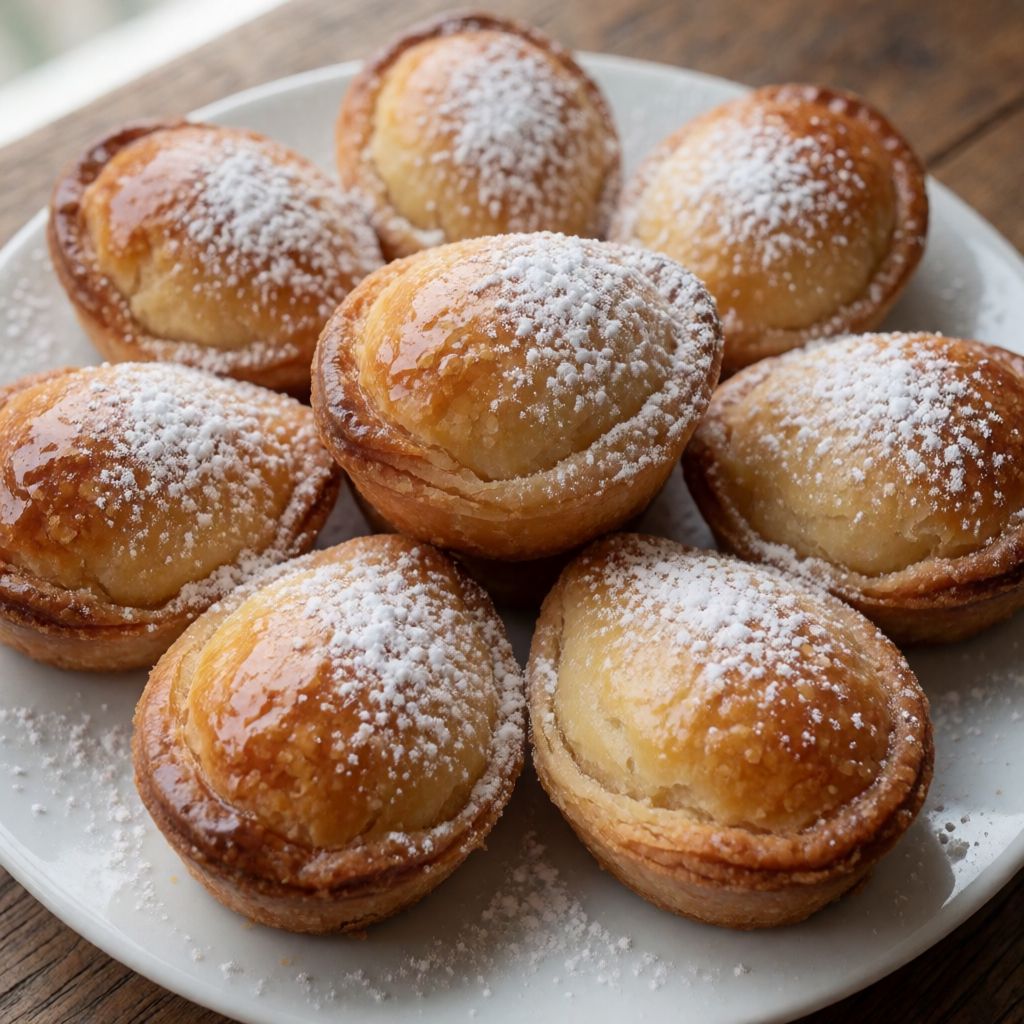
Marzipan Chocolate Almond Pastries
Buttery pastry parcels filled with marzipan and nougat, dipped in dark chocolate.
Labels are worked out automatically from the ingredients and can be wrong. Check the packaging if it matters to you.
Ingredients
- 40 g icing sugar
- 1 pinch salt
- 150 g plain flour
- 100 g butter cold
- 1 pcs eggs
- 40 g icing sugar
- 20 g egg whites
- 30 g almonds blanched and finely chopped
- 125 g marzipan
- 50 g nougat
- 150 g dark chocolate





Steps
Mix the icing sugar, salt and flour in a bowl or food processor.
Cut the butter into small cubes and rub into the flour until it resembles breadcrumbs.
Quickly mix in the egg, adding half first, and check if more is needed to bring the dough into a firm ball.
Chill the dough in the fridge for 30 minutes.
30 minMix the icing sugar with the egg white, add the finely chopped almonds, and gradually work into the marzipan until smooth and easy to shape into balls.
Roll out the dough to 3 mm and cut circles 8 cm in diameter.
Shape the marzipan mixture into round balls, make a small indent in each, fill with nougat, then place the ball on a dough circle, nougat side down.
Wet your hands with cold water and bring three edges of the dough up around the balls, pressing them firmly together.
Bake in a preheated fan oven at 180°C for 10-12 minutes, or until lightly golden.
11 minRemove from the oven and let cool on a wire rack.
Dip the Napoleon hats in melted dark chocolate before serving.
This is a tricorn-shaped pastry — a "Napoleon hat" — built on a contradiction: the outside is short, cold, crumbly pâte sucrée, and the inside is a soft, dense ball of marzipan with a pocket of nougat hidden in the middle. You fold three flaps of dough up around the filling, pinch them into three points, and what comes out of the oven is meant to look like a little tricorn hat, not a bun. Whether it works depends on two things: how cold your dough stays before it meets the oven, and whether you resist overfilling the ball with nougat before you seal it.
Nobody actually needs this to be shaped like a hat. The three-point fold is a sealing mechanism, not decoration — three pinches hold a round filling far better than trying to crimp a full circle shut, which tends to split along one seam under heat as the marzipan softens and pushes outward. So the "hat" shape is what good sealing looks like; the charm is a side effect of the engineering.
The pastry itself is a rub-in dough, the same logic as a Sunday-roast shortcrust: cold butter cut into flour until it's crumb-sized, not melted in, so the fat stays in separate flakes instead of greasing the flour evenly. That's what gives you shortness rather than toughness. Some say you can skip the chill and roll straight away — no, because warm butter has already started to blend into the flour by the time you roll it, and a dough that's lost its distinct fat pockets won't hold a crisp bite after baking; it bakes biscuity-soft instead of short.
Flour and icing sugar, not caster, go in first — icing sugar dissolves into the fat without leaving grit, where caster sugar would sit as hard crystals and could tear the dough as you roll it. The pinch of salt isn't for saltiness; it sharpens the sweetness of everything stacked on top later, the same reason you'd salt a custard.
Butter has to be cold, cubed small, and rubbed in with fingertips or a processor pulse, never melted or softened. The target is "breadcrumbs" — flour-coated flakes of fat, each one still distinct. This is what makes the baked case snap rather than bend; melt the butter in and you get a dense, cakey biscuit instead, because the flour has nothing to keep it apart.
The egg binds the crumb into a dough, but you add it in two goes and stop as soon as it comes together into a firm ball — not sticky, not dry and cracking. Extra egg here is the commonest way to ruin shortcrust: too wet and the gluten develops as you knead it smooth, and smooth dough is tough dough once baked. If you're short an egg, a tablespoon of cold water does the same binding job, just without the richness or the golden tinge.
The 30-minute chill isn't optional patience for its own sake, though it is patience — it lets the gluten that did form relax, and it re-firms any butter that warmed in your hands, so the dough rolls thin without shrinking back or tearing when you cut your 8 cm circles. Skip it and you'll be rerolling scraps that fight you at every pass.
Marzipan is almond paste bulked with sugar — buy it rather than make it unless you own a reliable source of ground almonds and patience for grinding past the oily stage. You're not eating it raw here, you're reworking it: icing sugar and egg white loosen it, and the extra chopped blanched almonds (blanched so no papery skin toughens the bite) give it enough body to hold a ball shape without slumping. If your marzipan is old and crumbly rather than pliable, warm it briefly in your hands before you start — cold marzipan cracks instead of smoothing.
Nougat is the surprise in the middle, so a small, firm cube is plenty — this isn't a filling you build volume with, because too much nougat melts, expands, and is exactly what will split your three-point seal in the oven. If nougat isn't to hand, a firm caramel or a square of marzipan-compatible fudge does the same job: something chewy and distinct against the smoother marzipan around it.
Dark chocolate for dipping should have no added milk fat competing with the cocoa — if yours seizes or goes grainy when melted, it's been overheated or had water introduced; melt it gently, off direct heat, in short bursts if you're using a microwave, since a British kitchen rarely runs to a proper bain-marie setup but a bowl over a pan of not-quite-simmering water does the same work. A fan oven at 180°C is specified because fan ovens run efficiently hot and even; if yours isn't fanned, push it up by about 20°C and watch for colour rather than trusting the clock, since "golden" is the real finish line, not eleven minutes on a timer.