
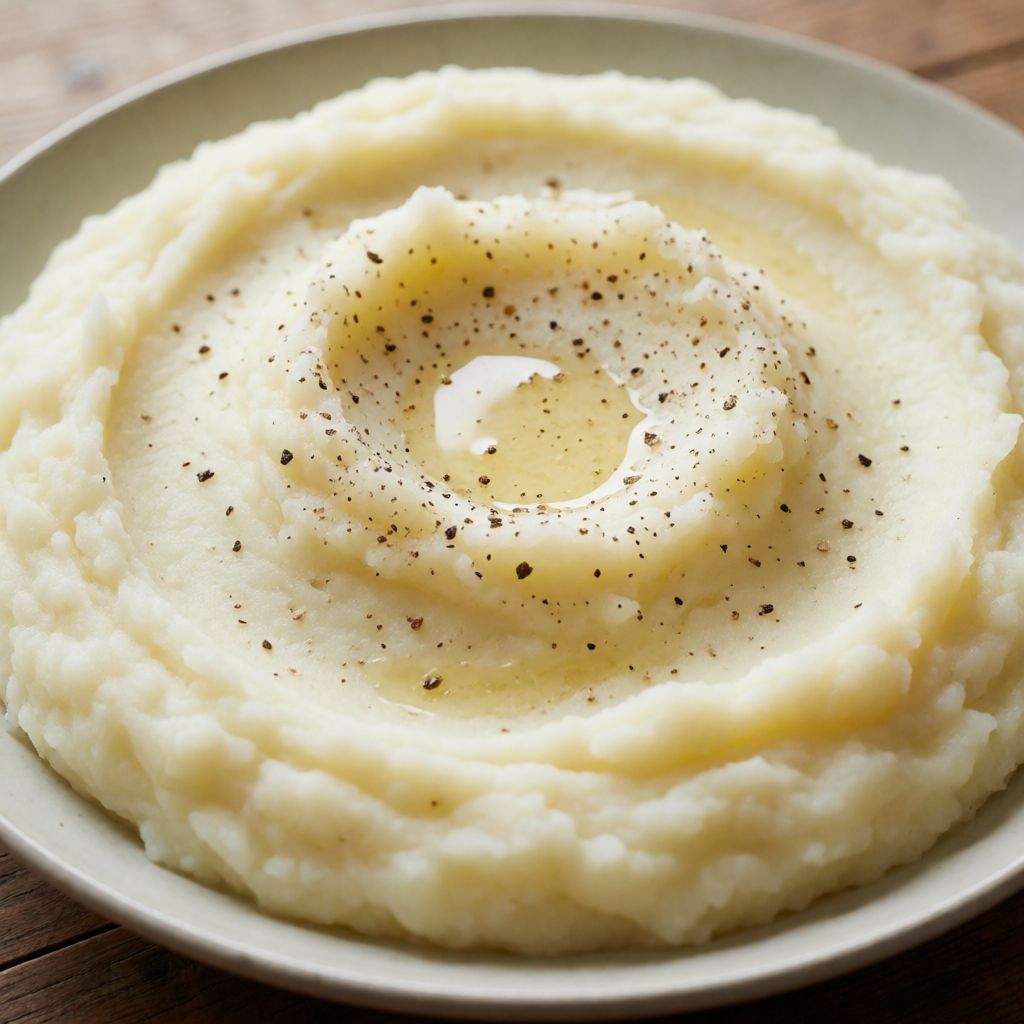
 AI photo
Mashed Potato with Cauliflower
A comforting mash of potatoes and cauliflower, enriched with butter and milk.
Labels are worked out automatically from the ingredients and can be wrong. Check the packaging if it matters to you.
Ingredients
- 1 kg Potatoes
- 500 g Cauliflower
- 75 g Butter
- 150 ml Milk
- Salt to taste
- Black Pepper freshly ground






Steps
Boil the potatoes and cauliflower in a pan of unsalted water.
2 minMeanwhile, warm the milk in a small saucepan.
3 minWhen the potatoes are tender, drain the pan.
1 minMash the potatoes and cauliflower with the butter until smooth.
Whip the mash on low speed, gradually adding the warm milk, until light and creamy.
3 minSeason with salt and pepper to taste.
1 min
This is a mash where half of the usual potato has been swapped for something white, bumpy, and far less fattening — cauliflower. The trick that decides whether it works isn't the ratio, it's the water. Boil both together in a pan, unsalted, and you let the potato starch soften without a chemical nudge in either direction. Some say always salt the water when you boil vegetables — no, not here, because salt firms up cell walls through the pectin in them, and the last thing you want from cauliflower in this dish is firmness. You want it to give completely, the moment the fork goes in, so it disappears into the potato instead of sitting there as separate flecks of cabbage-family stubbornness.
The second thing that decides it is temperature matching, not heat as such. The milk goes in warm, not cold. Think of making tea: pour cold milk straight from the fridge into a hot cup and you get a shock, a momentary curdled look before it settles. Potato starch does something similar — cold liquid added to hot mash makes it seize and go grainy in patches. Warm milk slides in without a fight, and the butter, already soft from the heat of the vegetables, coats the starch granules instead of clumping. That coating is what gives you the sheen and the "light and creamy" the recipe asks for, rather than a stodgy wall.
On the potatoes themselves: you want a floury variety, not a waxy one. Maris Piper and King Edward, both easy to find in any UK supermarket, break down readily because they're high in starch and relatively low in water — that's what gives you fluff rather than resistance. A waxy potato like Charlotte will hold its shape stubbornly even under a fork, and if you force it through a masher anyway, the cells rupture unevenly and you get gluey patches sitting next to firm lumps, the worst of both outcomes. If floury isn't what's in the bag, know what you're working against and mash more gently, in shorter strokes, to avoid provoking that gumminess.
Cauliflower: pick one with a tight, pale, unblemished head, heavy for its size. A light head usually means it's gone pithy inside, more air than vegetable, and it'll cook down to almost nothing useful. Grey speckling on the florets is early mould — not dangerous in tiny amounts, but it means the head's been sitting, and sitting cauliflower loses sweetness and gains a sulphurous edge that no amount of butter disguises. Economically, this dish makes sense because cauliflower is usually cheaper than potato by weight and lighter in calories — the kind of frugal swap that's been standard in British kitchens for generations, the same instinct behind bulking mash with swede or carrot. It's not health theatre, it's arithmetic that happens to taste good.
Butter: use unsalted if you can, because you're seasoning at the very end and salted butter takes that decision out of your hands before you've even tasted anything. Any fat that's soft and neutral-smelling at the point you add it will do roughly the same job — the point is coating, not flavour, though obviously butter gives you both. Ghee works if you want a slightly nuttier result; a neutral margarine works if dairy's an issue, though you'll lose some of the richness that butter's milk solids bring.
Milk: whole milk gives you the fat content that helps the emulsion hold; semi-skimmed will still work, just thinner, closer to a looser mash than a rich one. If you want it richer still, swap in single cream for some or all of it — the same warming rule applies regardless of what you pour. A plain, unsweetened oat milk is the nearest dairy-free stand-in, though it won't carry quite the same body.
One honest note on the hob: a domestic pan isn't a kazan and doesn't need to be. Boiling potato and cauliflower together just needs enough water to cover and enough patience to let both go properly tender rather than rushing them out early because the clock says they should be done. That patience is the real ingredient here — the kind that shows in the texture, not in anything you can point to on a timer.
Pepper, freshly ground, at the very end: pre-ground pepper loses its aromatic oils fast, and what's left is mostly heat without the scent that makes black pepper worth using in the first place. Grind it over the bowl just before serving and you'll notice the difference immediately, no faith required.