
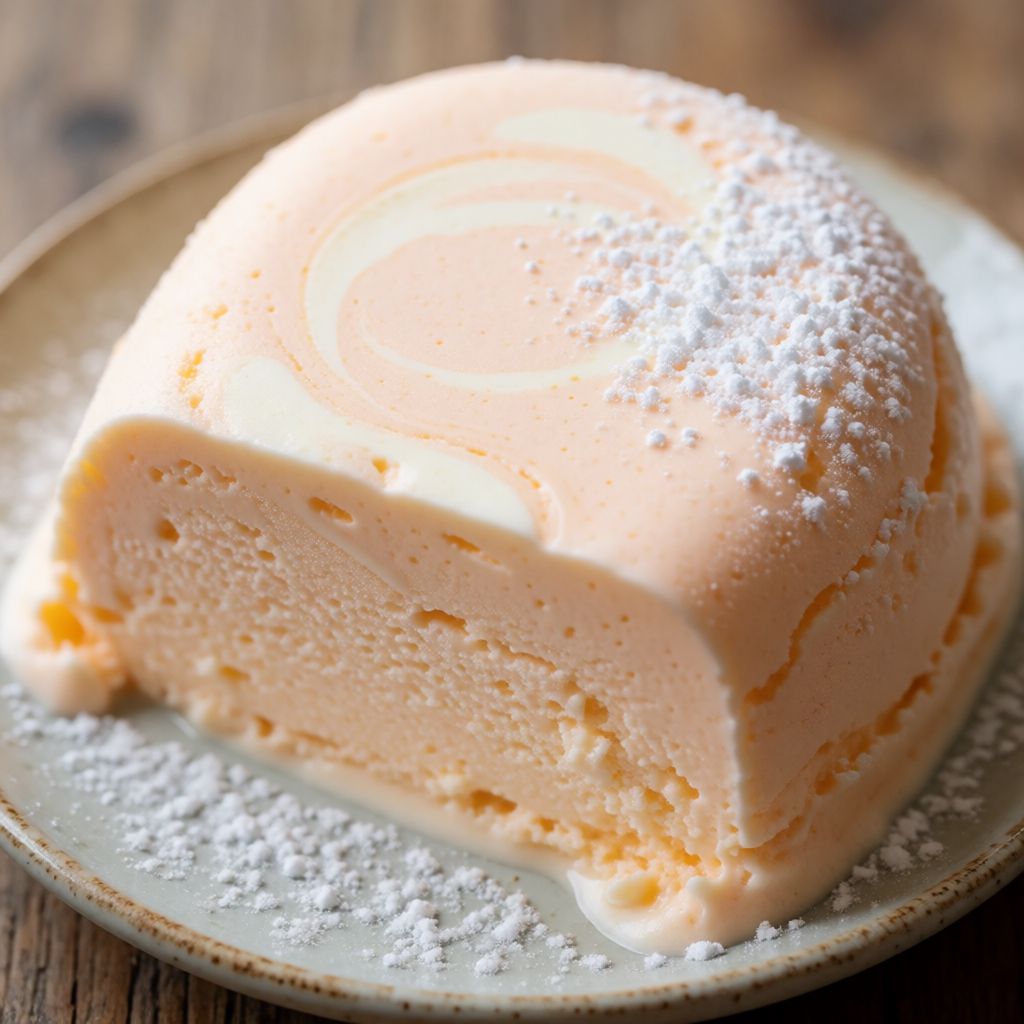
 AI photo
Melon Semifreddo
A chilled, creamy semifreddo made with fresh melon and a touch of lemon juice.
Labels are worked out automatically from the ingredients and can be wrong. Check the packaging if it matters to you.
Ingredients
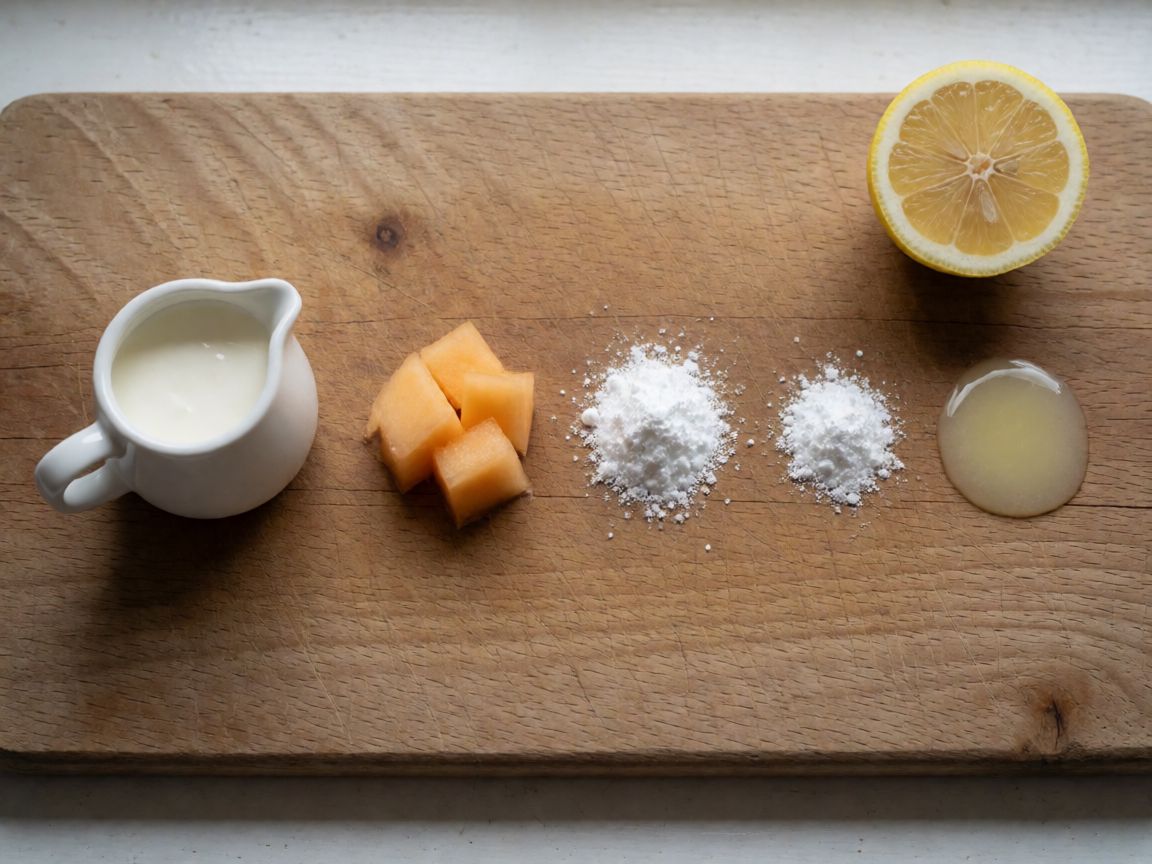
- 250 ml Double cream
- 200 g Melon
- 70 g Icing sugar
- 15 g Gelatine
- 0.5 pcs Lemon juice juice of half a lemon





Steps
Cut the melon, remove the skin and take out the amount of flesh needed. Transfer it to a blender and blitz it together with the lemon juice.
Soak the gelatine in cold water for at least 10 minutes, so it softens.
10 minSet aside 3-4 tablespoons of the cream, then whip the rest with the icing sugar to soft peaks.
Carefully fold the pureed melon flesh into the whipped cream, taking care not to knock out the air.
Warm the reserved cream and dissolve the well-squeezed gelatine in it.
Let it cool slightly, then fold the gelatine mixture into the rest of the cream.
Take a loaf tin, line it with cling film and pour in the mixture.
Cover the tin with foil and place it in the fridge overnight, for about 8-10 hours.
480 minCarefully turn the dessert out of the tin, using the cling film to help, and transfer the semifreddo onto a serving plate.
Decorate, if you like, with thin slices of melon and fresh mint leaves, then serve.
Forget the name's promise of a freezer. Semifreddo means half-cold, not half-frozen-solid-with-ice-crystals. It never goes into the freezer at all — the fridge does the whole job. What holds it together isn't ice, it's air and a little gelatine, set at a temperature where a spoon goes in without fighting it. That's the whole trick of this dish, and it's why you treat it gently rather than cold.
What decides whether it works: the melon, and how carefully you fold. There's no cooking step here to concentrate flavour or boil off water — the melon goes in raw, pureed, as it is. So if it isn't properly ripe and sweet-smelling, nothing downstream rescues it. No amount of icing sugar replaces a melon that was picked too early.
The folding matters just as much. You whip cream to trap air; that air is structure, not decoration. Beat it past soft peaks, or stir the melon in roughly, and you knock the air back out — what should be light turns into something dense and wet, closer to a cold soup with pretensions.
Some call this 'ice cream you don't need a machine for.' No — because ice cream wants to be frozen hard and then softened; this wants to never be hard at all. If yours comes out of the fridge rock solid and crunchy with ice, something in your fridge is behaving like a freezer, or the water content ran away from the gelatine. That's not a feature to aim for, that's a fault to notice.
Double cream earns its place because of fat, not because it says 'double' on the carton and sounds grander. Fat is what lets you whip air into cream and have it stay there — single cream has too little fat to hold a bubble, it just slops back to liquid. If you only have whipping cream, it'll just about do it, but the foam will be looser and less patient about holding its shape overnight.
Icing sugar rather than caster is deliberate: it's ground fine enough to dissolve into the fat without leaving grit, and it won't deflate the foam the way stirring in coarse sugar crystals can. Any sugar that dissolves without a fight works — icing sugar is just the one that asks least of you.
Gelatine's whole job here is to deal with the problem the melon causes: melon is mostly water. Whipped cream alone, loaded with that much melon puree folded through it, would eventually weep and slump. Fifteen grams of gelatine, bloomed in cold water first so it swells evenly rather than clumping, gives that watery mixture a loose net to sit inside. This is also why you warm — don't boil — a few spoonfuls of reserved cream to dissolve the squeezed gelatine, then let it cool before folding it back in: gelatine straight off the heat into cold whipped cream shocks the fat, and you get little set threads running through your mousse instead of a smooth set. If you use leaf gelatine instead of powder, match it by weight to roughly the same figure and soak it the same way — the mechanism doesn't care which form it comes in.
Lemon juice isn't there to help anything set. It's there because melon, however good, flattens out sweet with nothing to push against. Half a lemon's juice lifts it and stops the final dessert tasting like one long note. If you're short a lemon, a splash of any sharp citrus does the same job — it's acid you're after, not lemon specifically.
Choosing the melon: smell the stalk end, not the skin. A melon that's ready smells like melon even through the rind; one that doesn't smell of anything will taste of less once it's blitzed and diluted with cream. Cantaloupe or a ripe honeydew both work — the recipe doesn't demand a particular variety, it demands ripeness.
An English kitchen won't have a terrine mould sitting in the cupboard, and it doesn't need one. A loaf tin lined with cling film does exactly the same thing: holds the shape while it sets, and lets you lift the finished semifreddo out in one piece by pulling on the film rather than fighting a stuck edge with a knife. The overnight wait — eight to ten hours, not a number you can talk down — is the gelatine actually finishing its slow job of linking up through all that water. Rushing it in the freezer to save time just gets you back to the ice-crystal problem the whole method was built to avoid. Patience is the one ingredient on this list you can't buy more of in the shops.