
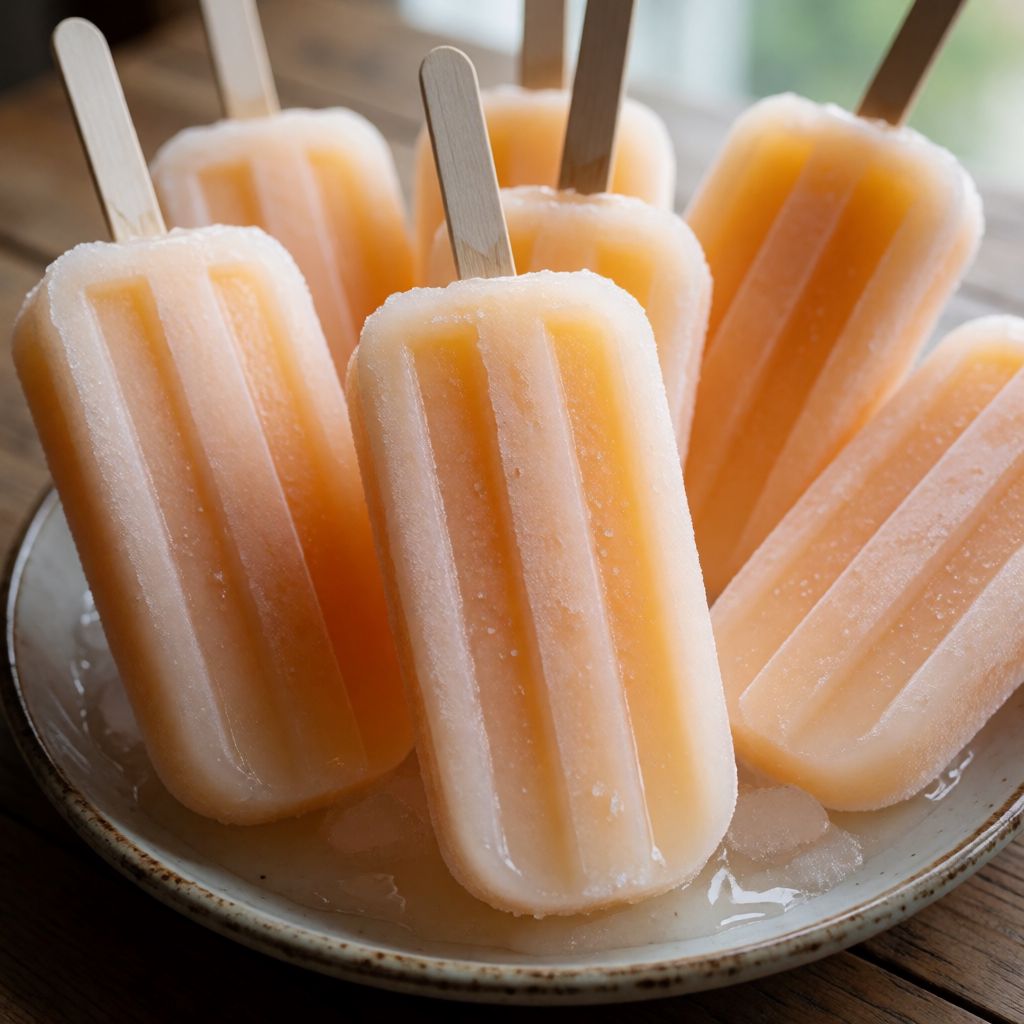
 AI photo
Melon Fruit Ice Lollies
A refreshing homemade ice lolly made with juicy melon, a touch of sugar and lemon juice.
Labels are worked out automatically from the ingredients and can be wrong. Check the packaging if it matters to you.
Ingredients
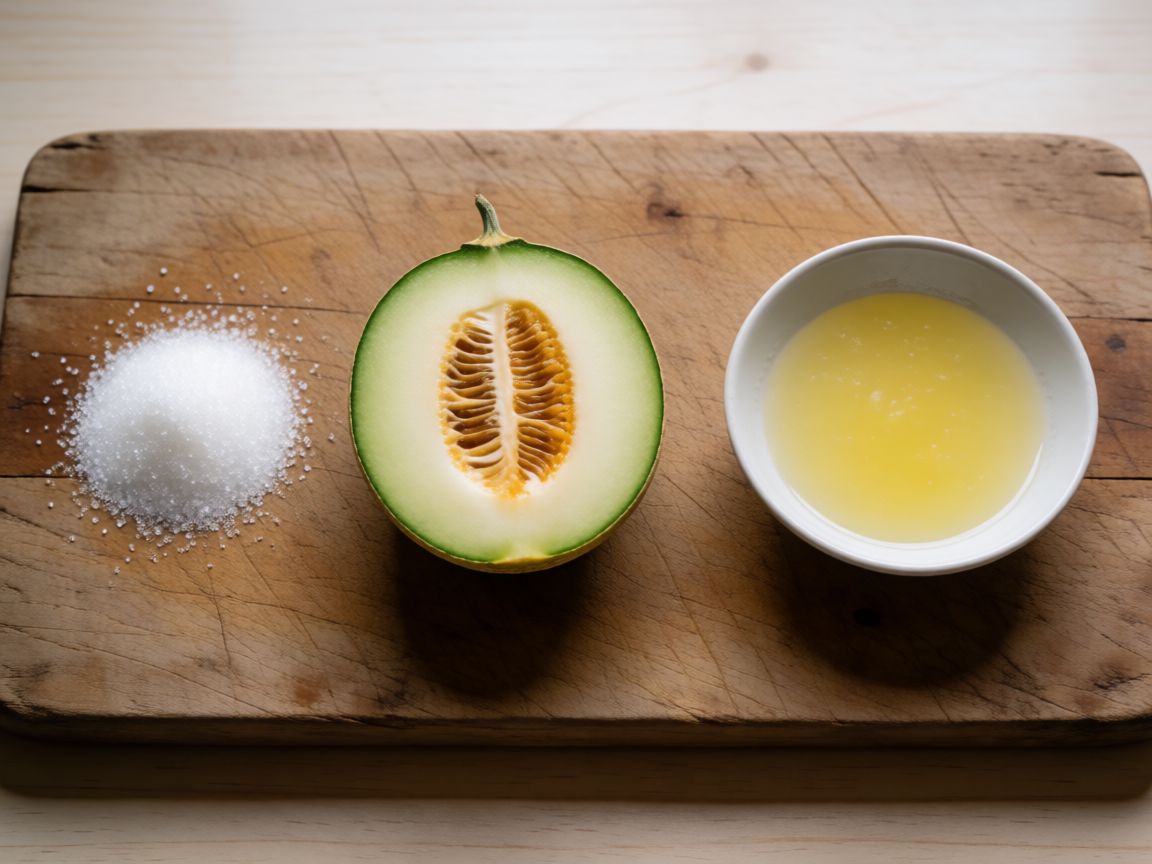
- 40 g Sugar
- 50 ml Water
- 0.5 pcs Melon about 200 g, deseeded
- 1 pcs Lemon Juice juice of 1 lemon



Steps
Peel the melon, cut it in half and remove the seeds and skin. Chop the flesh into pieces and put it in a large bowl.
Add the lemon juice, sugar and water. Blend everything with a stick blender until smooth.
Taste the mixture to check the sweetness and flavour; add a little more lemon juice or sugar if you like.
Divide the blended melon mixture among ice lolly moulds, tuck in a few mint leaves, then close the moulds.
Freeze for at least 3 hours, until the lollies are fully set.
180 minTake the melon lollies out a few minutes before serving and hold the moulds briefly under running water to release them.
This is not ice cream pretending to be posh — it's just fruit juice held upright by a stick and a freezer. No eggs, no cream, no custard base to fuss over. The whole trick of a lolly is that water, sugar and acid freeze together into something sliceable-smooth instead of a solid brick of ice, and that's decided entirely by two things: how ripe your melon is, and how fine you puree it.
Melon is doing two jobs here, not one. It's giving you the flavour, obviously, but it's also giving you most of the water in the recipe — that's why you only add 50 ml more. A ripe melon is naturally juicy and sweet enough to carry the mixture on its own; an under-ripe one is watery without being sweet, and no amount of added sugar fixes that properly, it just makes the syrup taste separate from the fruit instead of part of it. So pick the melon by smell at the stalk end and by weight — heavy for its size, faintly sweet-smelling through the skin — because once it's cut open and blended, you can't un-make a bad choice, you can only mask it.
Some say a lolly always turns out icy and grainy at home, nothing like the shop ones, so why bother. No — that's not fate, that's physics you can manage. Shop lollies stay smooth because industrial ones use stabilisers and glucose syrup to keep ice crystals small. You don't have that, but you have a stick blender, and a fine, lump-free puree does almost the same job — the smoother the liquid going in, the smaller and more even the ice crystals coming out. Leave pulp fibres in and they become scaffolding for big, crunchy crystals to grow on.
Sugar here isn't cooked into a syrup on the hob — you just blend it straight in with the water and melon, cold. That's not laziness, it's because the job of a syrup (getting sugar to dissolve evenly into liquid) is being done mechanically by the blender instead of thermally by a pan. Heat would dissolve it a touch faster, but you'd also be cooking a bit of the melon's fresh flavour out for no real gain. If your sugar won't fully vanish into the mix, that's a sign you need a finer sugar — caster, not granulated — because big crystals need more water or more time than a few seconds of blending gives them.
The water is there to loosen the puree enough to pour into narrow lolly moulds, nothing more. Too much and you're diluting the one thing giving this lolly its character — the melon's own sugar and pulp — and you'll end up with something icier and blander, because sugar content is what keeps ice crystals from locking into a hard, glassy block. Too little and you'll be fighting the blender. 50 ml against half a melon is a ratio worth respecting rather than eyeballing generously.
Lemon juice is doing the brightening job, not a preserving job — melon doesn't brown the way apple does, so you're not fighting oxidation here. You're fighting flatness. Frozen fruit needs more acid and more sugar than the same fruit eaten fresh, because cold mutes both sweetness and tartness on the tongue, so the lemon is there to survive the freezer, not just to taste nice in the bowl. If you've no lemon, any sharp, clean juice with no flavour loud enough to argue with the melon will do the same job — lime is closest, a splash of orange works if you want the sweetness to lean fruitier rather than sharper.
Mint goes in whole, tucked into the mould rather than blended, and that's deliberate — blend it and you lose both the colour (it turns the mixture a sad khaki) and the hit of aroma, because mint's scent compounds are volatile and come off strongest at the surface, right where your mouth meets the lolly first. It's garnish with a job, not decoration.
Melon itself can be swapped on one test, not by name: anything that purees down to a thin, pourable mash without needing extra liquid will behave the same way in a mould. Ripe peach, watermelon, mango — all work on the same mechanism. Dry, fibrous fruit — apple, pear — won't, because you'd need so much added water to loosen it that you'd dilute the flavour out of existence.
If you've no lolly moulds, don't go buy them for six lollies you might make twice a year — small paper or plastic cups with a wooden stick stood up in the half-frozen mixture do the same job; once solid, tear the cup away. And on the freezer itself: three hours is a floor, not a target. Depends on your freezer, how full it already is, how deep your moulds are. The real test is pressing a finger to the centre of the mould — no give, no softness, means it's set right through, not just frozen at the edges with a slushy core waiting to collapse off the stick the moment you unmould it.