
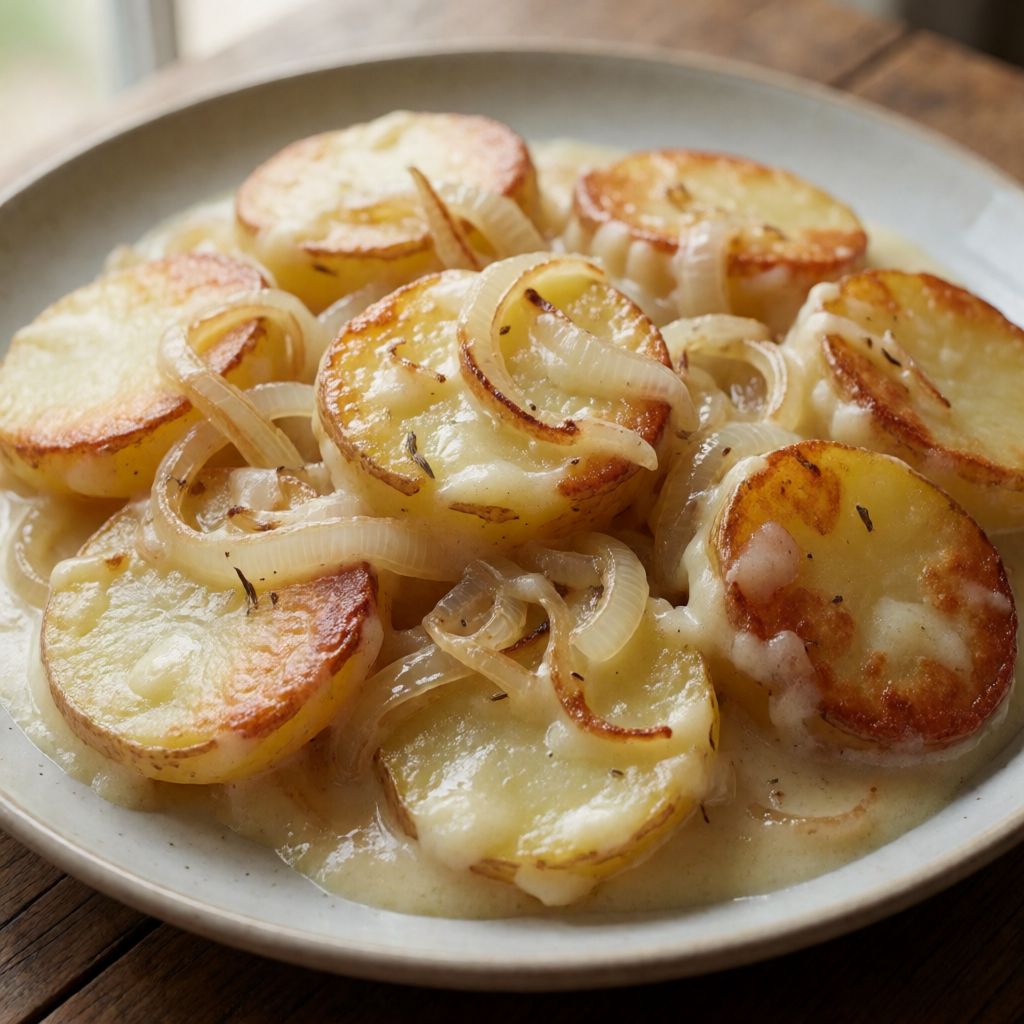
 AI photo
Lyonnaise Potatoes
A creamy potato and onion bake layered with béchamel sauce, inspired by French Lyonnaise-style cooking.
Labels are worked out automatically from the ingredients and can be wrong. Check the packaging if it matters to you.
Ingredients
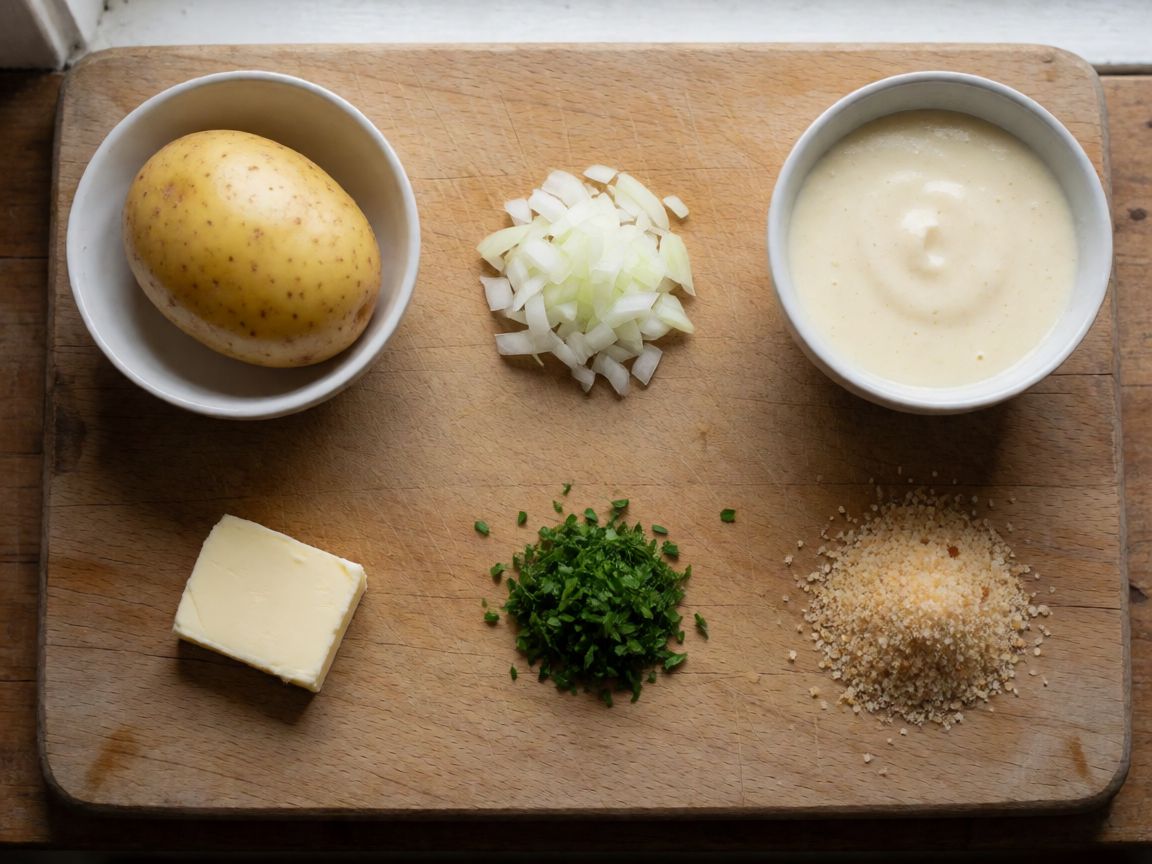
- 500 g New potatoes
- 250 g Onion
- 500 ml Béchamel sauce
- Olive oil to taste
- 1 pcs Butter a knob, for greasing
- Salt to taste
- Parsley to taste
- Breadcrumbs to taste, dried








Steps
Wash the potatoes and slice them thinly.
Bring a large pot of water to the boil, add salt and cook the potatoes for about 10 minutes.
10 minDrain in a colander and leave to cool.
Slice the onion into thin strips.
In a non-stick frying pan, melt the butter, add the olive oil and onion. Cook gently until the onion turns golden.
Grease a baking dish with butter and dust with breadcrumbs.
Arrange a layer of potatoes, cover with a layer of onion, pour over some béchamel sauce and season with parsley. Repeat the layers, finishing with a layer of béchamel.
Bake in a preheated oven at 180°C for 15–20 minutes, switching on the grill for the last few minutes.
18 minServe hot.
This isn't the fried-in-a-pan lyonnaise your grandmother might have meant — this one goes into the oven under béchamel, and that single fact decides everything else. What you're making is a potato gratin that borrows the onion idea from Lyon and stretches it with a white sauce, so it can sit in a dish while your oven is busy doing something else too — the Sunday joint, say. 500g potato, 250g onion, half a litre of béchamel: that ratio feeds four, as a side to a roast or on its own with something green.
What decides whether it comes out right: the potato must still have some bite left when it goes into the dish, the onion must go gold without going brown, and the béchamel must pour but not run. Fail any one of those three and you get soup, or mush, or a bitter top layer fighting a creamy bottom.
Myth to break first: "lyonnaise potatoes" doesn't mean "in sauce." The classic version is sliced boiled potato fried with onion in a pan, nothing poured over it — Lyon earned its onion reputation from the fields that surrounded it, not from a recipe book. This dish keeps the onion, drops the frying pan, and asks a sauce to do the holding-together that the pan used to do. Same debt to onions, different mechanism entirely.
Start with the onion, since that's where gentle heat matters most. Butter first, for the taste only butter gives, then oil on top of it — oil lifts the point at which the fat starts to catch, so the butter's milk solids don't burn while the onion is still finding its sweetness. I've scorched that butter enough times to know the oil has to follow it in, not sit there alone from the start. "Gentle" means you can watch the onion rather than fight it with a spoon; if it needs constant stirring to stop it catching, the heat's too high. Watch for colour, not a clock: pale gold sliding toward amber, soft enough to fold rather than snap. Push past that into brown and the onion turns bitter and argues with the béchamel instead of backing it up.
The béchamel is doing the job the pan used to do in the old version — it's the moisture, the glue, the thing that stops a dish of potato and onion drying out through nearly half an hour in an oven with no lid to trap steam. Your baking dish doesn't have one, and a plate over foil won't seal like a proper lid would, so the sauce has to carry what the lid can't. Any smooth white sauce built on a roux works; what matters is that it pours easily off a spoon but doesn't run off it in a thin stream — too thin and it sinks to the bottom leaving the top dry, too thick and it won't fill the gaps between potato slices, which is exactly where it's needed. No classic béchamel to hand? Double cream loosened with milk and a pinch of flour whisked in over heat gets you close; crème fraîche thinned the same way works too, with a sourness of its own the roux doesn't carry.
Greasing the dish and dusting it with breadcrumbs isn't decoration — béchamel carries milk solids, and milk solids weld themselves to hot metal or ceramic the moment they touch it bare. The crumb layer gives the sauce somewhere to sit without sticking, and it crisps at the base the same way the top crisps under the grill, so you get a texture at the bottom nobody expects and everyone finds. Dried breadcrumbs crisp rather than steam, which is why they're standard; stale bread blitzed fine does the same job, and a scatter of oats works if that's what's in the cupboard. The criterion is dry, starchy, fine enough to coat a buttered surface evenly — not the brand on the packet.
The grill at the end is there for colour, not for cooking. By the time the dish goes under it, the potato's already done from the heat around it in the main oven; the grill's only job is to brown the top of the béchamel fast with direct radiant heat, before the rest of the dish dries out waiting for that colour under the gentler main heat. Some cooks leave a gratin under the grill "until it looks ready" — which usually means too long. A few minutes is both the lower bound and close to the upper one; past that you're not adding colour any more, you're drying the surface into a crust that cracks off the spoon instead of serving with it.
Choose a new potato because it's low in starch and holds a slice. A maris piper or king edward — brilliant mashed, brilliant roasted whole — will break down into something closer to a thick soup once boiled briefly and then baked under sauce. Jersey Royals or Charlotte, sliced thin, keep their edges through all of it. Out of season, any waxy variety with a thin skin and a firm bite raw will behave the same way — that's the test to run in the shop, not the name on the bag.
Let it sit five minutes once it's out from under the grill. The béchamel is still loose with heat at that point; a few minutes and it sets just enough to hold its shape on a plate instead of running the moment you cut in.