
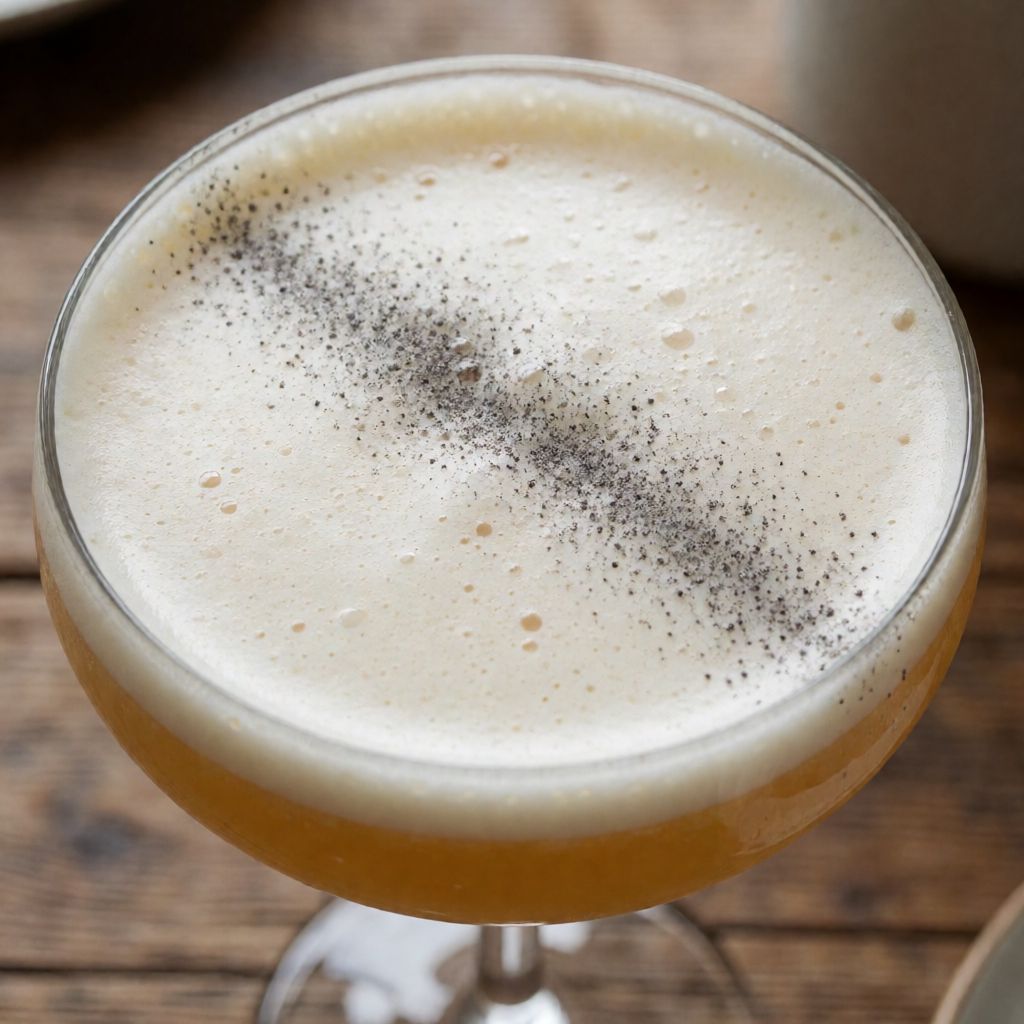
 AI photo
Orange and Liquorice Cocktail
A zesty rum cocktail with orange juice and a hint of liquorice, shaken until frothy.
Labels are worked out automatically from the ingredients and can be wrong. Check the packaging if it matters to you.
Ingredients
- 25 ml Rum
- 25 ml Grand Marnier
- 75 ml Orange juice
- 2 pinch Liquorice powder
- 1 pcs Egg white
- 4 pcs Ice cubes
- 1 pcs Orange a strip of orange zest, for garnish
- 1 pinch Liquorice powder



Steps
Pour the rum, Grand Marnier, orange juice, liquorice powder and egg white into a shaker together with 4 ice cubes.
Shake vigorously until the mixture becomes nicely frothy.
Pour into a glass with ice cubes and garnish with a pinch of liquorice powder.
What was changed
The Cointreau row was wrongly linked to coriander; it is now matched to Grand Marnier, the nearest orange liqueur sold in the UK.
This is a short, frothed sour — rum and orange liqueur sharpened with liquorice, topped with a head like a well-poured pint. Quick to make, no cooking, and it lives or dies on what happens inside the shaker in the five seconds before you pour.
What decides it is the foam. Egg white in a shaken drink isn't there for volume — it's there to be beaten. Vigorous shaking unfolds its proteins and traps air in them, the same mechanism that makes a meringue stand up, just done cold and fast instead of with a whisk and patience. Shake too gently, or stop too soon, and you get orange juice with bubbles instead of a proper dense, pale head. The cue isn't a count of seconds — it's the look of the top layer. It should stop reading as liquid and start reading as froth.
Some say shaking a cocktail is just a cold way of stirring it. No — if that were true you'd build it straight in the glass with ice and save yourself the arm work. The whole reason this one goes in a shaker and not a jug is the egg white. Stirring moves liquid; shaking beats air into it. That's the job.
The two pinches of liquorice powder aren't doing the same thing. The one shaken in disappears into the drink and cuts the sweetness of the Grand Marnier and the orange juice, so it doesn't end up tasting like a dessert in a glass. The one on top sits there for your nose — you smell it before the drink touches your tongue, and that changes how sweet the first sip tastes, even though nothing about the liquid has changed.
Rum here is a direction, not a brand. The recipe just says rum, and the only real rule is: don't pick one that argues with the orange and the liquorice. A heavily spiced or very smoky rum will fight both of them. A clean white or light gold rum stays out of the way and lets the orange liqueur and the aniseed note do the talking.
Grand Marnier is cognac-based and carries real orange — not just sugar, but the bitterness that comes off macerated peel, which is exactly what stops this drink being flat-sweet. If you haven't got it, any orange liqueur holds the same shape: Cointreau is drier and cleaner, triple sec is thinner and younger-tasting. None of them are identical, but the geometry of the drink — spirit, orange sweetness, acid, bitterness — survives the swap.
Orange juice should be fresh if you can manage it. Fresh juice brings acid along with the sugar, and that acid is doing real work — it's what keeps the foam from tasting flat and sickly. Carton juice is usually sweeter and thinner on acid, which isn't a disaster, just taste as you go and maybe ease back slightly on the Grand Marnier if the carton juice is a sweet one.
Liquorice powder is ground dried root — musky, a bit bitter, not the taste of liquorice sweets, which are mostly sugar and aniseed oil doing a different job entirely. If you've none in the cupboard, finely ground aniseed or star anise gets you the closest family resemblance. If all you have is a clear anise liqueur, a few drops will do it, but then you've added liquid, so trim the orange juice a touch or the drink gets watery.
Egg white is the engine of the foam, not decoration. If raw egg worries you, UK supermarkets sell pasteurised egg white in cartons — same protein, same foaming, no risk. For a version with no egg at all, two tablespoons of aquafaba, the water chickpeas were cooked in, foams the same way because it's full of the same kind of surface-active compounds the egg white has, just from a plant instead of a bird.
The ice is doing two different jobs and it matters that you don't confuse them. The four cubes in the shaker chill the drink fast and melt a little as you shake — that small amount of melted water is the dilution that makes a shaken drink taste rounder than the same thing poured neat and cold. The ice in the glass afterwards is only there to keep it cold while you drink; it isn't meant to melt much, so don't shake that batch too — you'd be diluting twice for no reason. And if there's no proper shaker in the flat, a clean jam jar with a tight lid does exactly the same mechanical job — the egg white doesn't know the difference, it only knows it's being thrown around hard enough to trap air.