
 AI photo
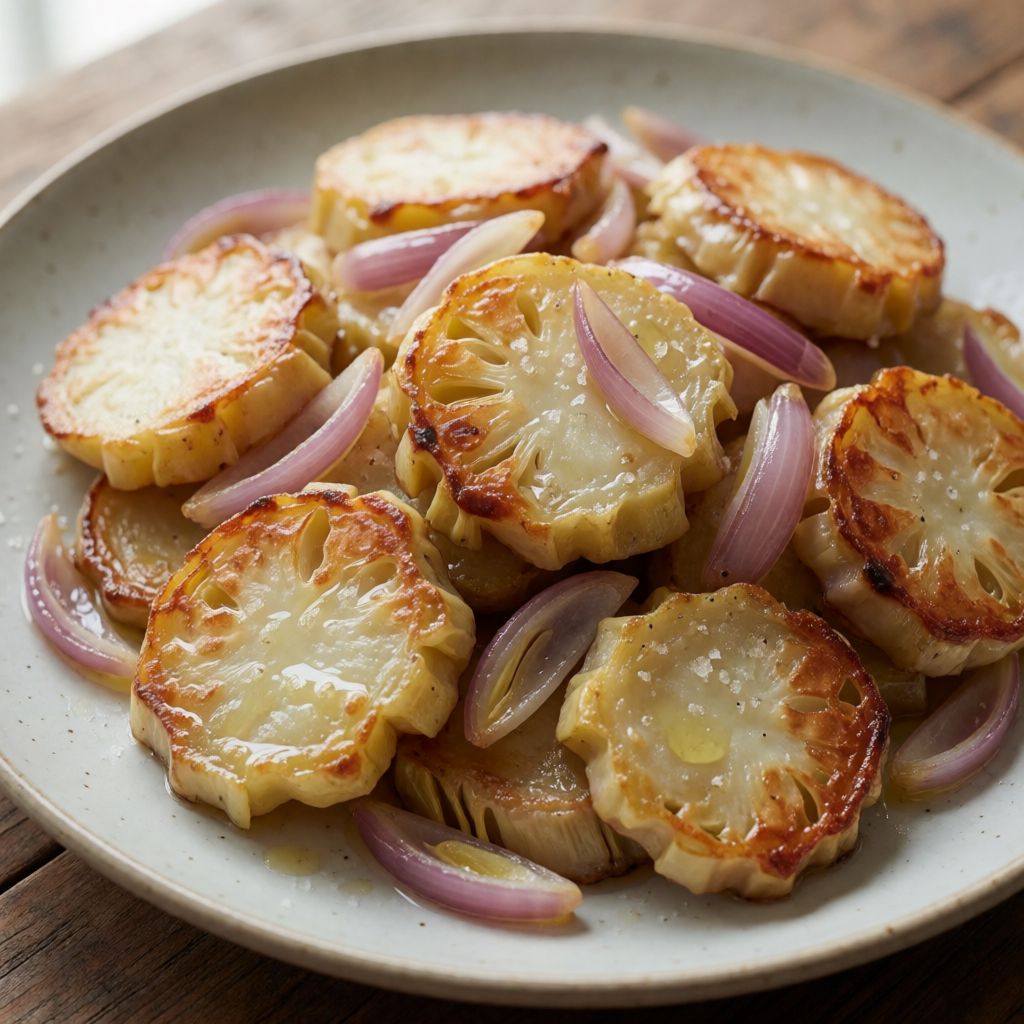
Pan-Fried Jerusalem Artichokes
A simple side dish of Jerusalem artichokes pan-fried with shallot in olive oil until tender.
Labels are worked out automatically from the ingredients and can be wrong. Check the packaging if it matters to you.
Ingredients


Steps
Peel the Jerusalem artichokes, rinse and cut into slices 1–2 cm thick.
In a non-stick pan, fry the shallot in olive oil over medium heat.
When the shallot is lightly golden, add the Jerusalem artichokes.
Stir with a fork or wooden spoon, adding salt to taste halfway through cooking.
Add a little water if needed, so the Jerusalem artichokes do not catch on the bottom.
Check with a fork: the Jerusalem artichokes should be soft and tender.
This is a quiet little dish built around one fact: the Jerusalem artichoke is not a potato, whatever the greengrocer's shelf next to it suggests. It's a sunflower tuber, full of inulin, not starch. Starch gelatinises when you heat it with water and goes soft and floury — that's why a potato falls apart into mash. Inulin doesn't behave that way. It softens, but the tuber keeps a faint bite, something between a potato and a water chestnut, and that bite is exactly what you're frying for here, not fighting against.
What decides whether this works is the order of two heats. First the shallot goes in alone, in the oil, and it has one job: turn from pale and sharp to lightly gold, building a small store of sweetness before anything else touches the pan. Only then does the artichoke go in. Skip that step, or rush it, and you get raw onion bite sitting underneath cooked tuber — two separate flavours instead of one dish.
The second thing that decides it is moisture. Jerusalem artichoke has very little sugar on its cut surface compared with onion or potato, so it has almost nothing to caramelise with — it just sits on hot metal and scorches. The splash of water isn't there to make a sauce. It's there to stop that scorching, to let the slices steam through from underneath while the top keeps frying. Add it the moment you hear a dry rasping sound instead of a sizzle, not on a schedule.
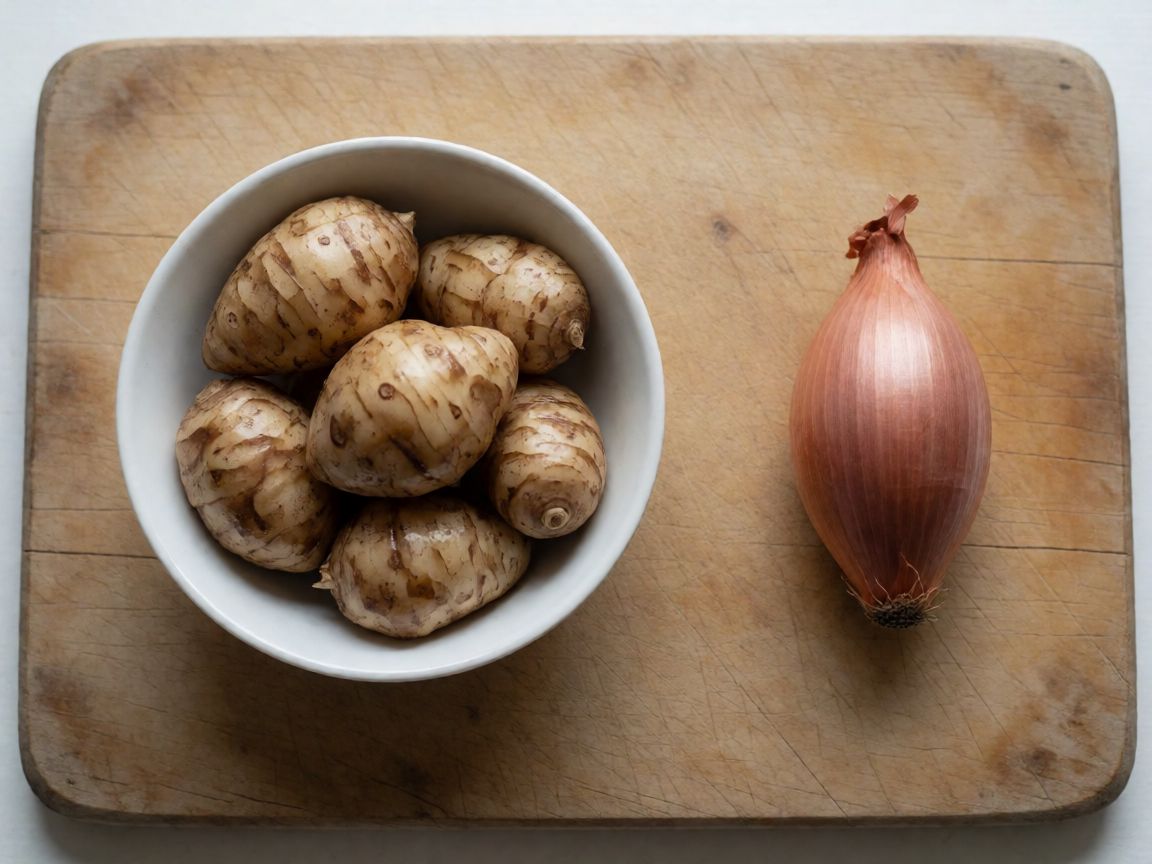
On the artichoke itself: buy tubers that feel firm and heavy for their size, no soft give, no green patches. They're knobbly by nature — that's not a flaw, it's just a lumpy root doing what lumpy roots do — and the knobbles make peeling fiddly. Peel anyway; the skin carries a slight bitterness the flesh doesn't have, and in a dish with only four ingredients, one bitter edge is enough to notice. Cut the slices to an even 1–2 cm. Thinner than that and the edges catch and burn before the centre softens; thicker, and you're waiting on the middle while the outside's already dark. Even thickness is what lets you judge the whole batch by one fork-test instead of fishing out the worst piece.
One honest note on the tuber's other habit: inulin is a fibre your gut doesn't break down the way it breaks down starch, and for some people that means noticeable gas a few hours later. Cooking it through, as this recipe insists on, softens that effect somewhat. Nobody warns you about this in most recipe books. I'd rather tell you than have you wonder later.
The shallot: its job is sweetness and a bit of body under the artichoke, nothing more. Any mild onion that turns gold rather than brown-and-bitter will do — a small regular onion, a banana shallot, even a leek white if that's what's in the fridge. The criterion is mildness, not the specific vegetable.
Olive oil here is a cooking medium, not a flavour statement — there's no raw drizzle at the end to show it off. So the real criterion is an oil that can sit in a hot pan without smelling of itself: a light olive oil, sunflower oil, any neutral oil with a reasonably high smoke tolerance. Save the good peppery extra-virgin for a salad, where it'll actually be tasted.
Salt goes in halfway, not at the start, for a reason: salted too early, the slices immediately start pulling moisture to their surface, and you end up steaming them in their own juice instead of frying the surface first. Halfway in, you've already got some colour; salt from there on just seasons, it doesn't sabotage the fry.
A non-stick pan is the right call for a home hob — a wide one, since you want the slices in a single layer, not stacked and steaming each other. If you only have a heavier pan, use a touch more oil and watch the shallot more closely, since cast iron and stainless hold heat longer and punish a moment's inattention.
As for where this fits on a British table: it's a reasonable stand-in for roast potatoes alongside a Sunday roast, with a different character — lighter, a bit nuttier, no crisp shell. Worth remembering that this tuber was, for much of its European history, cheap ground-cover food — grown because it survives poor soil and hard winters, eaten by people with little else, including as a famine vegetable in parts of wartime Europe. That's the honest reason it's humble rather than fashionable: not magic, just a plant that asks nothing of the soil and gives something back when there's little else to cook. 500 g feeds four as a side, roughly a fist-sized knob of tuber each — small, but it's not meant to carry the plate alone.