
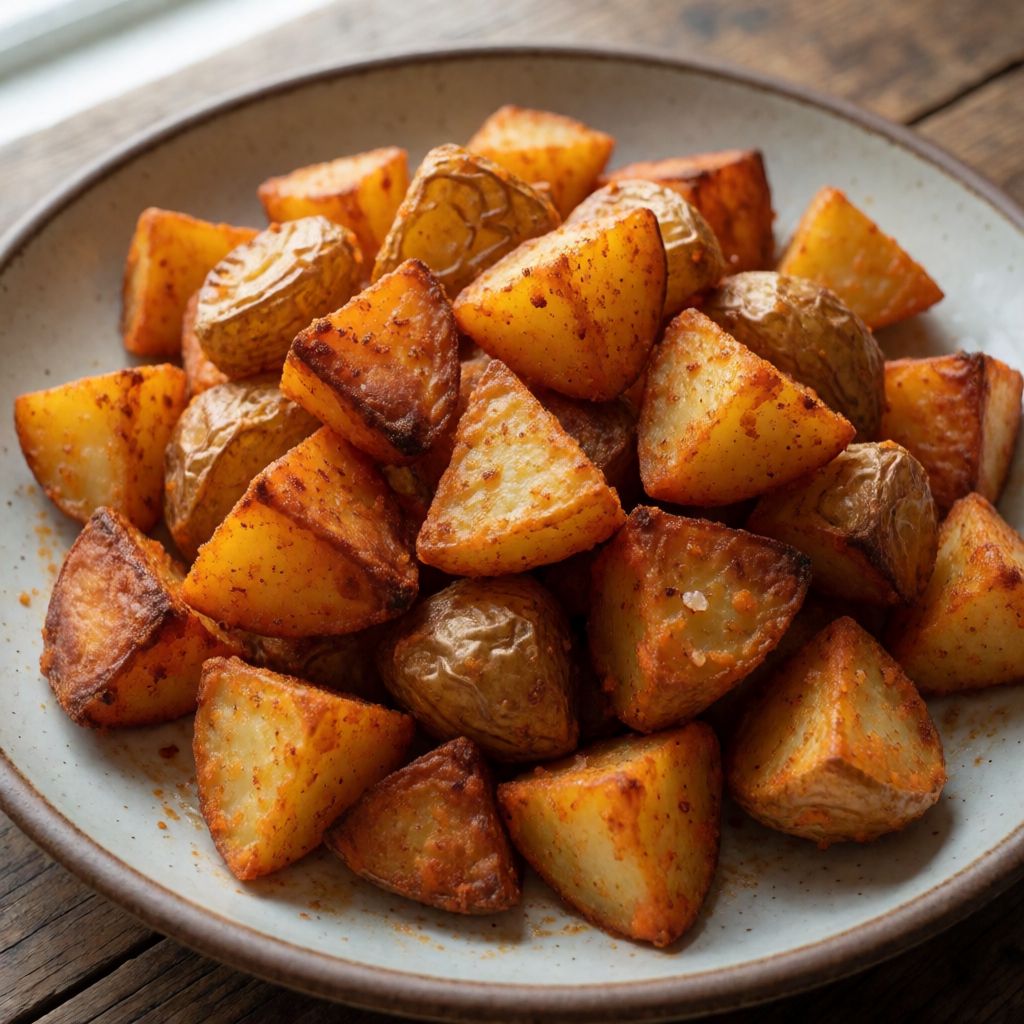
 AI photo
Potatoes with Paprika
Crispy oven-roasted potato cubes tossed in olive oil and paprika.
Labels are worked out automatically from the ingredients and can be wrong. Check the packaging if it matters to you.
Ingredients
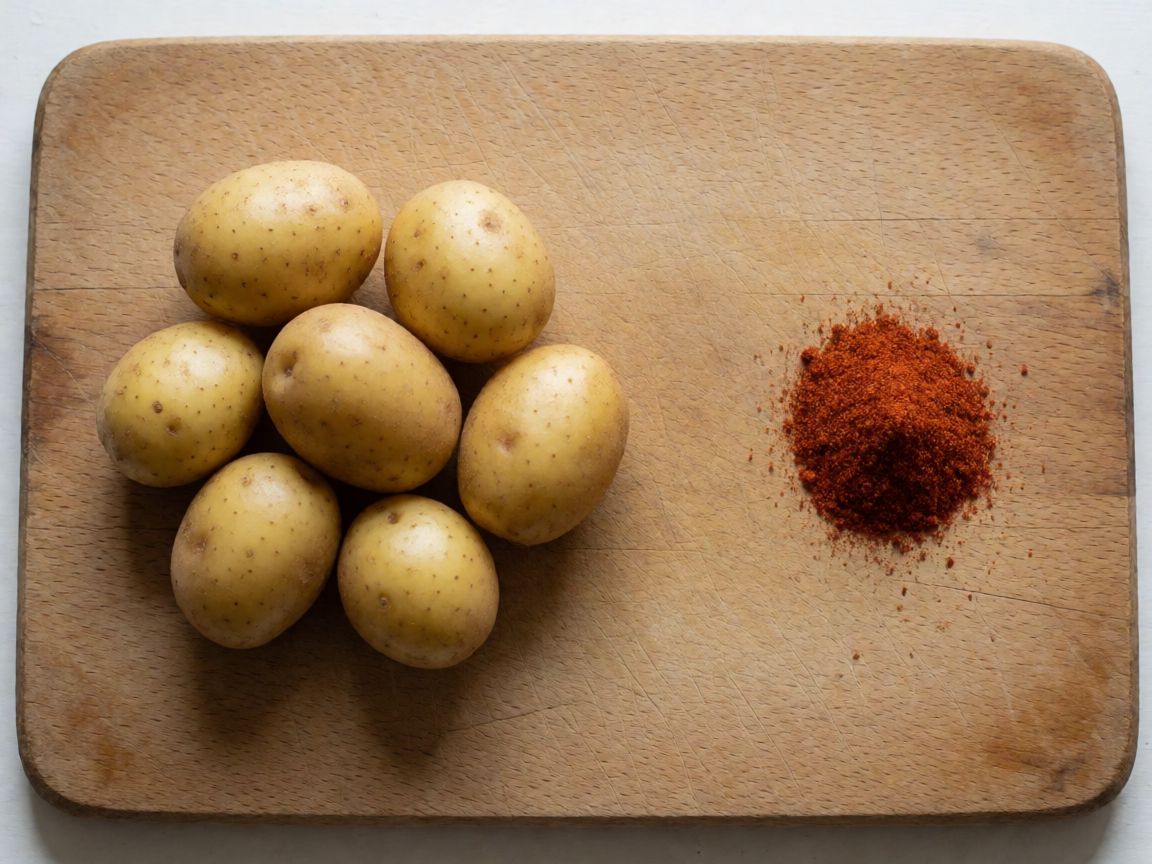




Steps
Thoroughly wash the potatoes under running water, peel them with a vegetable peeler, and cut into small cubes.
Soak the diced potatoes in cold water to remove excess starch.
10 minDrain the water and pat the potatoes dry with a clean tea towel.
Mix the olive oil with the paprika and a pinch of salt in a separate bowl.
Toss the dried potatoes in the bowl with the dressing so they are evenly coated.
Spread the potatoes on a baking tray lined with baking paper, making sure the pieces don't touch.
Bake in a preheated fan oven at 180°C.
15 minStir with a spoon and continue baking.
15 minTurn on the grill function for a final crisp and golden colour.
5 minRemove the potatoes from the oven, transfer to a serving plate, season with extra salt if desired, and serve hot.
This is not the stuff you shove in under the Sunday joint, swimming in dripping — it's a dry, dusted cube, each one meant to come out of the oven with a crust like a good biscuit and a middle that just about holds together. What decides whether it works isn't the oven number so much as what happens before the oven ever sees the tray: how much starch you wash off the cut surface, and how dry those pieces are when the oil touches them.
A potato is water and starch held together in tight little cells. Cut it, and that starch bleeds onto the surface. Leave it there and in the heat it behaves like wallpaper paste — it sets into a tacky skin that traps steam underneath, so the potato effectively steams itself soft instead of roasting dry. That's the whole reason for the cold-water soak and the towel-drying afterwards. Skip it, and you'll get potatoes that look roasted but taste boiled with a touch of sunburn.
The second fight is for space on the tray. Pieces touching each other breathe steam into the gaps between them, and steam is the enemy of crust — that's why a crowded tray gives you soft-shouldered wedges, not crisp ones, no matter how hot the oven is. Spread them out properly, even if the tray looks half-empty for it. In an ordinary fan oven the moving air is doing the real work here, pulling moisture off the surface continuously — that's different from a plain static oven, where humidity just sits and builds around the food.
Potato choice matters more than people admit. A floury variety — King Edward, Maris Piper, the kind you'd already have in for mash or a roast — gives you a fluffier inside and a crisper outside once the surface starch is washed away, because what's left inside is drier and more open. A waxy potato holds its cube shape better under stirring but won't crust the same way; use it if you want neater pieces over maximum crunch, not because one is "correct".
The oil is a thin coat, not a fry — 50g across a kilo of potato is barely enough to film each cube, so its job isn't to cook the potato but to carry the paprika and conduct heat evenly across the surface. The criterion for which oil: something with no smell of its own, so the paprika leads and the oil just does its job quietly. Sunflower or rapeseed oil, both ordinary in a UK kitchen, do this fine. Save a nutty or grassy extra-virgin for the salad, not here — its flavour would just compete.
Paprika's colour and flavour compounds are fat-soluble, which is exactly why you mix it into the oil first rather than dusting it straight onto the potatoes. Bound in oil, it spreads evenly and is far less likely to scorch bitter under the grill than loose powder sitting on a dry surface would be. Sweet paprika gives colour and a mild, warm flavour; smoked paprika pushes it toward something closer to chorizo; a pinch of cayenne or chilli flakes in with it if you want actual heat — just cut the sweet paprika back a little so you're not overloading the dressing.
Salt in the dressing is there for seasoning, not for drawing moisture — the amount is too small to do much of either, which is exactly right; too much salt this early would pull water back to the surface and fight everything the soak and the towel just achieved. Taste and adjust at the end instead, once you can actually judge it.
And patience is doing more here than any ingredient on the list. The soak needs its ten minutes to actually pull starch out, not just sit in water for show; the drying needs a proper towel, not a quick pat; and the first stretch in the oven needs to be left alone, because disturbing a crust before it's set just tears it off and starts the steaming problem all over again. None of this is complicated — it's just steps that only work if you don't rush past them.