
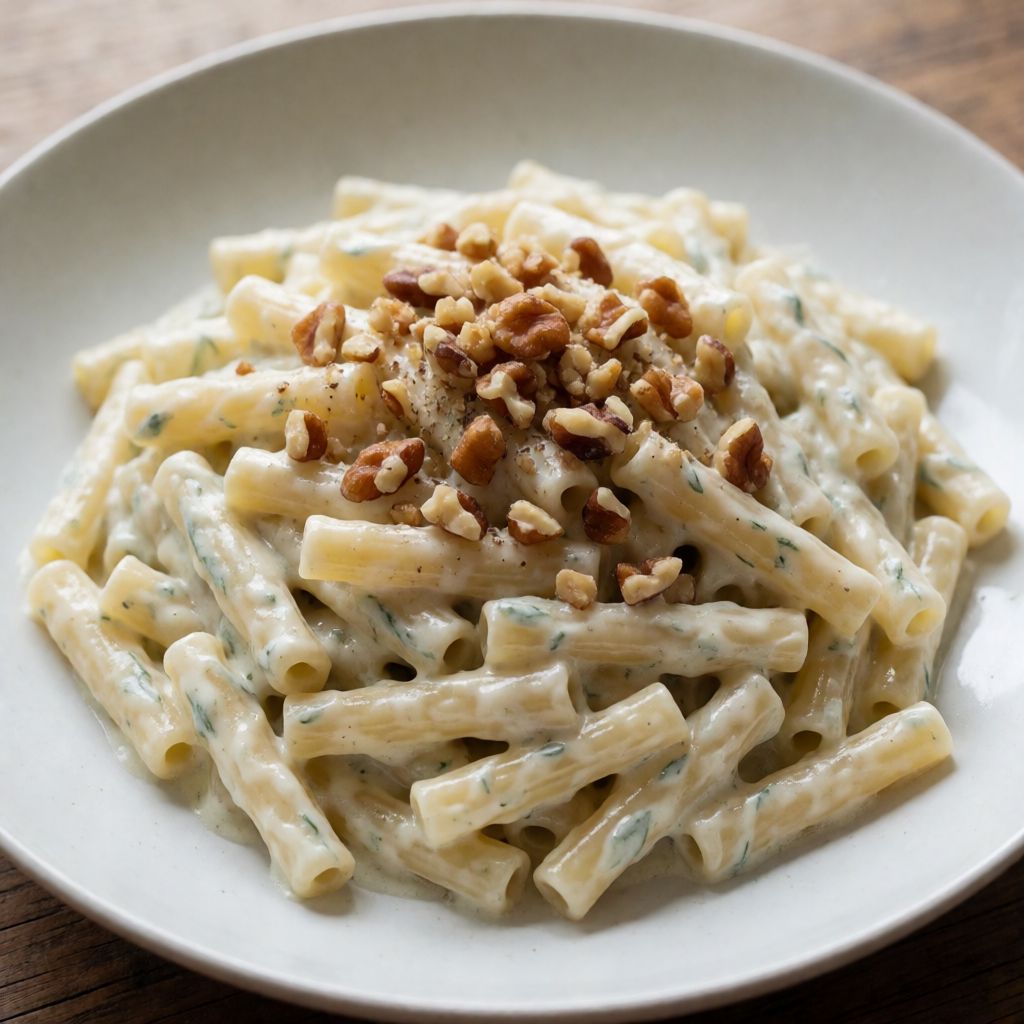
 AI photo
Gorgonzola and Walnut Pasta
A creamy pasta with gorgonzola and walnuts, ready in under 30 minutes.
Labels are worked out automatically from the ingredients and can be wrong. Check the packaging if it matters to you.
Ingredients



Steps
Finely chop the walnuts with a knife, and remove the rind from the gorgonzola and dice it.
Put the pasta on to cook in salted water according to the packet instructions. Melt the butter in a non-stick frying pan.
Set aside a little of the pasta cooking water for later. Cook the pasta until al dente, then drain in a colander.
Tip the pasta into the pan with the melted butter.
Add the diced gorgonzola and cook gently, stirring, until the cheese turns into a smooth, creamy sauce.
If the sauce isn't creamy enough, add a little of the reserved pasta cooking water.
Add the walnuts and mix well so all the ingredients combine evenly.
Divide between plates and serve.
Four ingredients, one real decision: how much heat you give the cheese. This dish isn't a creamy sauce that happens to contain gorgonzola — it IS the cheese, loosened by heat and water until it coats the pasta like something it was always inside. Everything else — walnuts, butter, pasta — is scaffolding for that one event.
Some will tell you a dish like this needs cream to get the sauce right. It doesn't — because gorgonzola already comes half-undone. The blue mould running through it has spent weeks breaking down fat and protein, so the cheese is already soft enough to flow once warmed, no cream required. Add cream and you don't get a richer sauce, you get a muted one — the sharpness that makes this dish worth making gets buried under it.
What decides whether it works: heat gentle enough that the cheese melts rather than splits, and pasta water added at the right moment so the fat doesn't pool on its own at the bottom of the pan. Get either wrong and you end up with something greasy sitting next to the pasta, not a sauce coating it.
The walnuts go in raw, right at the end — chopped, not ground — because their job is to still be crunchy against something soft. That contrast is the whole reason they're in the dish at all; soften them and they're just texture lost.
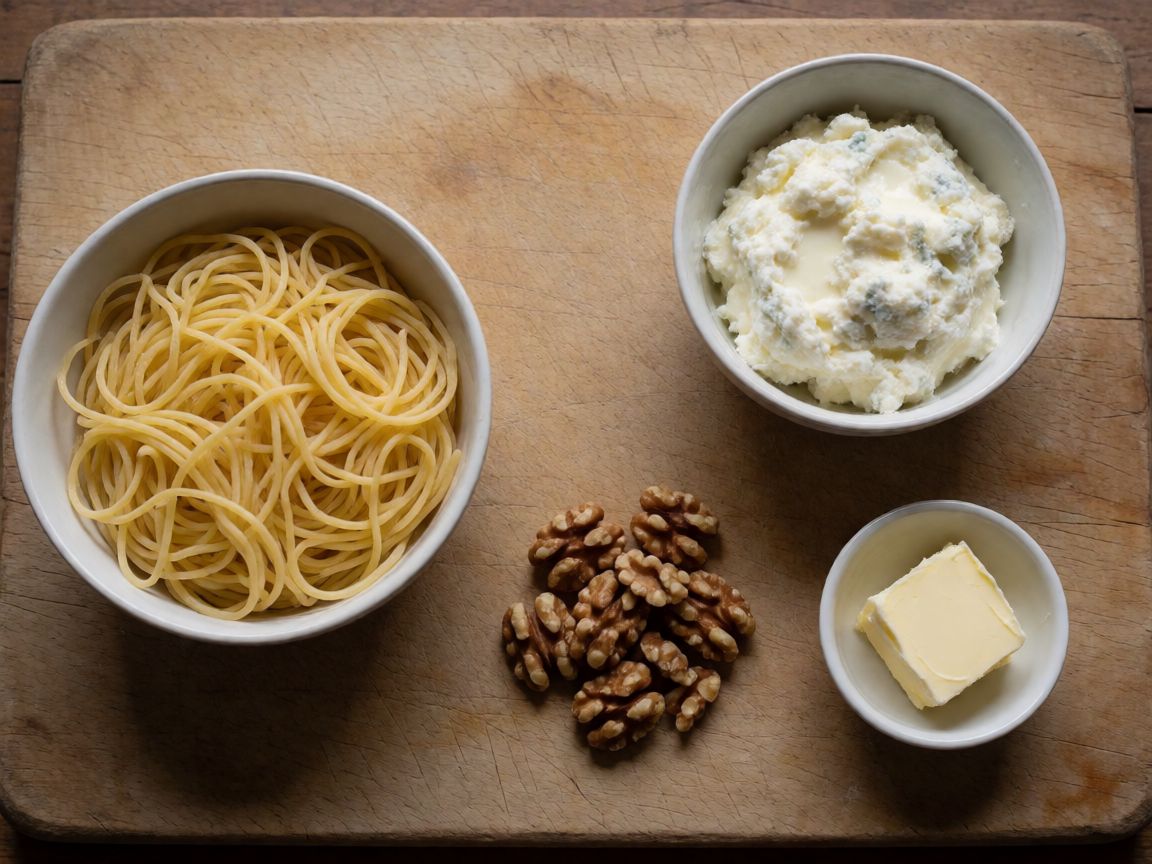
Pasta — anything with ridges, folds, a tube running through it: penne, rigatoni, fusilli. The sauce here is thick, almost a coating rather than a liquid, and it needs a surface to hold on to. Grooves and holes do that job; a flat smooth strand like spaghetti mostly lets it slide off onto the plate. If that's what's in the cupboard, use it — just expect sauce left behind.
Gorgonzola — the rind goes, always; it's where the mould has worked least and where most of the bitterness sits. Inside it you've got two broad styles: dolce, soft and almost spreadable, and piccante, firmer and sharper. Dolce melts into the pan in moments; piccante holds its shape longer and wants more pasta water to loosen. If you have neither — or if gorgonzola at the shop is priced like it came from somewhere exotic, which it sort of did — Stilton is the honest substitute in a British kitchen. It's firmer and drier, so you'll lean harder on the reserved pasta water to get it moving. The criterion, if you're hunting further afield: any blue cheese soft enough to collapse under gentle heat and water, not one that stays crumbly no matter what you do to it.
Butter — not for flavour alone, though it brings some. Its real job is to give the cheese something to melt into that isn't bare metal, so the proteins in the gorgonzola don't catch and scorch on contact. Melt it until it's loose and quiet, small bubbles, no colour change. Brown butter here means the pan's too hot for what comes next, and a too-hot pan is exactly what turns melting cheese into split cheese — fat weeping out one way, solids clumping the other. If you're avoiding dairy fat, any neutral oil will carry the pasta the same way, but you lose the faint milkiness that backs the cheese up rather than fighting it.
Walnuts — chopped with a knife, not pulsed in a machine. A knife leaves pieces of uneven size, and that unevenness does work: some bite gives resistance, some nearly dissolves, and together it reads as texture rather than one uniform crunch. A food processor turns walnuts to dust and paste in the same thirty seconds, no in-between stage. If walnuts aren't to hand, any nut with real fat in it and a bit of bitter edge to balance the cheese's saltiness will do — pecans, hazelnuts. Toast briefly first if the nut you're using is bland raw; walnuts rarely need it.
The pasta water is the part people skip, then wonder why the sauce looks like oil sitting next to cheese curds. It isn't there for flavour. It's starchy from the pasta that cooked in it, and that starch is what lets fat and cheese and liquid hold together instead of separating the moment they cool slightly on the plate. Butter alone can't do this job — fat and water don't want to mix, full stop, and starch is what makes them behave. Keep back a cupful before draining; you'll use far less than that, but you can't put water back down the sink once it's gone.
Salt carefully, or not at all until the end — gorgonzola is already salty, and this is a dish built around a few strong flavours with nowhere to hide an oversalted mistake. This is a quick dish from a Northern Italian larder — cheese, nuts, pasta, nothing needing a special trip if you keep blue cheese and walnuts around already. It sits at the opposite end of the week from a Sunday roast: one pan, no oven, twenty-five minutes. Patience here isn't about time, it's about not rushing the one moment that matters — standing at the stove while the cheese turns from lumps to liquid, rather than wandering off and coming back to find out which way it went.