
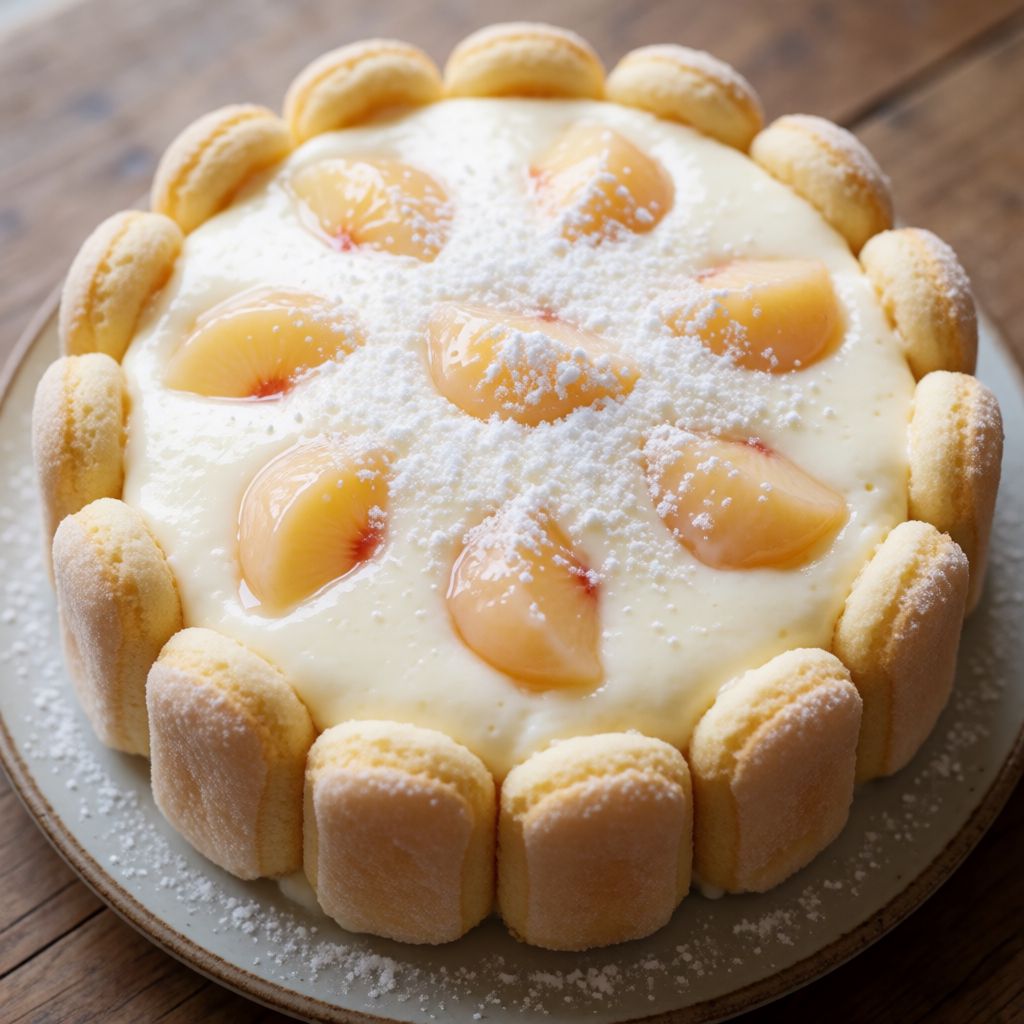
 AI photo
Peach Charlotte
A creamy mascarpone and peach charlotte, chilled on a base of sponge finger biscuits.
Labels are worked out automatically from the ingredients and can be wrong. Check the packaging if it matters to you.
Ingredients
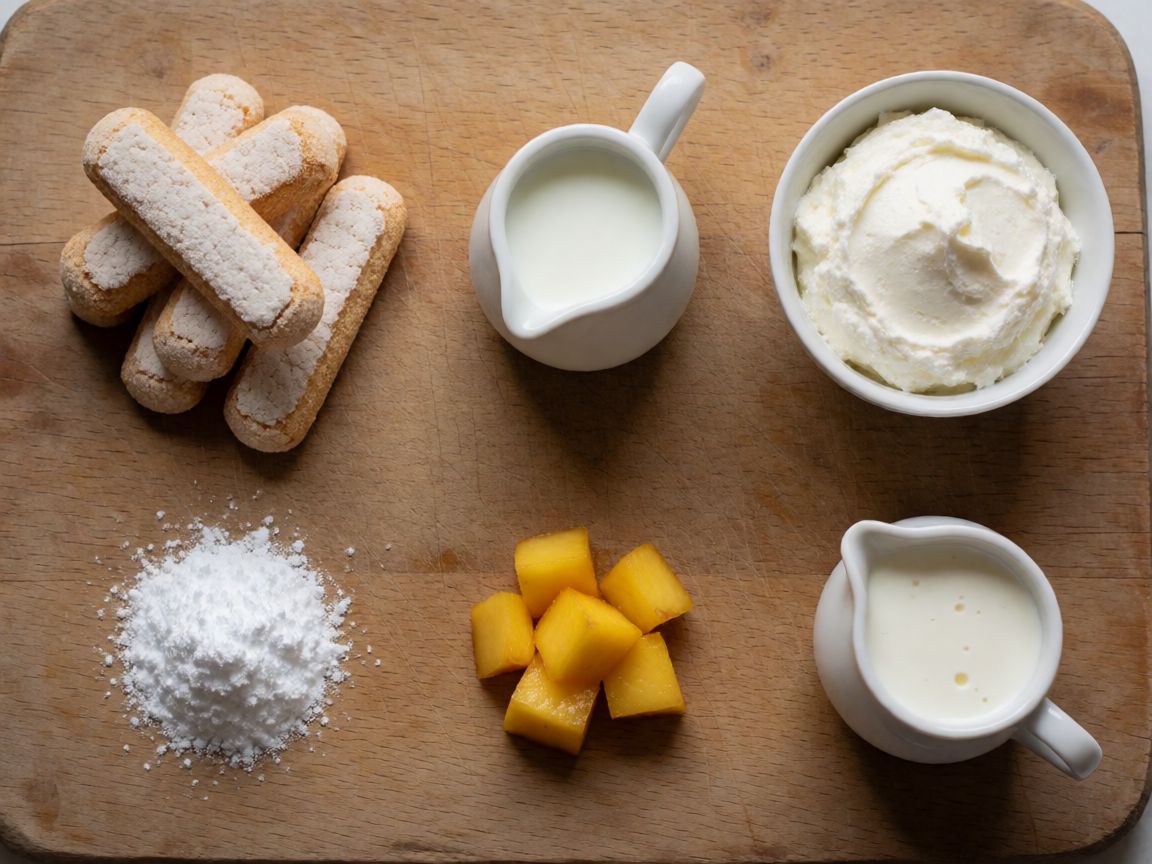
- 300 g Savoiardi (Sponge Finger) Biscuits
- Milk room temperature, to taste
- 500 g Mascarpone
- 125 g Icing Sugar
- 300 g Peaches plus extra to decorate
- 200 ml Double Cream or whipping cream






Steps
Line a loose-bottomed tin with cling film. Dip the sponge finger biscuits in milk and arrange them over the base. Trim the ends off more biscuits and stand them upright around the side of the tin.
Put the tin in the fridge while you prepare the filling.
15 minUsing a mixer, beat the mascarpone with the icing sugar until smooth and creamy.
Add the diced peaches and fold in gently with a spatula.
Whip the cream in a separate bowl, then carefully fold it into the mascarpone mixture, working from the bottom up.
Spread the mixture over the biscuit base and smooth the top.
Chill the cake for at least 4-5 hours.
270 minBefore serving, slice extra peaches thinly and use to decorate the cake. Serve chilled.
A charlotte is not a cake you bake — it's a cage you build, then fill, then let the cold do the cooking. The sponge fingers stand on their ends around the tin like the staves of a barrel; the base layer is the barrel's bottom. Everything else is about whether that cage holds and whether what you pour into it actually sets.
What decides this dish isn't flavour, it's structure and fat. No gelatine here, no oven, no flame — the thing that turns a bowl of cream and cheese into slices you can lift with a cake knife is cold fat, nothing more exotic. Chill it too little and you get a lovely dessert you have to eat with a spoon straight from the tin. Chill it long enough and the butterfat in the cream and the mascarpone locks into a solid network, the way butter goes hard in the fridge door. That's the whole trick.
Some say you should soak the biscuits in milk until they're soft through — no, because a fully soaked biscuit has no backbone left, and backbone is its entire job standing up around that tin. You're not making them edible-soft, you're wetting the surface so they bond to the filling and to each other, while the inside stays dry enough to hold its shape. Dip, don't drown.
The long chill — four, five hours, more if your fridge runs mild — is the actual cooking step of this recipe. Heat does nothing here; cold does everything. Treat the hours as a floor, not a target: check it by trying to lift a thin slice cleanly rather than by the clock.
Mascarpone and icing sugar first, beaten smooth, and the icing sugar matters more than it looks like it should: it's sugar ground fine enough to dissolve into a cold, dense cheese without leaving grit. Caster sugar, let alone granulated, will sit there as tiny hard crumbs in every mouthful, because cold fat doesn't dissolve sugar the way a warm batter does. If icing sugar isn't in the cupboard, blitz ordinary sugar in a blender until it's powder — same result, five minutes earlier in the shop queue saved.
The cream is where the actual setting mechanism lives, so don't treat whipping it as a chore to rush. Whipping beats air into the fat until each bubble is wrapped in a skin of butterfat — that's what gives it body. Fold it into the mascarpone from the bottom up, not stirred round and round, because stirring collapses exactly the air you just worked to get in. Lose that air and the filling drops from a mousse-like set to something closer to wet cheese. Use double cream or a cream labelled for whipping — anything below about 35% fat won't hold air at all, it'll just go foamy and collapse back to liquid, because there isn't enough fat to coat the bubbles.
Peaches want to be ripe but not weeping — press gently near the stalk end, it should give a little. Underripe peaches bring no flavour and cut like apple; overripe ones bleed juice into the mascarpone and loosen the whole set. English supermarket peaches out of season are often picked hard for transport and never really ripen on the shelf; leave them a day or two in a bowl at room temperature, not the fridge, before you cut them. If they're still disappointing, well-drained canned peaches in juice (not syrup) are an honest substitute — pat them dry, the dessert can't afford their extra water.
Lining the tin with cling film isn't fussiness, it's the only release mechanism you've got. This cake never sees an oven, so there's no baked crust, no natural non-stick surface — just raw biscuit against bare metal, which would otherwise glue itself to the tin and tear apart on the way out. The film is doing the job a greased tin does for a sponge.
Savoiardi themselves are a fairly recent luxury turned everyday biscuit — eggs, sugar, flour whipped light and dried out, originally a court biscuit because sugar and eggs in that quantity weren't a household's casual spend. The charlotte as a shape — biscuits as a standing wall, cream filling in the middle, turned out and shown whole at the table — comes from exactly that world: a dessert built to be unmoulded and admired before it's cut, because showing it off was half the point when the ingredients were dear. None of that is magic, it's just what a dessert looks like when it's designed to impress a table that could afford the biscuits.
This is, usefully, a Sunday dish for a flat with one oven and one Sunday roast in it: build it in the morning, slide it into the fridge, and let the joint have the oven to itself while the charlotte does its slow, cold setting in the background. Slice the decorating peaches only just before serving — cut fruit sitting on cream for hours will brown at the edges and weep onto the surface, which is a defect you can dodge simply by leaving that one step for last.