
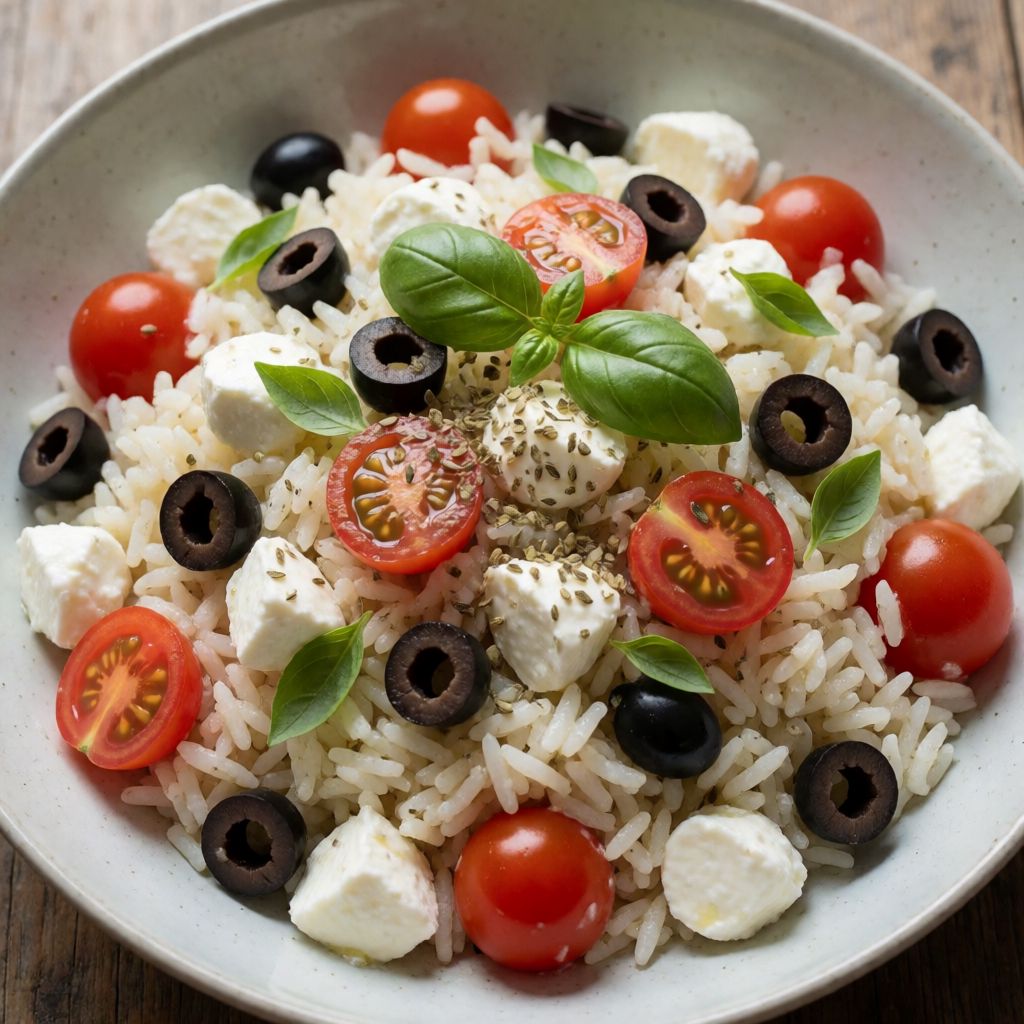
 AI photo
Rice Salad with Cherry Tomatoes and Mozzarella
A fresh rice salad with cherry tomatoes, black olives, mozzarella and basil, dressed simply with olive oil.
Labels are worked out automatically from the ingredients and can be wrong. Check the packaging if it matters to you.
Ingredients
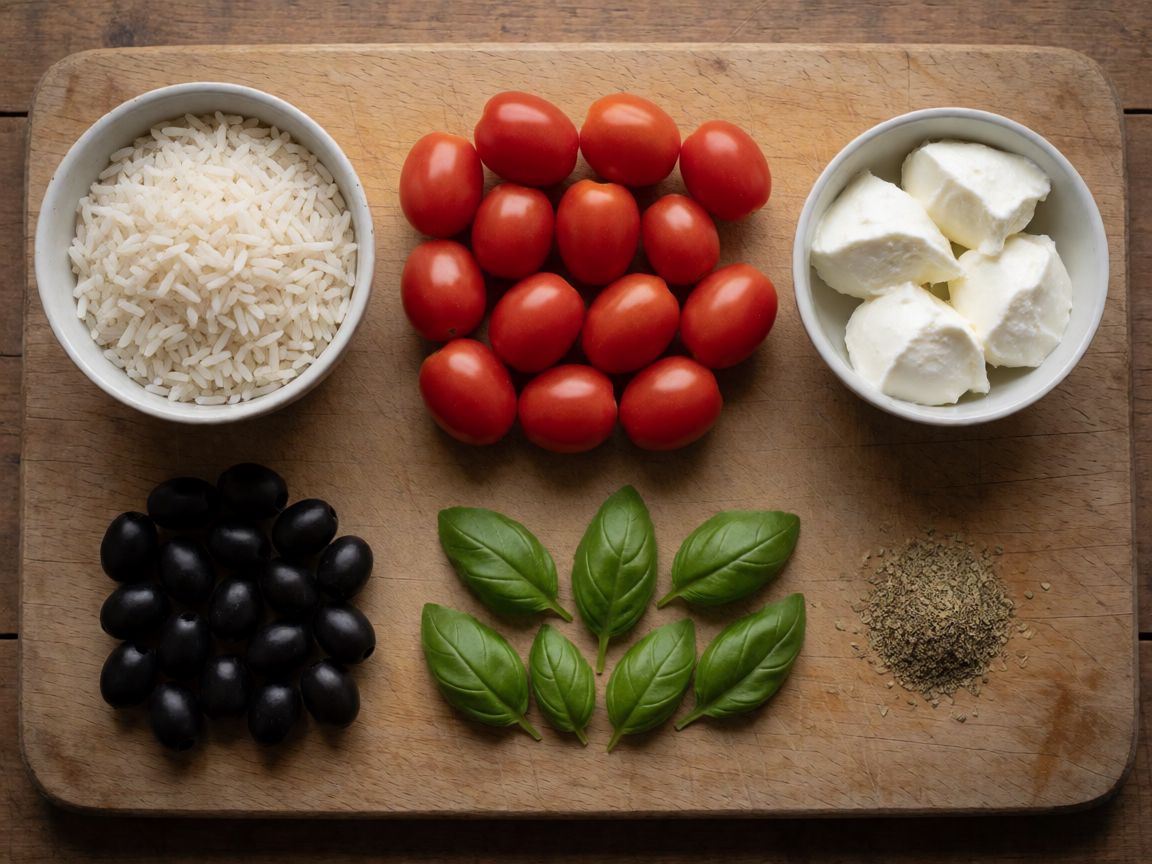
- 160 g Rice
- 15 pcs Cherry tomatoes
- 15 pcs Black olives
- 200 g Mozzarella
- 7 pcs Basil leaves
- Oregano to taste
- Olive oil to taste
- Salt to taste







Steps
Cook the rice in boiling salted water until tender.
20 minWash the cherry tomatoes and place them in a bowl together with the mozzarella and black olives.
Add the olive oil, salt, oregano and basil.
Rinse the rice under cold water to stop the cooking process, then transfer it to the bowl with the other ingredients.
Mix thoroughly and serve.
This is not rice dressed up to look like a salad — it is a salad that happens to use rice as its base instead of lettuce. The whole point is that everything in the bowl stays at the same temperature: cold, or close to it. That is the one thing that decides whether this works. If the rice goes in warm, it starts sweating into the mozzarella, the cheese weeps its milky water, and in twenty minutes you have a puddle instead of a salad.
Some say you rinse rice before cooking to wash off the starch. That rule exists for pilaf, where you want the grains dry and separate in hot fat. Here the rinse that matters happens after cooking, under cold water, and its job is different: it stops the grains cooking on their own residual heat and washes the loose surface starch off their skins so they don't glue to each other in the bowl. Skip that rinse and you get a rice salad that eats like porridge with tomatoes in it — the fault isn't the rice, it's that nobody told it to stop.
So the mechanism is: cook the rice properly, meaning tender but with a little resistance left at the centre of the grain — bite one, don't guess by the clock — then shock it cold fast, under the tap, in a sieve, shaking off the water. Only then does it go in with the rest, which has been sitting and getting to know the oil, salt and herbs while the rice was still boiling. That waiting is not dead time. The olive oil needs a few minutes against the salt and oregano before it tastes like anything; rushed, it just sits on top of the bowl as a slick.
Rice: go for a long or medium grain that holds its shape when cold — basmati, or a plain long-grain rice, both work. Avoid risotto rice (arborio, carnaroli) here; it's bred to release starch and go creamy, which is exactly backwards from what a cold salad needs. 160 g dry rice gives you roughly double that cooked, which is about right for two generous plates alongside everything else.
Cherry tomatoes: you want them firm, not the soft ones that have been sitting in a punnet under supermarket lights going slightly tired — a tired tomato has already started breaking down its own walls and will bleed into the bowl instead of staying as a bite. If cherry tomatoes aren't good, a couple of firm regular tomatoes, deseeded and cut into similar-sized pieces, do the same job; the point of the piece size is that it sits in a spoonful next to a piece of mozzarella and an olive, not that it's technically a cherry tomato.
Black olives: brined or oil-cured both work, but oil-cured ones are saltier and more intense, so taste before you add the salt from the recipe — you may need less. Olives here are a seasoning as much as a vegetable; they're doing what capers or anchovies do in other cold dishes, dropping little concentrated hits of salt and ferment through an otherwise mild bowl.
Mozzarella: fresh, in its own whey, torn by hand rather than cubed with a knife — torn edges are rough and hold a little more oil and oregano on their surface than a clean-cut face does. A supermarket block mozzarella for melting is a different product entirely — dry, rubbery, bred for pizza, not for eating raw — and it will not give you the same soft give. If you genuinely can't get fresh mozzarella, a mild bocconcini or even a fresh burrata (drained) will carry the dish; a hard cheese won't, it's playing a different role.
Basil: fresh leaves only, torn just before mixing, never dried — dried basil tastes of hay, and in a raw dish with nothing cooked to round it off, that difference is not subtle. Oregano, by contrast, is one of the few herbs that genuinely improves dried, which is why Mediterranean kitchens keep it that way even now that fresh is available everywhere — it concentrates rather than fades.
Oil: olive oil earns its place here because nothing in this bowl is cooked, so you taste the oil exactly as it is, not as a carrier for heat. That's the test for whether a recipe needs olive oil specifically or just "any oil with no smell of its own": if the oil is raw and present on the plate, use one with character; if it's just there to fry something and leaves with the heat, use a neutral one and save the good bottle. Here, don't swap it for a flavourless oil — you'd lose the one ingredient doing real work besides the rice itself.
This kind of dish — cold rice with whatever cheese, olive and vegetable were on hand — comes out of the same economics as any composed salad in a hot country: it travels without spoiling fast, it needs no reheating, and it uses yesterday's rice as readily as today's. If you've got leftover rice from Sunday sitting in the fridge, already cold, this is exactly the use for it — you've already done the hardest part without meaning to.