
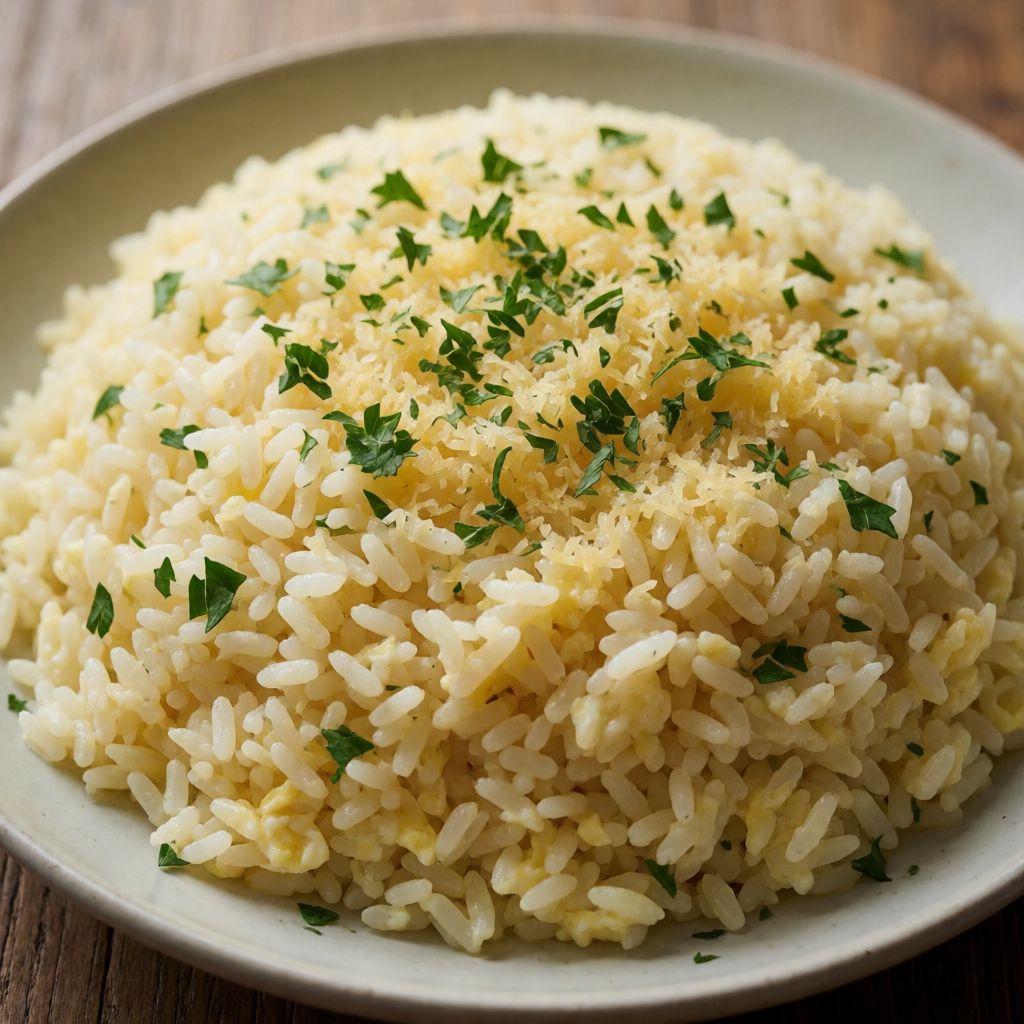
 AI photo
Rice with Egg and Parsley
A quick, comforting plate of rice stirred with egg and cheese, finished with fresh parsley.
Labels are worked out automatically from the ingredients and can be wrong. Check the packaging if it matters to you.
Ingredients
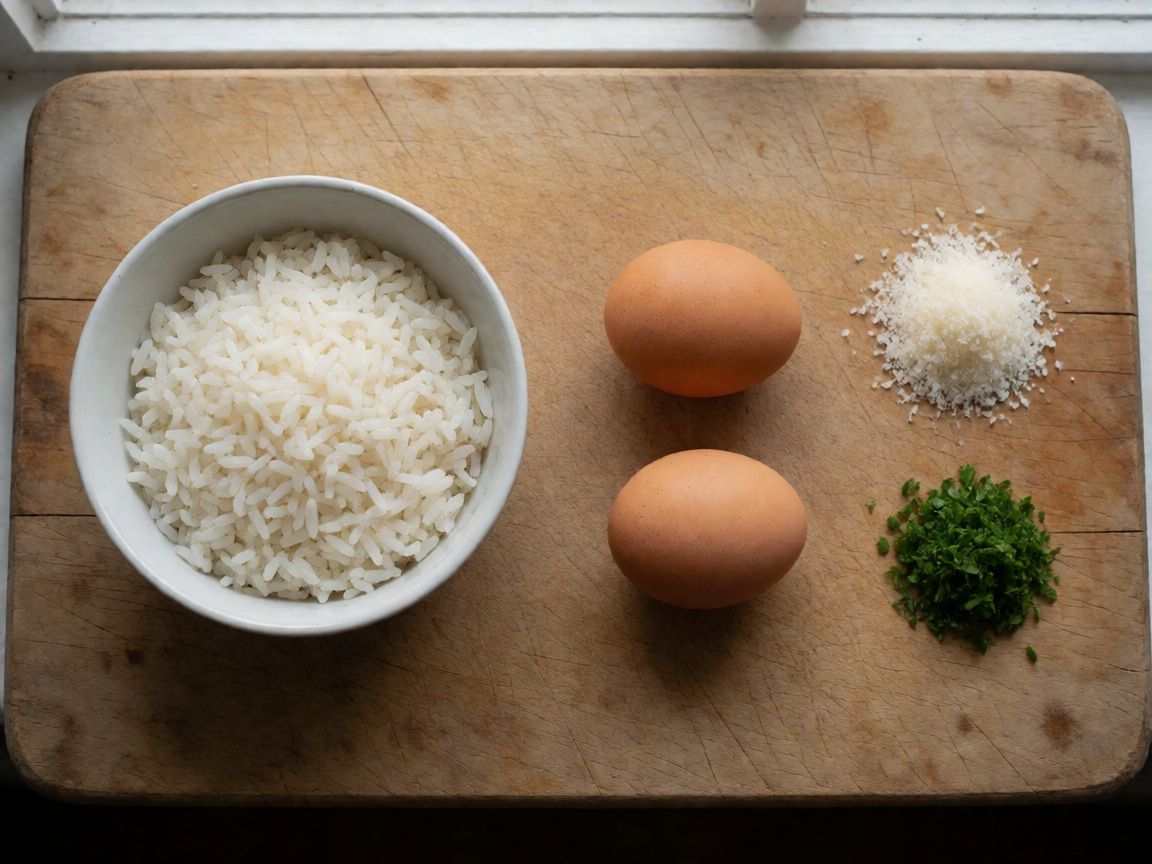





Steps
Cook the rice in salted water until al dente, then drain.
10 minIn a bowl, crack the eggs, add the chopped parsley and a handful of Parmesan, then whisk well with a fork.
3 minTip the hot rice straight into the egg mixture and stir briskly to combine.
1 minServe immediately while hot.
This is an egg-and-cheese coating, not a sauce you make in a pan — the only heat source is the rice itself, fresh off the boil. It works the way a plate of carbonara works: raw egg meets something properly hot, and that heat alone sets it to silk instead of scrambled curds. No cooking the egg separately, no stirring over a flame — the mechanism is the whole recipe.
What decides whether it works is heat and speed. Drain the rice and tip it into the egg while it's still steaming hard — not "warm", hot enough that holding the colander bare would make you flinch. Then stir fast, inside a minute, because every second after that is the egg quietly deciding whether it wants to be a glossy coat or a handful of rubbery bits.
Some say you need a splash of cream to make this creamy. No — the creaminess is an illusion built by egg yolk and melted Parmesan emulsifying with the starchy water still clinging to the rice, the same trick carbonara runs. Add real cream and you don't get creamier, you get heavier and duller, because cream competes with the egg for the same job and loses badly, leaving you with something closer to wet porridge.
When it's right, each grain wears a thin, matte, golden coat — no pool of raw egg pooling at the bottom of the bowl, no small rubbery curds scattered through. See curds, and you know exactly what happened: the rice went in too cool, or the stir was too slow, or the bowl sat a minute before anyone ate it.
Start with the rice. You want whatever you'd normally boil loose in water like pasta — long grain, basmati, nothing wrong with either. But a rounder, starchier grain, closer to a risotto rice, carries more surface starch out of the pot with it, and that starch is exactly what the egg needs to grip onto. 80–90g dry is about a teacup and a half, enough for one proper bowl. Steer clear of the ready-cooked pouches from the supermarket — they've had their surface starch rinsed and steamed away, so the egg has nothing to hold on to and just slides off, pooling at the bottom instead of clinging to the grain.
One and a half eggs looks like a typo until you think about why. One whole egg gives you structure and most of the moisture; the extra half — in practice, just a yolk — adds richness without the extra watery white that would need more heat than a bowl of rice can supply, and more heat-demand is exactly what leaves you with that wet, under-set egg pooling underneath. Crack one whole egg, add the yolk of a second, and either save the spare white for an omelette tomorrow or beat it into pastry glaze — nothing here is wasted, this whole dish has the logic of using up what's in the fridge rather than planning a shop.
Parmesan's job is salt, savoury depth, and the particular way a hard aged cheese melts into threads rather than clumps. 70g is roughly a chunk the size of a small matchbox, finely grated so it disappears into the egg rather than sitting in lumps. Any hard, salty, aged cheese does the same job — Pecorino Romano, even older Grana — the criterion is hard and sharp with no sweetness to it. A soft or stringy cheese, mozzarella especially, won't melt into the egg the same way; it clumps and goes rubbery instead of coating the grain.
Parsley is here for smell and a bit of green against all that gold — it isn't doing chemistry, so chop it fine and don't fuss over it. Any soft herb does the same work: chives, a little basil if that's what's open in the fridge.
Go easy with the salt. The rice water was already salted, and Parmesan brings plenty of its own — a pinch in the egg mixture is enough, taste before you add more, you can't easily take it out again.
In an ordinary British kitchen you need nothing beyond a saucepan, a colander, a bowl, and a fork sturdy enough to whisk properly. The one genuine demand here is patience in reverse — have the egg, cheese and parsley already whisked and sitting right next to the stove before you even drain the rice, because the moment the rice leaves the water, its own heat is the only clock you've got, and it's already running down.