
Dairy
Parmesan
Parmesan is a hard aged cheese with a rich, nutty flavor. It's grated over pasta, risotto, salads, and soups.
392 kcal per 100 g
Nutrition per 100 g
392 kcal
| Protein | 35.8 g |
|---|---|
| Fat | 25 g |
| Carbs | 3.2 g |
| Fiber | 0 g |
Source: USDA FoodData Central, 2026-09-21. Per 100 g of product.
Good to know: Parmesan
Parmesan is a hard cheese, and hard means something you can feel before you even taste it. Break off a piece with your hands rather than slicing it, and let it crumble — that's the paste telling you it's aged, not fresh.
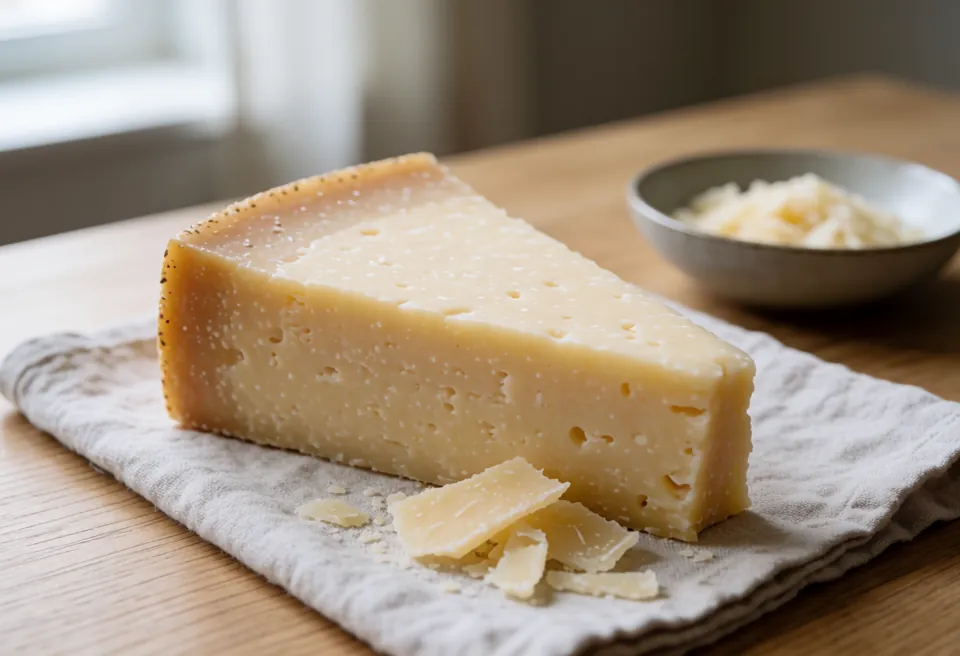
Choose it by the crunch. Real aged Parmesan has tiny white flecks scattered through the paste — bite down and you'll hear them crack faintly between your teeth. Smell it: nutty, faintly sharp. Don't worry if the cut face looks a touch darker near the rind than at the centre — that's normal, nothing to send it back for. What you don't want is a cut face that feels slimy or damp under your finger, or gives off anything sour. Put it back if it does.
Some people say Parmesan is only a grating cheese, dust for the top of your pasta. No! It's a food in its own right, with 35.75 grams of protein per 100 grams — dense, savoury, satisfying on its own. Treat it as garnish only and you waste both flavour and food — shave it into salads, simmer the rind in soup, let a slice stand alone with a glass of wine.