
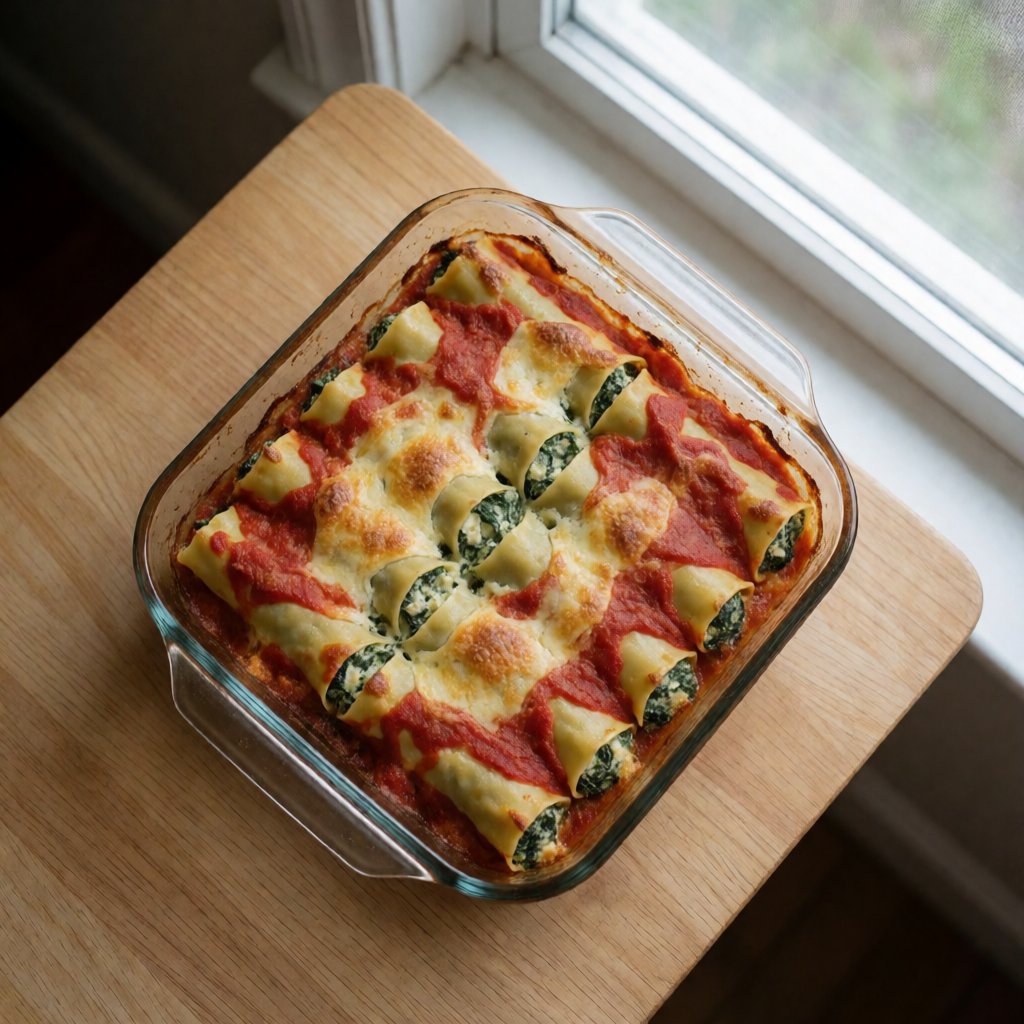
 AI photo
Spinach and Ricotta Cannelloni
Oven-baked cannelloni tubes filled with spinach and ricotta, baked in tomato sauce and topped with mozzarella.
Labels are worked out automatically from the ingredients and can be wrong. Check the packaging if it matters to you.
Ingredients
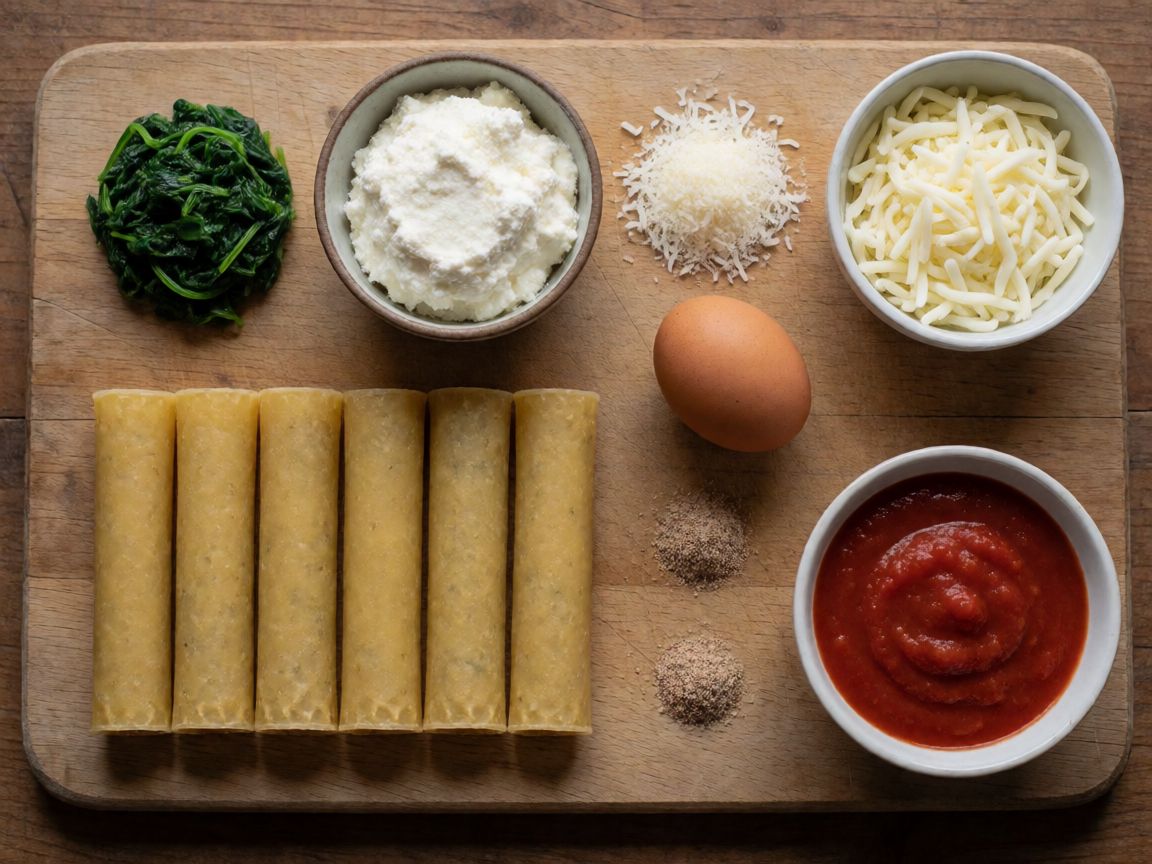
- 80 g Cannelloni 6 tubes, no pre-cooking needed
- 150 g Frozen spinach thawed and squeezed dry
- 150 g Ricotta
- 30 g Parmesan or a hard cheese
- 1 pcs Egg
- 1 pinch Nutmeg
- 1 pinch Salt
- 300 ml Tomato pasta sauce passata-style sauce, not ketchup
- 60 g Mozzarella








Steps
Mix the spinach, ricotta, egg, parmesan, nutmeg and salt together, then fill the cannelloni tubes.
Spoon half the tomato pasta sauce into the bottom of the baking dish, lay the tubes on top, pour over the rest of the sauce to cover them completely, then scatter the mozzarella on top.
Cover the dish with foil and bake for 35 minutes.
35 minRemove the dish from the oven.
This is cannelloni — pasta tubes stuffed with spinach and ricotta, then drowned in tomato sauce and baked until they give in. Think of it as lasagne rolled into cylinders: same logic, same mechanism, just shaped differently because someone, centuries ago, worked out that a tube holds filling better than a flat sheet and doesn't fall apart on the fork.
What decides whether this works is one thing: the sauce has to cover every tube completely, right up and over. Dry pasta — the kind you didn't pre-boil, like this one — cooks by drinking the liquid around it. No liquid touching it, no cooking. A tube with its back poking out of the sauce will still be hard and floury in the middle when everything else is soft, and you'll blame the recipe instead of the half-centimetre of pasta that stayed dry the whole time.
The foil over the dish is your lid. You don't have a kazan with a tight-fitting cover that holds steam in; a domestic oven dries things out fast unless you trap the moisture yourself. Foil does that job here — it keeps the steam circulating inside the dish so the pasta softens from the top as well as from the sauce underneath, rather than crusting over before the middle is done.
Some say cannelloni must be boiled first, the way you'd boil any pasta. No — because then you're fighting two problems at once: hot, soft, floppy tubes that tear when you try to fill them, and a filling that's already been half-cooked by the heat of the pasta. Raw tubes, cold filling, hot sauce doing all the work at once — that's the whole point of the "no pre-cook" kind.
Start with the filling. Frozen spinach, thawed and squeezed — and squeezed properly, with real pressure, not just a polite press with a spoon. Spinach is mostly water once it's been frozen and thawed; leave that water in and it thins your ricotta into something closer to soup, which then leaks out of the tube while it bakes and waters down the sauce around it instead of staying put. Squeeze it in your fist over the sink until no more comes out, that's the test, not a number of minutes.
Ricotta gives you the body and the mildness — it's a fresh, unaged cheese made from whey, so it has almost no salt of its own, which is exactly why the parmesan and the pinch of salt are doing real work here, not just seasoning for the sake of it. If you've got no ricotta, cottage cheese works as a stand-in, but blitz it smooth or push it through a sieve first, because its curds are too separate and will show in the filling as little white lumps instead of one creamy mass. The criterion is: a soft, spreadable fresh cheese with a mild flavour, loose enough to pipe or spoon.
The egg is the binder. Without it the filling is just warm cheese and spinach sitting loosely inside a tube, and once the heat hits it, it slumps and runs out the ends. The egg sets like a very soft custard as it bakes, holding everything in place so when you cut into a tube later it keeps its shape instead of collapsing into the sauce.
Nutmeg with spinach and ricotta isn't decoration, it's an old pairing for a real reason: nutmeg's slight bitterness and warmth cuts through the flatness of dairy and cooked greens, the same way it does in béchamel. One pinch. More than that and it stops being a background note and starts tasting like dessert spice in your dinner.
The sauce needs to be an actual passata-style sauce — something with real tomato water in it — because that water is what the uncooked pasta is relying on to cook through. Ketchup, for all it looks similar on a spoon, is mostly sugar, vinegar and reduced paste; there isn't enough free liquid in it to soften raw pasta, and what little moisture it has will scorch under foil before the tubes are done. Any hard, well-aged cheese does the job of the parmesan — pecorino, an aged gouda, whatever's sharp and salty and grates fine.
Last point, and it's the one people skip: once it's out of the oven, give it a few minutes before you serve it. The filling is set by egg and heat together, and it's still loose right at that edge between cooked and firm when it comes out. Cut in too soon and everything runs onto the plate; wait, and the tube holds its shape and the filling stays where you put it. Patience here isn't optional, it's the difference between a cannellone and a very hot, very messy soup.
·