
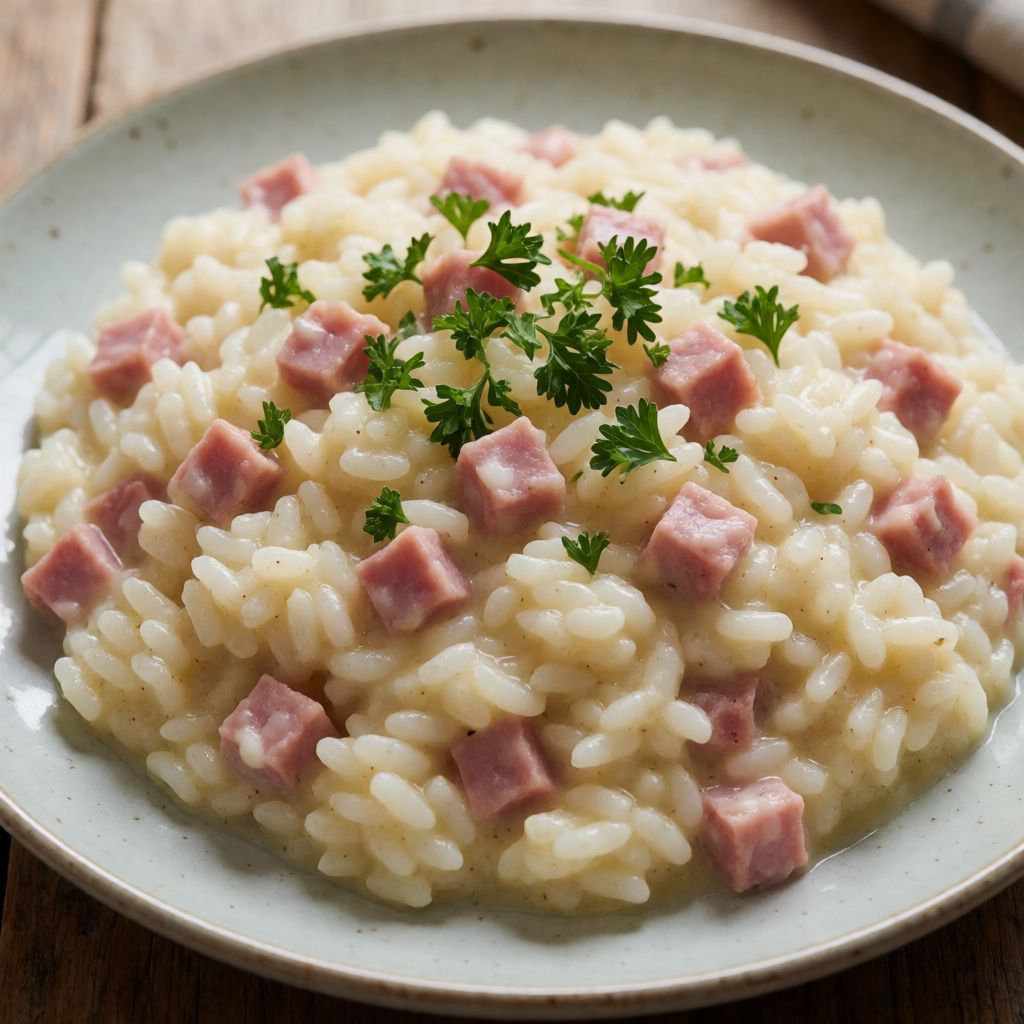
 AI photo
Shepherd's Risotto
A simple, hearty risotto finished with mortadella, mozzarella and a beaten egg with parsley.
Labels are worked out automatically from the ingredients and can be wrong. Check the packaging if it matters to you.
Ingredients
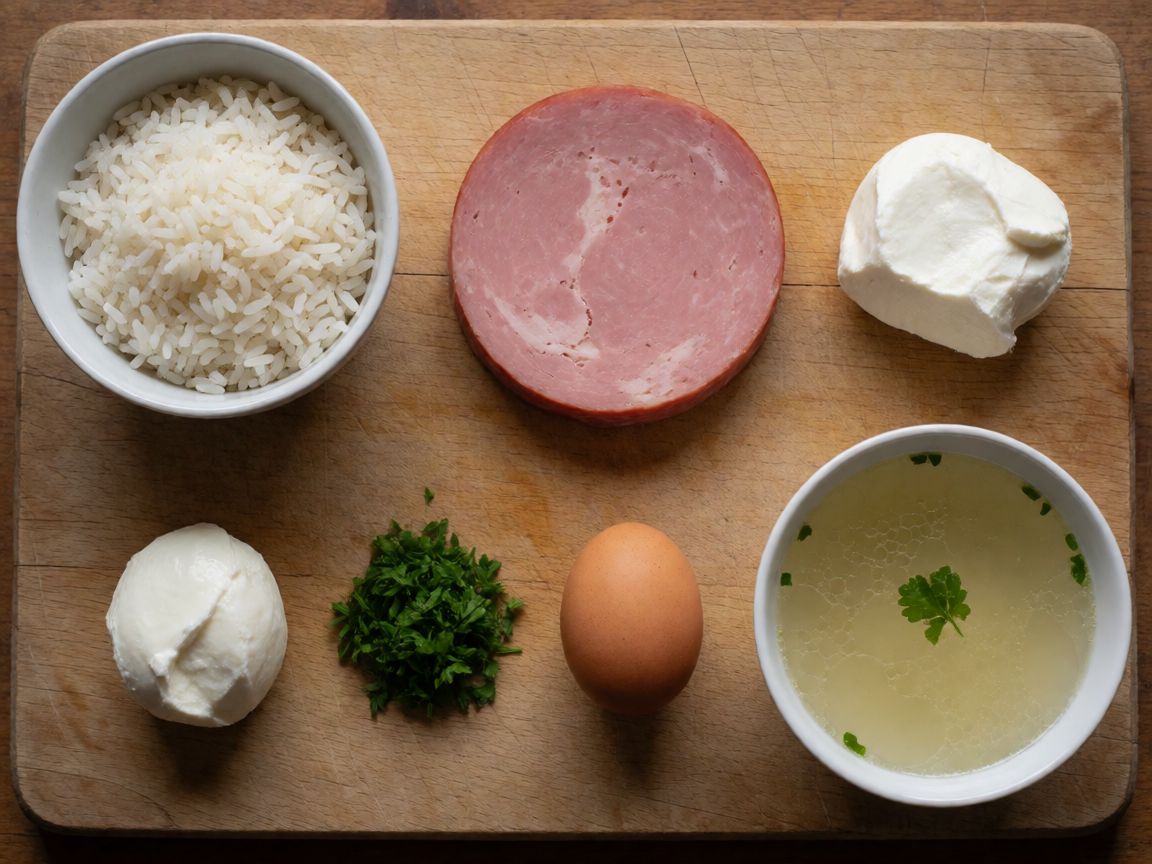
- 400 g Rice
- 1 pcs Mortadella a thick slice
- 1 pcs Mozzarella
- 1 pcs Egg
- 1 bunch Parsley chopped
- 1 l Vegetable stock
- 2-3 tbsp Olive oil
- Salt to taste








Steps
Dice the mortadella and mozzarella.
5 minIn a bowl, beat the egg and stir in the finely chopped parsley.
3 minIn a pot, fry the sliced onion in the olive oil, then add the rice.
3 minFry briefly, then gradually add the vegetable stock, stirring until the rice is cooked.
15 minAdd the mortadella and mozzarella, and mix well.
2 minStir in the beaten egg and parsley, and mix thoroughly.
2 minServe hot.
This is not restaurant risotto with its white wine and parmesan rind — it's a hillside version, built from what a shepherd could carry up to the flock without it going off: cured sausage, hard-wearing cheese, an egg, a stick of butter's absence filled in by fat from the meat itself. The name tells you the economics before you've even lit the stove.
What makes risotto risotto has nothing to do with the toppings. It's the technique: rice cooked by small additions of hot stock, stirred so each grain scrapes its starch loose and the starch glues the dish together. That's where the creaminess comes from — not cream, not butter, just abraded starch suspended in liquid. Pour all the stock in at once and you've made rice soup: the outside of the grain goes soft before the centre's had a chance to drink anything, and you end up with mush around a bullet.
The part that decides whether this dish works isn't the rice stage at all — it's the last four minutes, when the egg goes in. Too hot a pot and the egg scrambles into rags, the way it does if you're careless with carbonara. You want the rice just off the boil, hot enough to cook the egg through for safety but gentle enough to let it set into a coating rather than curds. Pull the pot back from the heat a beat before you add it, and stir like you mean it.
Rice is the one place you can't improvise blind. You need a variety that's generous with its starch and holds its shape while giving it up — arborio, carnaroli, vialone nano, the usual names. In a British supermarket, failing those, reach for pudding rice before you reach for long grain: pudding rice is short and starchy enough to mimic the effect, even if the bite ends up softer. Basmati or jasmine will just sit there being fragrant and refuse to thicken anything — wrong tool, however good the rice.
The onion at the start isn't a garnish, it's the base flavour the whole pot builds on, so give it time to turn soft and translucent in the oil before the rice goes in — not brown, because browned onion turns bitter and that bitterness doesn't cook out later, it just rides along. The rice itself gets a brief fry in that same oil before any liquid touches it; this seals the outside of the grain a little, so it holds together better through the stirring that's coming. You'll see the edges turn glassy while the centre stays a chalky white — that's your cue, not a clock.
Stock goes in gradually because that's the whole mechanism — a ladle at a time, stirred until it's mostly drunk up before the next ladle arrives. This is the patience part of the recipe, and there's no shortcut for it: twenty minutes standing at the stove, not twenty minutes doing something else and checking in. Each addition keeps the grain hydrating evenly instead of flooding it, and the stirring is what scrubs the starch loose in the first place. Doneness here is a bite, not a timer — the grain should give with a little resistance left in the centre, not crunch, not disintegrate.
Mortadella is a fatty, finely ground, mildly sweet cooked sausage — Bologna's answer to using the whole pig economically rather than wasting the trimmings. If you can't get it, look for the same thing under a different name: any cooked, fatty cold cut without a hard smoke flavour will do the job, even a good bologna or luncheon meat from the deli counter. What you're after is fat and gentle savouriness, not a strong cure that fights the egg and cheese.
Mozzarella needs to melt into strings, not into a puddle of water, so if you're using the fresh, wet kind sitting in brine, pat it properly dry first or it'll loosen the whole dish with released whey right when you want it to tighten up. A firmer, low-moisture mozzarella behaves better here and is honestly easier to find in most supermarkets than the ball-in-water version anyway.
The egg and parsley, beaten together before they ever meet the pot, are doing the job butter and parmesan do in a classic risotto — enriching and binding at the very end, off the worst of the heat. Four hundred grams of rice for two people is a generous, working portion rather than a delicate one — this was food for people doing physical work on a hillside, not a starter course, and it's worth remembering that when you're tempted to call it too much.