
 AI photo
Baked Chickpeas
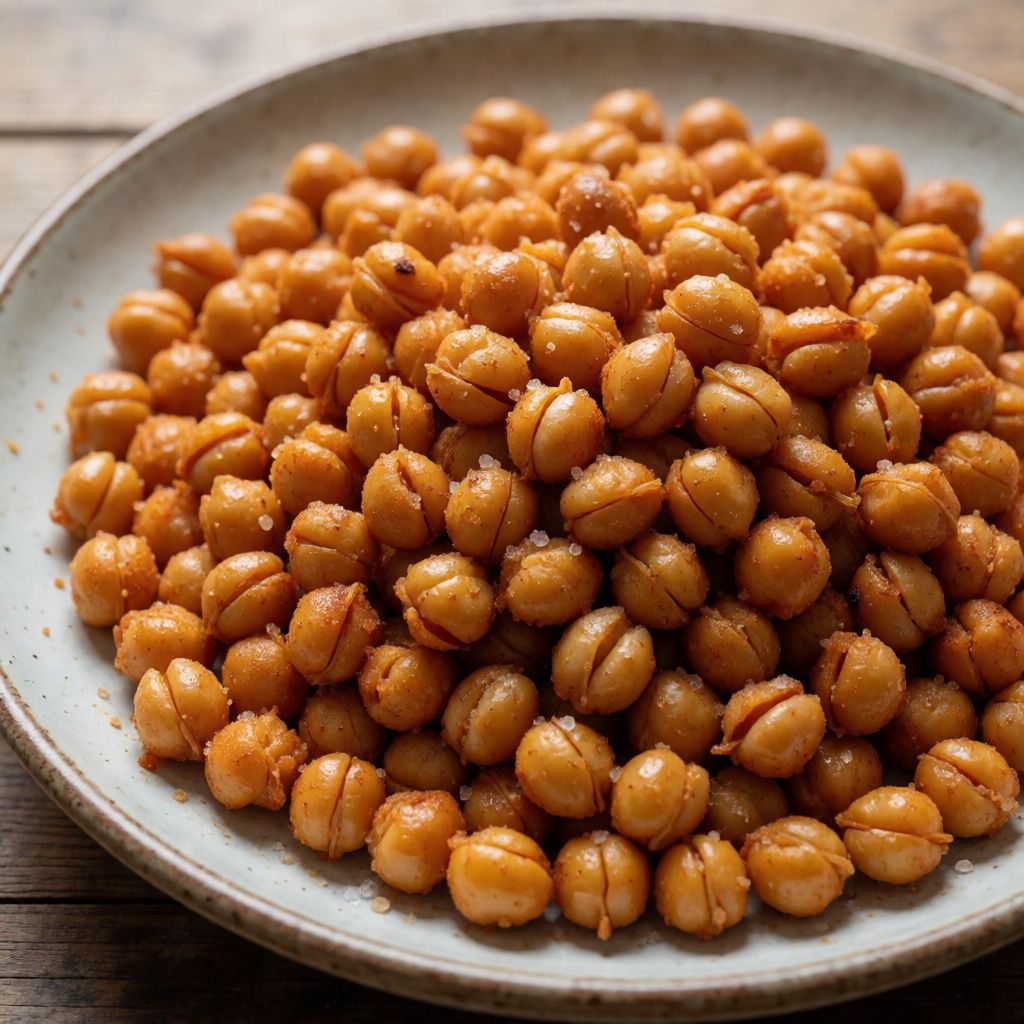
Crispy oven-baked chickpeas seasoned with smoked paprika and olive oil, great as a snack or side.
Labels are worked out automatically from the ingredients and can be wrong. Check the packaging if it matters to you.
Ingredients
- 1 can Chickpeas drained and rinsed
- 0.5 tsp Smoked paprika
- 1 tbsp Olive oil
- 1 tsp Salt




Steps
Rinse the chickpeas and pat them dry with a clean tea towel.
Toss the chickpeas well with the oil, then with the spices.
Spread onto a baking tray lined with parchment paper and roast at 180°C with the fan on for 20-25 minutes, until the chickpeas are tasty and crispy.
23 minIf you like, turn the chickpeas once or twice during roasting.
What was changed
The oven temperature was rounded to 180°C to fit the local display scale.
This is a bowl of noise before it's a side dish — chickpeas roasted until the skins crack and rattle on the tray. Nothing clever in the ingredient list, which is exactly the point: four things, and the whole result rides on one habit most people skip because it feels like nothing. Drying the chickpeas before they meet the oil.
Here's the mechanism. Water left on the surface of a chickpea has nowhere polite to go in a 180°C oven — it turns to steam right there on the skin, and steam is wet heat. Wet heat softens, it doesn't crisp. So the chickpea that goes in damp spends its first few minutes steaming itself instead of roasting, and by the time the surface finally dries out you've lost the margin that would have made it crunchy rather than just warm. The tea towel in step one isn't tidying up. It's the actual start of cooking.
Some say tinned chickpeas are the lazy version, that the real thing starts with dried ones soaked overnight. No — because the tin has already done the soaking and the boiling for you, at a factory that does it at scale and does it right. That's not a shortcut, that's someone else's labour you're buying for the price of a can. The job left for you is the one the tin can't do: getting the water off the skin again.
On the oil: it goes on after drying, before salt, and that order matters twice. Oil coats the skin and helps it brown — a thin film conducts heat into the surface and encourages that gentle char rather than leaving it to roast dry and uneven. But oil poured onto a wet chickpea doesn't coat, it beads and slides, so dry first, oil second, works for the same reason as the towel step: nothing sticks to a wet surface. One tablespoon for a tin's worth is a film, not a bath — chickpeas swimming in oil fry their outside soft and shiny rather than roasting it dry and cracked, so resist the urge to be generous here. Olive oil carries its own flavour and that's wanted alongside paprika; if you'd rather not taste it, use any oil that doesn't mind 180°C and has no smell of its own to fight the paprika — sunflower or rapeseed do the job quietly. Skip butter unless you enjoy watching it, because it scorches well before the chickpeas are anywhere near crisp.
Salt goes on after the oil for a reason beyond taste. Salt needs something to grip, and a dry salted-then-oiled chickpea just has the crystals wash off in the oil. Salted after oiling, the grains sit in the film and stay put, so what you taste is actual crunch of salt against the skin, not salt dissolved into nothing. A level teaspoon for a drained tin (around 240g once the liquid's gone) seasons it properly without turning the tray into a salt lick — taste once they're out and adjust next time, not mid-roast.
Smoked paprika is doing a job oven heat alone can't: giving a whisper of char flavour without actually burning anything. If you haven't got it, sweet paprika with the smallest pinch of smoked salt gets you close, or drop the smoke entirely and go savoury with cumin and a little chilli — the chickpea doesn't demand paprika specifically, it demands something with a bit of warmth and colour to cling to the oiled skin.
Parchment under the tray isn't fussiness either. A bare metal tray lets the oiled underside of each chickpea glue itself slightly as it browns, and when you turn them you tear the very skin you were trying to crisp. Paper lets them lift clean.
On the fan: that setting matters more than the number next to it. A fan oven moves air past the food, which strips the surface moisture away continuously rather than letting it hang around the chickpea in a still, humid pocket the way a non-fan oven does. That's the difference between the stated 20–25 minutes and a longer, soggier road to the same result without the fan — if your oven only does static heat, give it more time and turn the chickpeas more often, because you're compensating for air that isn't moving on its own.
If the oven's already on for a Sunday roast, that's not a coincidence worth missing — slide the tray in on a lower shelf while the joint rests, and you've got a side for free off heat you were paying for anyway. And give the whole business its due patience: the towel-drying takes longer than it looks like it should, and the last five minutes in the oven are where "soft" turns into "cracks between your teeth." Pull the tray early because the clock says so, and you'll have warm chickpeas, not crisp ones.