
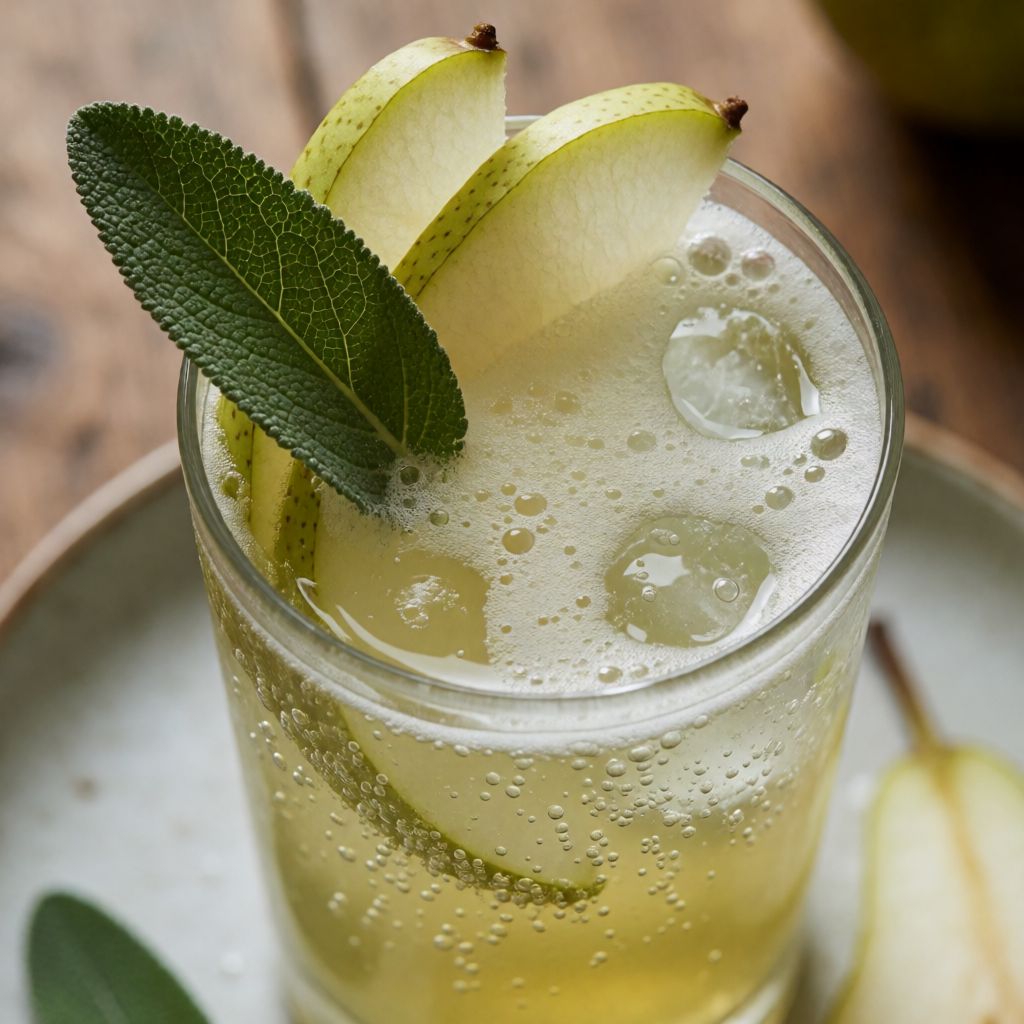
 AI photo
Sage, Pear and Gin Cocktail
A refreshing cocktail combining sage, pear and gin, topped with sparkling water and lime.
Labels are worked out automatically from the ingredients and can be wrong. Check the packaging if it matters to you.
Ingredients
- 10 pcs Sage leaves fresh
- 0.5 pcs Pear sliced
- 2 tbsp Honey
- 75 ml Water
- 60 ml Gin
- Sparkling water frozen into ice cubes
- 0.5 pcs Lime for juice
- 330 ml Sparkling water
- 1 pcs Lime sliced
- 3 pcs Sage fresh, for garnish

Steps
Bring the water to the boil in a saucepan, add the sage leaves and pear, let it boil briefly, then remove from the heat and allow to cool.
5 minOnce the mixture has cooled completely, stir in the honey.
15 minPour the sage syrup into a cocktail shaker, add the gin, ice cubes and lime juice, and shake well.
2 minStrain the drink into two glasses, discard the leaves and pear, and top up with sparkling water.
1 minGarnish with sage, fresh pear and lime slices.
1 min
This is two small systems that meet only right at the end: a warm sage-and-pear syrup, and a cold shake of gin, lime and ice. Everything before the shaker is about building flavour gently; everything in the shaker is about chilling and diluting it fast. Keep that split in your head and the drink makes sense.
What decides whether it works is how long the sage actually sits in hot water. Some say boil it longer and you get more sage flavour — no, because sage's aroma lives in oils that are volatile: the longer they're over heat, the more of them leave as steam instead of staying in your water. A brief boil, then off the heat to steep as it cools, pulls flavour out without cooking it away. You'll see it happen: the leaves go from bright grass-green to a duller, tired olive. That colour change is your real signal, not a clock.
The honey goes in only once the liquid is properly cool, and that's not fussiness. Stir honey into something still hot and you flatten it — its own floral note collapses into generic sweetness, sometimes with a faint scorched edge if your water was really still near boiling. Cooling first is the step that protects the honey from the heat, the same logic as adding yoghurt to a hot sauce off the flame instead of on it.
After that it's a balance act: syrup sweetness against lime's sharpness against the bitterness gin always carries from its juniper. Taste after you shake, before you top up with sparkling water — that's your last moment to fix anything, because once the fizz goes in you're diluting the balance you just made, not adjusting it.
Sage: buy it fresh, leaves firm and a bit matte, not wilting at the edges. Dried sage is a different ingredient entirely here — no oil left to release into water, just dust. If you've genuinely got none, a little fresh rosemary will take you into the same piney territory, though it's sharper and you'll want less of it. Don't reach for mint instead — it's cool and sweet in a way that changes the whole drink's personality rather than standing in for sage's role.
Pear: half a pear for the syrup, half kept for garnish is the usual split here, but what you're really choosing is ripeness. You want it giving slightly to a thumb, with a bit of scent at the stem — a pear that's still hard as a doorknob won't give up anything in that brief boil, and you'll be paying for decoration, not flavour. If yours is underripe, that's fine, just know the honey is doing more of the sweetening work alone.
Honey: go for something light and floral — a basic clear honey from any supermarket is correct, not a failing. A dark, heavy honey (heather, buckwheat) will argue with the sage instead of carrying it. If you've no honey, golden syrup will sweeten the drink but brings none of honey's own aroma — treat it as a sugar substitute, not an equal swap.
Gin: a straightforward London dry style is what this recipe assumes — its juniper and citrus notes sit comfortably next to sage's own slightly piney, eucalyptus edge. A heavily flavoured or fruit-sweetened gin will fight the syrup rather than lift it, so save those for something else.
The sparkling-water ice cubes are doing a specific job: as they melt in the shaker and then in the glass, they dilute the drink with water that's already carbonated, so the whole thing doesn't go flat the way it would if you'd used plain ice. Shaking itself isn't showmanship — some think it's just for cold, no, because the hard agitation also chips the ice slightly and folds a little air and that ice-melt water through the gin and syrup together, rounding off the alcohol's harder edge in a way stirring never quite manages. In a flat with no proper shaker, a clean jam jar with a tight lid does the same work; a tea strainer held over the glass stands in for a cocktail strainer.
Lime juice should be squeezed fresh at the point of use — bottled juice carries a flat, slightly bitter note from sitting in a bottle, and you'll taste it against something this delicate. The sparkling water for topping up goes in dead last, straight into the glass, never into the shaker — shake carbonation and you just beat the bubbles out of it, and you'll have made a flat drink and a mess. For the garnish sage, lay the leaf in whole, don't bruise or tear it: a crushed leaf starts browning and turns slightly bitter and grassy almost immediately, where a whole leaf just sits there releasing its own scent quietly every time the glass comes up to your face.