
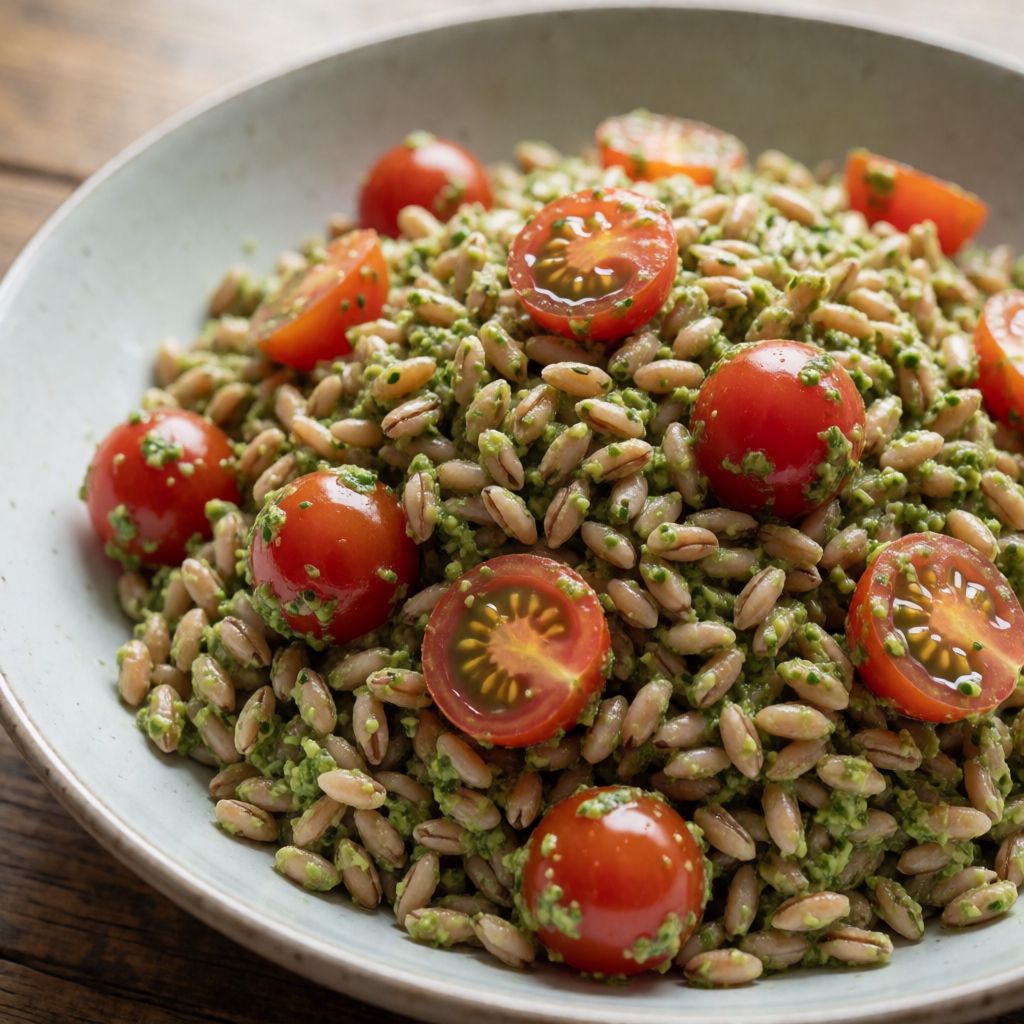
 AI photo
Spelt Salad with Pesto and Cherry Tomatoes
A fresh spelt salad with pesto and cherry tomatoes, chilled before serving.
Labels are worked out automatically from the ingredients and can be wrong. Check the packaging if it matters to you.
Ingredients
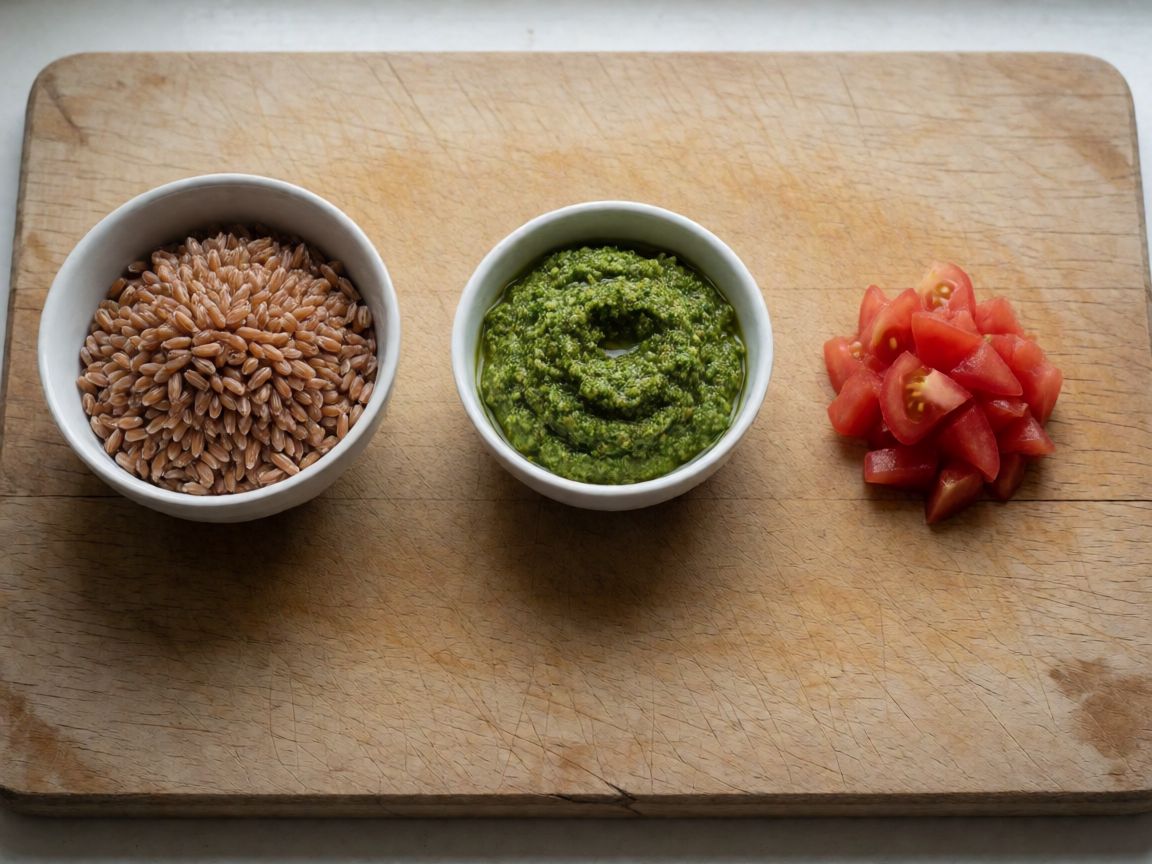
- 250 g Spelt Berries
- 130 g Pesto
- 170 g Cherry Tomatoes quartered
- Olive Oil to taste
- Salt to taste




Steps
Rinse the spelt under cold running water to remove any debris and husk.
Boil the spelt in salted water, following the cooking time given on the pack.
Drain the spelt and immediately rinse it with cold water to stop the cooking, then transfer it to a large bowl.
Add a little olive oil, along with the pesto and the cherry tomatoes cut into quarters.
Mix well and chill in the fridge for at least 30 minutes.
30 min
This is a grain salad built on three different textures doing three different jobs: the spelt chews, the pesto coats and seasons, the tomato bursts and cuts through the fat with acid. Nothing here is cooked twice and nothing is served hot — that's the whole point. It's a dish for a fridge, not a stove, which makes it the rare recipe that gets better the longer you leave it alone.
What decides whether it works is the grain, long before the pesto goes anywhere near it. Spelt still has its outer bran layer, unlike polished rice, so it behaves like a small, sturdy pasta — you boil it to a timed point, not to a texture you're guessing at, and you want it to still resist your teeth slightly. Overshoot that and you get a bowl of grey mush dressed in good pesto, which is a waste of good pesto.
The cold rinse after draining isn't just about stopping the cooking — some say it "washes out the flavour." No. What it washes out is the surface starch that the grain sheds into the water while boiling, the same starch that, left on, glues the grains together into clumps as they cool. Rinse it off and every grain stays separate, ready to pick up oil and pesto on its own surface instead of sticking to its neighbour.
Thirty minutes in the fridge at the end is not a suggestion, it's an ingredient. Warm grain and cold pesto don't meet properly — the oil in the pesto needs to firm up slightly and work its way into the grain, and the tomato needs that time to bleed a little juice into the mix. Taste it straight after mixing and then taste it after the chill: it's not the same dish twice.
Spelt itself is a wheat, just an older, less-bred-for-yield one, with a tougher husk that survives rinsing better than modern soft wheat and gives you that nutty, slightly mineral chew. Any whole grain with a firm husk and some bite to it will stand in: farro, wheat berries, pearl barley, even brown rice if that's what's in the cupboard, though rice won't give you quite the same bite. Check the cooking time on whatever bag you've got — husked grains vary a lot, and "follow the pack" is not a cop-out, it's the only honest instruction when the grain itself isn't standardised the way pasta is.
Rinse the dry grain first, before it ever sees water in the pot, for a different reason entirely — that's about washing off field dust and loose husk fragments, not starch. Skip it and you'll find grit at the bottom of your bowl later, which is a much less forgiving fault than a slightly gluey grain.
Pesto here is doing the job of both sauce and seasoning at once, which is why it goes in cold and stays cold — basil, garlic, pine nuts, parmesan and oil are all things that turn bitter, dull or gritty with heat, so the whole method of this salad is built around never warming it past the temperature of your own kitchen. If you're buying it, read the back: you want something thick enough to coat a spoon, not a thin green oil. If you're making your own or substituting, the criterion is simple — any thick, well-salted, oil-bound herb paste with enough fat in it to cling to the grain. Walnuts instead of pine nuts, rocket instead of basil, nutritional yeast instead of parmesan if you're avoiding dairy — all of that works, because the mechanism doesn't care which herb or nut, only that the paste is fat-rich and assertive enough to carry a mouthful of plain grain.
The cherry tomatoes are quartered, not left whole and not diced to mush, because you want cut surfaces that weep a little juice into the bowl without the tomato collapsing into pulp. Pick ones that are actually ripe and a bit sweet — in a British supermarket in winter that can mean reaching for a vine variety or accepting that a sun-dried tomato, roughly chopped, will give you more flavour than a pale, watery one grown under glass with no sun on it at all.
The olive oil you stir through before the pesto isn't there for flavour — the pesto already carries plenty of its own oil. Its job is to coat the warm grain the moment it's drained, exactly like oiling pasta, so the grains don't weld themselves together while they sit waiting for the pesto. Any oil with no strong smell of its own will do this job; you just lose a little of the matching olive note if you swap it for something neutral like sunflower.
Made like this, it keeps well in the fridge for a day or two, which makes it good company for a Sunday when the oven's busy with something bigger — leave this in the fridge from Saturday and you've got a cold side that needs nothing from you on the day at all.