
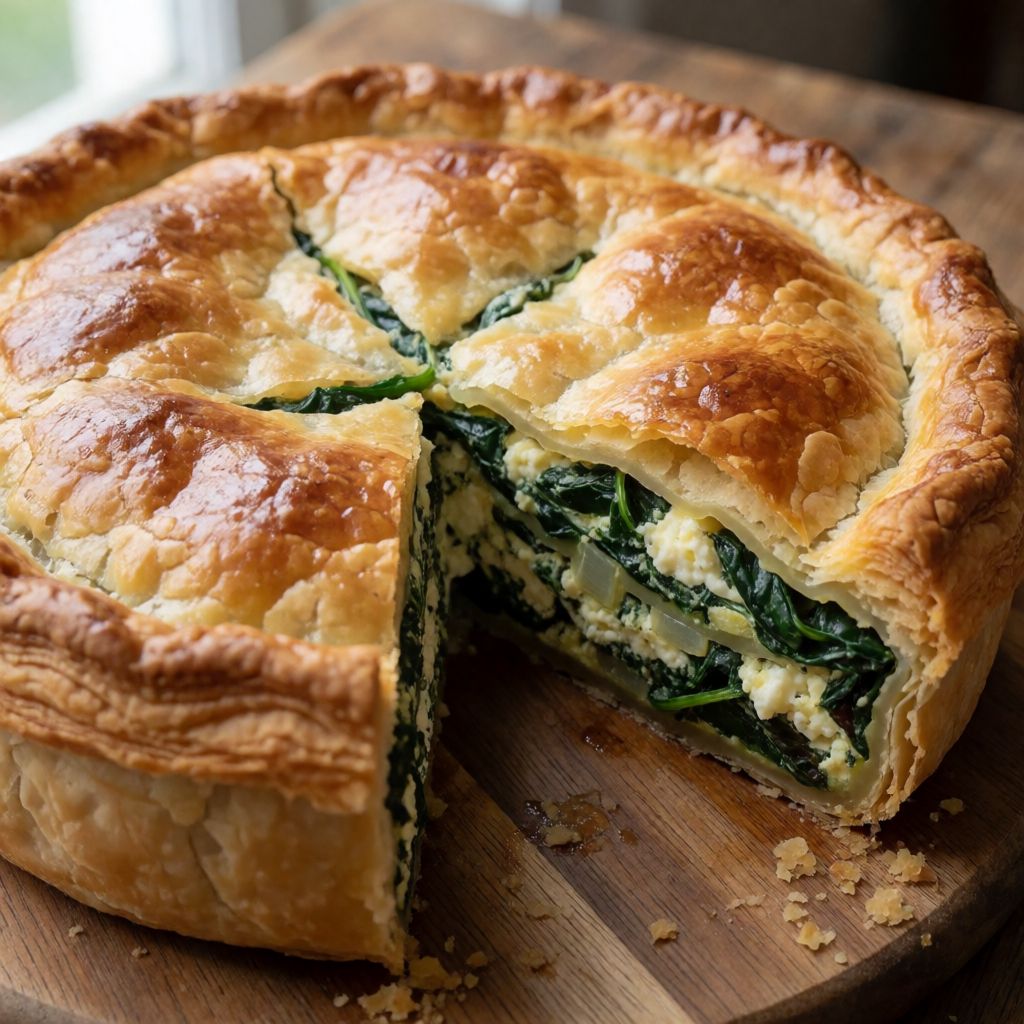
 AI photo
Spinach and Chard Pie
A savoury pastry pie filled with chard, spinach, ricotta and parmesan.
Labels are worked out automatically from the ingredients and can be wrong. Check the packaging if it matters to you.
Ingredients






Steps
Rinse the chard under running water and boil in lightly salted water for about 7-8 minutes, then drain in a colander.
8 minIn a non-stick pan, sauté the spinach with a little olive oil and a pinch of salt until all the moisture has evaporated.
Slice the onion thinly and fry it in another non-stick pan with a little olive oil.
When the onion is nicely browned, add the boiled chard and let it cook together with the onion. Leave to cool.
In a bowl, mix the chard, spinach, eggs, ricotta, parmesan and nutmeg, stirring well until smooth.
Grease a 24-26 cm tin with butter and dust with flour.
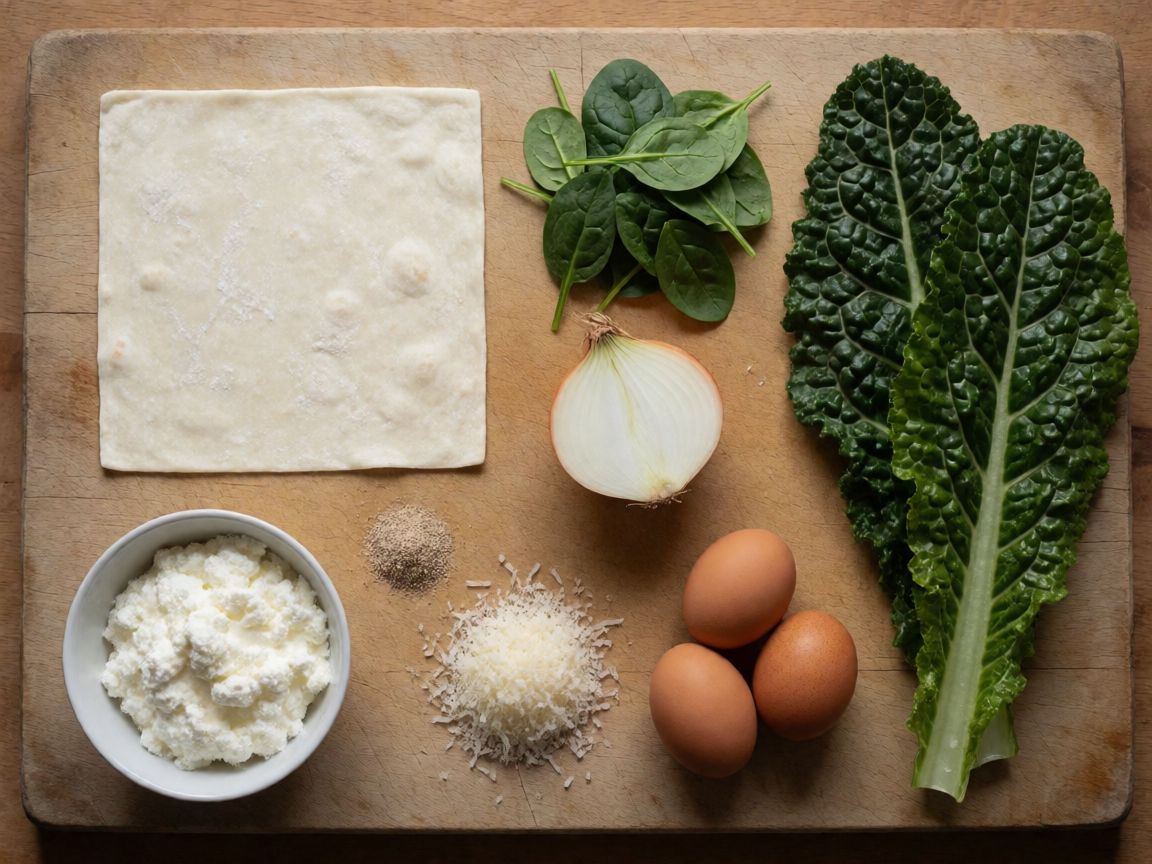
Lay the puff pastry sheet in the tin, fill it with the filling and smooth the surface.
Preheat the oven to 180°C and bake the pie for about 35-40 minutes.
38 minAfter baking, let the pie cool slightly before serving whole or cut into portions.
This is a torta salata — a savoury pie that's really a greens-and-cheese custard held up by a pastry shell. Think of it as a vegetable quiche that's decided it doesn't need a tin's worth of cream to taste rich. What decides whether it works isn't the pastry, it's the water. Two kilos of chard look absurd raw and collapse to almost nothing cooked — but if you don't drive the moisture out of both the chard and the spinach, you get a soggy base and a filling that weeps grey liquid onto your plate instead of holding its shape when sliced.
Some say spinach pies are naturally wet and you just accept it. No — the wetness isn't the vegetable's fault, it's a step skipped. Spinach wilted in a pan releases water as it dies; if you pour it straight into the filling, that water has nowhere to go but through the pastry during baking, and puff pastry under liquid doesn't crisp, it steams and goes rubbery. The instruction to cook spinach "until all the moisture has evaporated" isn't fussiness, it's the one job standing between you and a pie that holds a slice instead of sliding apart.
The eggs and ricotta are doing more than bulking things out — three eggs set the whole mixture into a soft custard once it hits oven heat, and the ricotta keeps that custard tender rather than rubbery, because its fat coats the egg proteins and stops them binding too tightly. Parmesan isn't there for flavour alone; its glutamates do a lot of the savoury work that salt alone can't, which is why the pinch of salt stays genuinely a pinch.
Chard is the backbone here, not spinach — two kilos against 250g tells you that. Chard's stems hold structure even after boiling, so it gives the filling body; spinach alone would collapse into a flat green sheet. If you can't get chard, use more spinach and accept a softer, less substantial filling, or reach for cavolo nero — leafy, firm-ribbed, boils down the same way. What you're choosing for is a leaf with enough fibre to survive two cooking stages without turning to mush.
Boiling the chard first, then letting onion take it further in the pan, is two separate jobs. Boiling just softens and tames any bitterness. The pan afterwards is about evaporation and flavour — the onion's sugars caramelise as it goes from pale gold toward a deeper amber (don't rush this by cranking the heat; scorched onion turns bitter and there's no saving it downstream), and that colour change is your actual doneness cue, not a clock. Letting the mixture cool before it meets the eggs matters too: hot vegetables dropped onto raw egg start cooking it on contact, giving you scrambled flecks through the filling instead of a smooth set.
Ricotta should be the firm, crumbly kind sold for cooking, not a smooth spreadable tub — too much whey left in it reintroduces the water problem you worked to avoid with the spinach. If you drain whatever ricotta you have in a sieve for twenty minutes first, you fix most of that. Parmesan wants to be properly aged and grated fresh if you can — the pre-grated dust in tubs has anti-caking starch in it and melts less cleanly, giving a grittier bite.
Nutmeg is the traditional partner to any egg-and-dairy filling — it's not decorative, it cuts through the richness of ricotta and egg the way it does in béchamel, so a pinch genuinely changes the finish, not just the aroma.
Olive oil should have no strong character of its own here — it's a cooking medium for the onion and spinach, not a flavour statement, so a mild, cheaper olive oil or any neutral vegetable oil works exactly as well; save the good peppery extra virgin for drizzling over the cut pie afterwards if you want it, not for the pan.
The butter-and-flour on the tin is an old trick from a kitchen without non-stick pans: flour gives the butter something to grip, so the fat doesn't just slide off the metal under weight, and the pastry base lifts out clean instead of tearing. In a modern non-stick springform tin you can skip the flour and just butter lightly — but if your tin is older or a bit scratched, keep doing both; it costs you a tablespoon of each and saves you a torn pie.
180°C with no fan assumption, 35–40 minutes as a floor, not a target: look for the pastry edge turning deep gold and the filling's surface set rather than wobbling like a liquid when you nudge the tin. An ordinary UK oven can run cooler at the edges than the dial says, so if the centre still jiggles at 40 minutes, give it longer rather than pulling it out on the clock's word.