
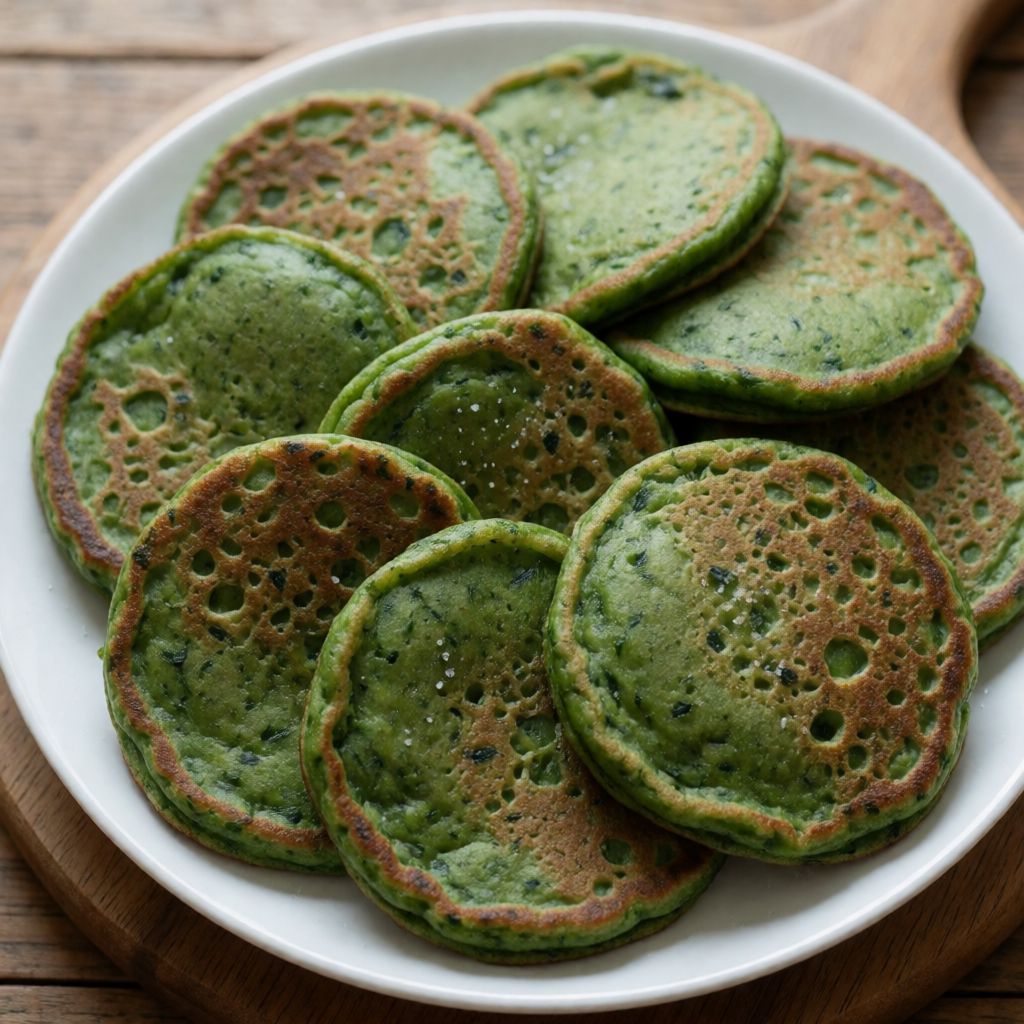
 AI photo
Spinach Pancakes for an Aperitif
Savoury spinach pancakes, perfect as a nibble with cured meats, cheeses or dips.
Labels are worked out automatically from the ingredients and can be wrong. Check the packaging if it matters to you.
Ingredients
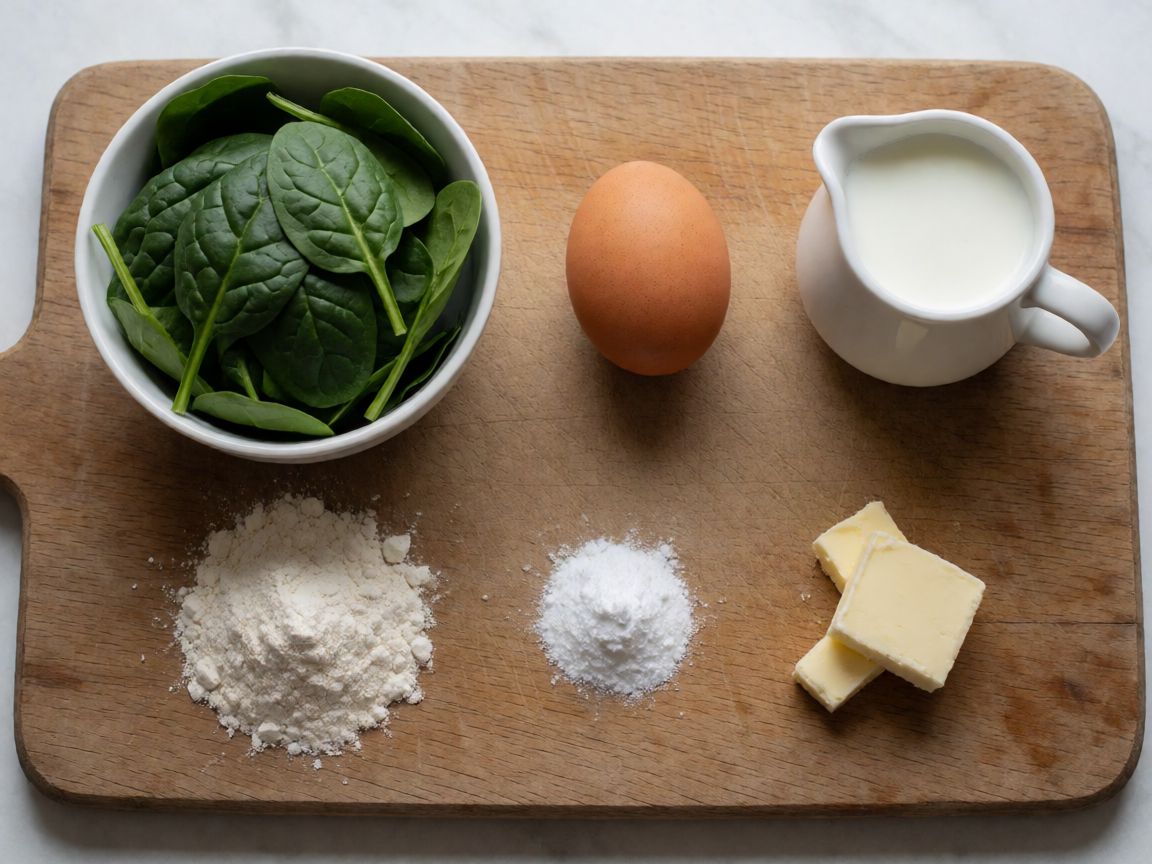
- 200-250 g Spinach
- 1 pcs Eggs
- 160 g Milk
- 150 g Gluten-free flour mix or medium to coarse-ground rice flour, or plain flour
- 5 g Baking powder
- Salt to taste
- Butter to taste
- Vegetable oil to taste, for frying








Steps
Sauté the spinach in a pan for 5-6 minutes without water or oil, covered, then let it cool.
6 minIn a separate bowl, whisk the eggs with the milk.
Sift in the flour mix, then add the baking powder.
Squeeze out the spinach well and weigh out 120g.
Blend the spinach, add it to the batter, stir in a pinch of salt and mix everything together.
Heat a small frying pan, melt some butter, and pour in a ladleful of batter at a time.
Fry for about 2-3 minutes until bubbles appear, then flip with a spatula and continue cooking.
3 minServe the pancakes immediately, with cured meats, cheeses, savoury spreads and the like.
This is not a Shrove Tuesday pancake and it was never meant to be sweet. Think of it as a small green disc the size of a blini, meant to sit under a slice of ham or a smear of soft cheese before the real meal starts — in Italy that's called an aperitivo, in your kitchen it's the five minutes before the roast goes on the table when people stand around with a glass in hand and need something to eat that isn't crisps.
What decides whether these work is water, not heat. Spinach is almost all water, and if you let that water into the batter unmeasured, you get soup, not batter — the flour can't set it, the baking powder has nothing solid to lift. That's why the recipe tells you to weigh the spinach after squeezing it, not before. 120g is not a suggestion, it's the number that makes the ratio with egg, milk and flour actually hold together when it hits the pan.
Some say you should blanch spinach in boiling water before using it in a batter, to "soften" it. No — boiling it drowns the flavour in the pot and you throw that flavour down the sink with the water. Sautéing it dry, covered, in its own pan lets it wilt in its own steam and keeps what little taste spinach has concentrated instead of diluted. The lid here isn't a lid for pressure, it's a lid so the steam that comes off the leaves doesn't just escape into your kitchen — any plate set over the pan does the same job if you don't own one that fits.
Spinach: fresh is better here because frozen spinach has already been through one freeze-thaw that breaks its cell walls and releases water before you've even started — you'd be squeezing out a wetter, blander mass. If frozen is all you have, thaw it fully first and squeeze harder; expect to need a bit more raw spinach to land on the same 120g once it's cooked and drained, because frozen loses more volume.
Egg and milk: together they are the glue and the thinner. The egg sets when it hits heat and holds the crumb together; the milk keeps the batter pourable. Any milk with a fat content similar to whole milk does this job — oat or soya milk works if you have no dairy, but skip anything watery like rice drink, it won't carry the batter the same way.
Flour: the recipe gives you three options because the job of the flour here isn't to develop gluten — you're not kneading, you're whisking a batter that goes straight in the pan. So the real criterion is a flour that thickens with liquid and heat without needing time to rest. A gluten-free mix does this predictably because it's usually balanced already. Coarse rice flour gives a slightly grainier bite, which some people like against the soft spinach. Plain wheat flour is the easiest fallback and the most forgiving if your measuring is slightly off.
Baking powder is doing the work that yeast would do over hours — except you don't have hours, this batter goes from bowl to pan in minutes. It reacts with the liquid and heat to throw bubbles through the batter fast. Don't substitute bicarbonate of soda alone; it needs an acid to activate properly and this batter has none strong enough.
Butter and oil: butter first, for the taste it leaves on the pancake's crust — that's not negotiable if you want the flavour the recipe is built around. But if your pan runs hot and the butter starts to brown too fast between pancakes, top it up with a spoon of neutral oil, something with no smell of its own — sunflower or a light vegetable oil — which raises the point at which the fat starts to burn, without you losing the butter taste you already built into the first few pancakes.
Serve these the moment they're off the pan. Baking powder's lift fades once the batter's gone, and a cooled pancake stiffens and loses the slight give it has fresh — closer to a biscuit than a pancake. This is where patience has to run out: you've spent it earlier, cooling the spinach before blending so it doesn't cook the egg early or set the baking powder off too soon. Once the pancakes are made, there's no more patience to spend — eat them standing up, with whatever's on the board.