
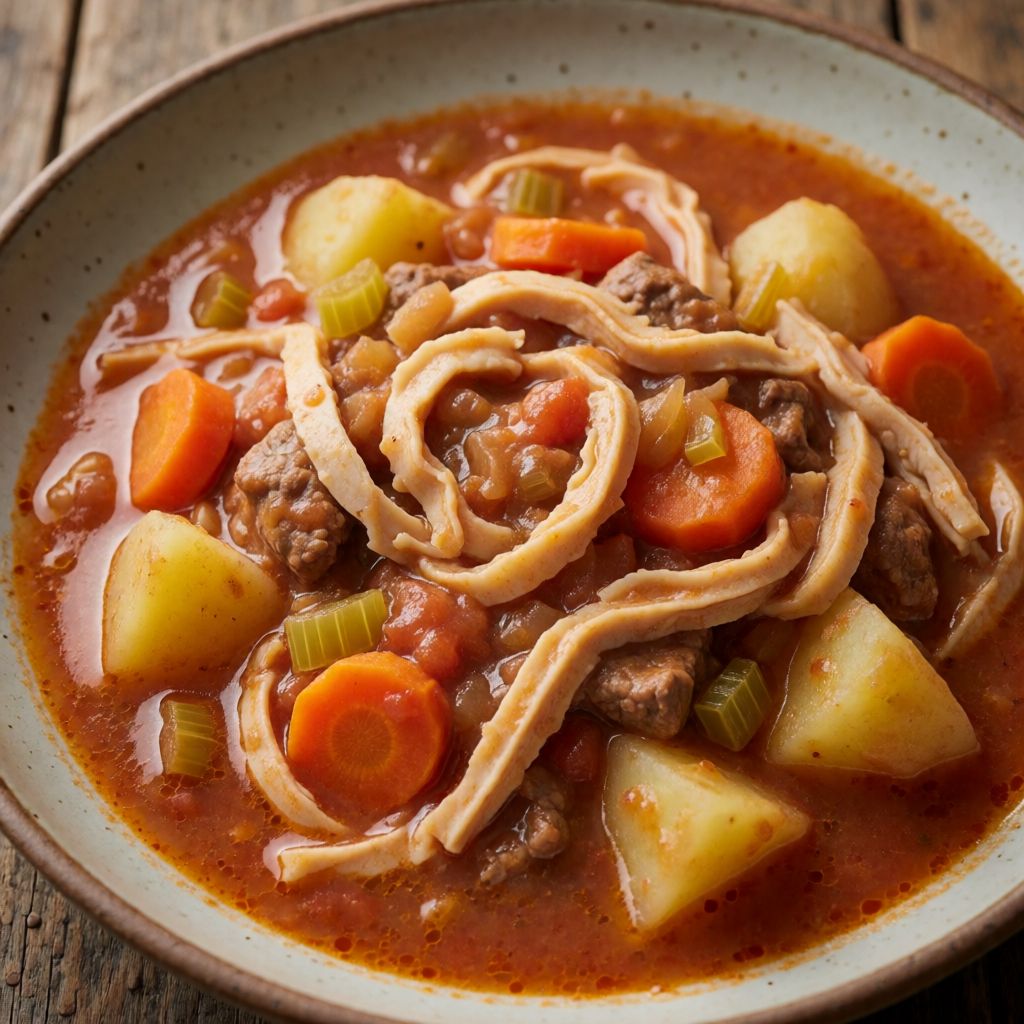
 AI photo
Tripe with Potatoes
A hearty tripe stew simmered with tomato, white wine and potatoes until tender.
Labels are worked out automatically from the ingredients and can be wrong. Check the packaging if it matters to you.
Ingredients











Steps
Cover the tripe with water and vinegar and leave for 1 hour, then rinse and cut into thin strips
60 minFinely chop the garlic, onion, carrot and celery
Pour olive oil into a pot, add the chopped vegetables and fry
Add the tripe, fry it, pour in the white wine and season with salt
Cook the tripe for 5 minutes
5 minAdd the tomato passata and oregano, cover and cook for about 15 minutes
15 minAdd the diced potatoes and simmer gently for about 1 hour
60 minOptionally add Parmesan before serving
Serve hot with homemade bread
What was changed
In this version beef tripe has been used instead of veal tripe, as it is easier to find in British shops.
Tripe with potatoes is a poor man's dish that only works if you stop being squeamish about tripe and start treating it like a vegetable that needs a long swim. Honeycomb tripe is almost pure collagen — no fat, no real flavour of its own, nothing to burn. That's the whole mechanism here: you're not cooking meat, you're dissolving connective tissue slowly enough that it turns soft instead of staying like a bath mat. Rush it and you get rubber. Give it the better part of an hour at a bare simmer and it gives up, turns tender, and starts tasting of whatever's in the pot with it — wine, tomato, celery, garlic.
What decides this dish is patience, not skill. There's no clever knife work, no searing to get right. The two things that actually matter: cleaning the tripe properly before it goes anywhere near heat, and never letting the pot boil hard once the tripe's in. Some say tripe always smells — no, because that smell is what the vinegar soak is for. Untreated tripe carries a faint barnyard note from the gut it came from; an hour in water with vinegar, then a good rinse, strips that out. Skip it and you'll fight the smell all the way through cooking, no amount of oregano will cover it.
Buy tripe already dressed — "honeycomb" is the pattern on the stomach lining, and it's the cut worth asking your butcher for by name, because plain "tripe" can mean blanket or thick seam tripe, which take even longer and chew differently. If your butcher's pre-bleached it (most UK ones sell it that way, already boiled white), the vinegar soak is still worth doing — it's not there to cook the tripe, it's there to pull out residual smell, and bleached tripe still carries a trace of it. Cut it into strips after the soak, not before: thin strips swim in the sauce and cook evenly; thick ones stay tough in the middle long after the outside's gone tender.
The soffritto — onion, carrot, celery, garlic, finely chopped — isn't decoration, it's the base flavour that the tripe itself can't provide, since tripe brings texture and almost no taste of its own. Chop it fine and give it real time in the oil before the tripe goes in: you're after the onion softening and turning translucent, the raw bite gone, not colour. Any oil with no smell of its own works here — olive oil is traditional because it was what was in the cupboard in the regions this dish comes from, but a flavourless sunflower or rapeseed oil does the same structural job if that's what you've got.
The white wine isn't for taste alone — poured in while the pan's still hot, it deglazes whatever's stuck to the bottom from frying the tripe, lifting it back into the sauce instead of leaving it to burn later. Let it bubble down for those first five minutes uncovered-ish so the raw alcohol smell cooks off; if it still smells sharply of wine when the tomato goes in, it hasn't had long enough. Any dry white does the job — you're not drinking it, you're using its acidity to cut through the richness of a long braise, so don't waste good wine on it and don't substitute anything sweet.
Tomato passata rather than whole tinned tomatoes because you want a smooth sauce that coats the tripe strips rather than chunks sitting on top — if all you have is tinned tomatoes, blitz them. Oregano here is doing a simple job: a dried herb that holds its character through an hour of simmering, unlike fresh herbs which would just disappear. If you haven't got it, dried thyme or a bay leaf left in the pot does something similar — herbal background, nothing that fights the tomato.
On potatoes, any waxy or all-rounder variety holds its shape through the final simmer; a floury baking potato (your classic Maris Piper for a Sunday roast) will start breaking down and thicken the sauce into something closer to mash, which isn't wrong exactly, just a different dish than the one you meant to make. Cut them to a size that'll go from firm to yielding in under the full hour the tripe's had — a knife should slide in without resistance, that's the only clock that matters, the minutes on the recipe are just where to start checking.
Parmesan at the end is optional for a reason — it adds salt and a savoury edge the dish doesn't strictly need, since the tripe and tomato already carry plenty of flavour after an hour together. If you add it, hold back on salting earlier, because cheese and a well-reduced tomato sauce both concentrate saltiness as they sit. Bread on the side isn't garnish — it's there to mop the sauce, which is arguably the best part of the dish, so don't skimp on it or serve this with something that can't do that job, like rice.