
 AI photo
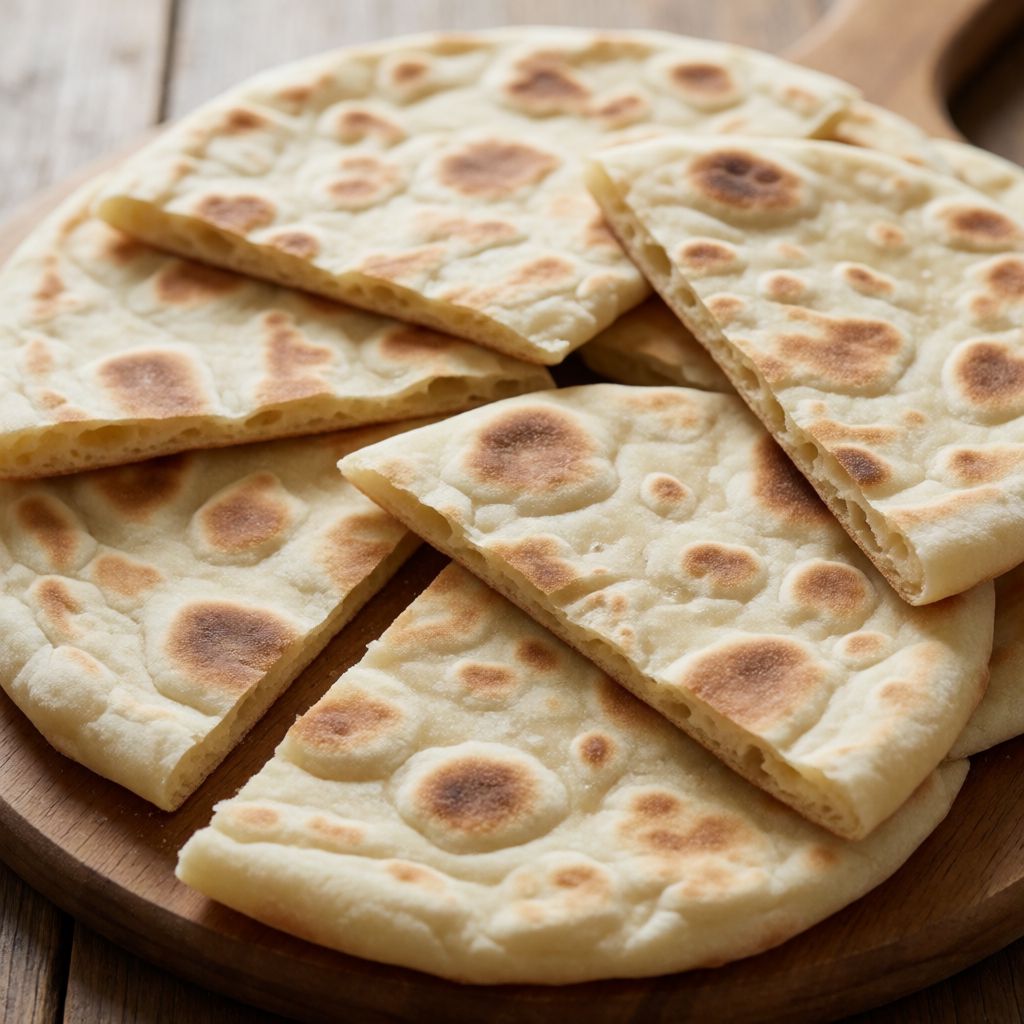
Umbrian Torta al Testo – Flatbreads for Filling
A simple Umbrian flatbread dough, fried until golden and ready to be filled with your favourite ingredients.
Labels are worked out automatically from the ingredients and can be wrong. Check the packaging if it matters to you.
Ingredients
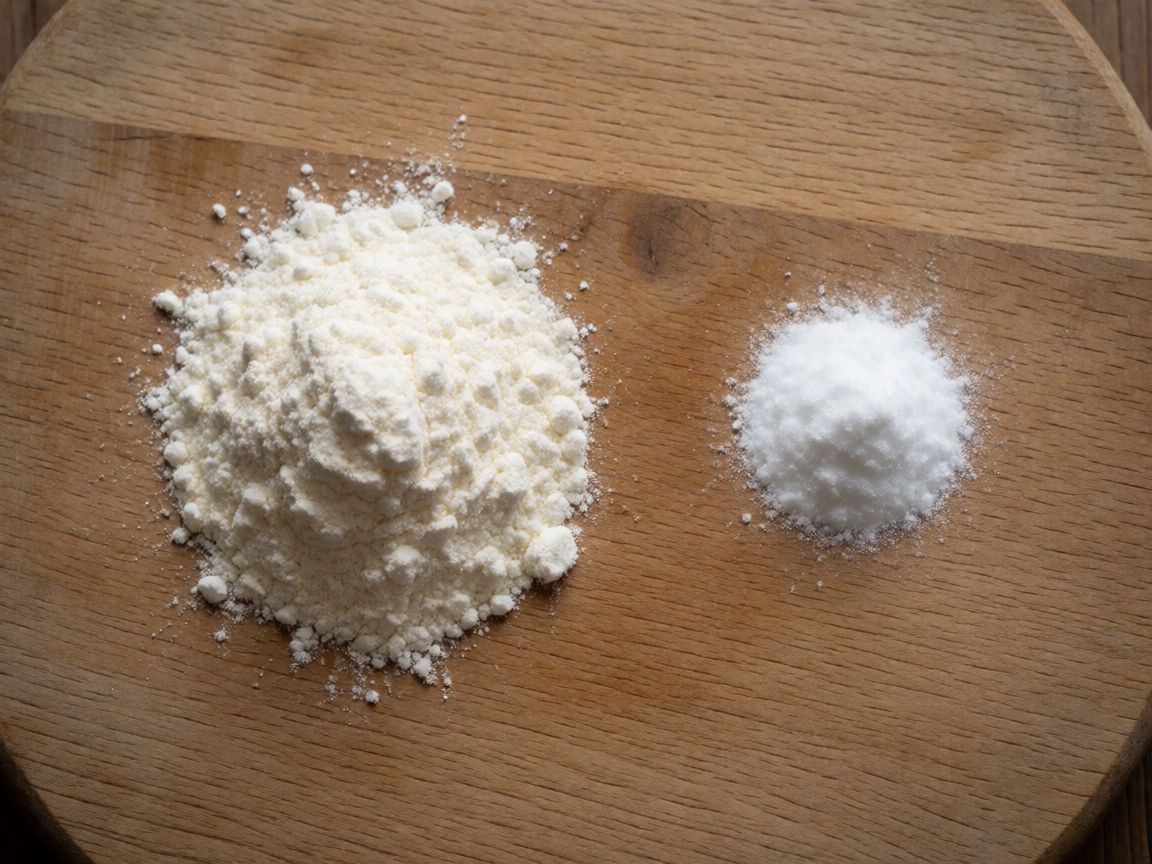
- 250 g Plain Flour
- 125 ml Water
- 5 g Salt
- 10 g Olive Oil
- 2-3 g Baking Soda





Steps
Tip the flour and baking soda into a large bowl, mix with a fork, add the water and keep stirring.
Add the olive oil and knead the dough by hand for a few minutes until it is smooth and elastic.
Wrap the dough in cling film and let it rest in the fridge.
30 minTake out the dough and roll it with a rolling pin into a round about 25 cm across.
Heat a frying pan until very hot, lay in the flatbread and cook until golden bubbles appear.
Turn it over and cook the other side.
Serve the torta al testo sliced, or cut it into two discs and fill as you like.
Torta al testo is Umbria's answer to not having a proper oven: a flatbread baked on a heavy stone or terracotta disc (the testo) set straight on the embers, eaten plain or split and stuffed once it cooled enough to handle. The filling is an afterthought bolted on by hungry people — the bread itself is the whole recipe, and whether it's any good comes down to one thing: does it blister, or does it just lie there like a tortilla that gave up.
Some say a flatbread with no yeast has to come out flat and cracker-dry. No — because baking soda doesn't need an acid to do work here. Heat alone is enough to break it down, and when it breaks down fast inside a thin, wet dough, it throws off gas and steam together. That steam is what you're chasing: it pushes pockets up through the dough and blisters the surface into those gold-brown bubbles. No yeast, no long wait — just heat doing the job a ferment usually does.
Which puts almost the whole recipe in the pan's hands. Too gentle, and the moisture leaks out slowly instead of flashing to steam — the dough tightens, dries, goes rubbery rather than bubbled. Too fierce without being dry, and you scorch the outside before the inside has had its steam. The heat you want is the same one chapati or tortilla want: hard, dry, radiant, and bare — no oil in the pan, because oil turns a blister into a fry, and a fried torta al testo loses the point of the exercise.
Flour: plain flour, not strong bread flour, and that's deliberate. Less protein means a gentler gluten network — enough to hold the bubbles the soda throws up, not so much that the bread turns chewy like a pizza base. If all you've got is bread flour, knead it less and let the rest in the fridge run a little longer, so the extra gluten has time to loosen.
Water: the amount here gives you a stiff dough, not a slack one — stiff enough to roll thin without it sticking to the pin or tearing under its own weight. If it feels too wet to roll, that's a flour or a flat you've measured generously; work in a spoon of flour rather than fighting it.
Salt: flavour first, but it also firms the gluten slightly, which helps the dough hold its shape while you roll it that thin.
Olive oil: this is what keeps the bread tender instead of crackerish once it cools — the oil coats the gluten strands and stops them locking up tight. Any oil with no strong smell of its own will do the same job; it's olive oil here because that's what's in an Umbrian larder, not because the chemistry demands it. A neutral vegetable oil works; a strongly flavoured one, like sesame, will fight the bread rather than help it.
Baking soda: the one ingredient doing real work without fanfare. It needs no yeast-style wait because it doesn't ferment anything — it just decomposes under heat, in the pan, right when you need the lift. That's also the historical logic of the dish: this was bread for people without time or fuel to spare on a slow rise. Firewood in the Umbrian hills wasn't free, and a testo, once heated, got used for round after round of bread rather than relit each time — the same thrift that put soda in the dough instead of yeast.
No testo, no fire pit — fine. A heavy-based frying pan or a flat griddle does the same job as a domestic stand-in; just get it properly hot and dry before the dough goes anywhere near it, because a thin pan heats unevenly and scorches one side before the middle's even warmed through. And if you've no cling film for the rest, a plate turned upside-down over the bowl, or a damp tea towel laid across it, stops the surface drying out just as well — the dough doesn't care what's keeping the air off it, only that something is.