
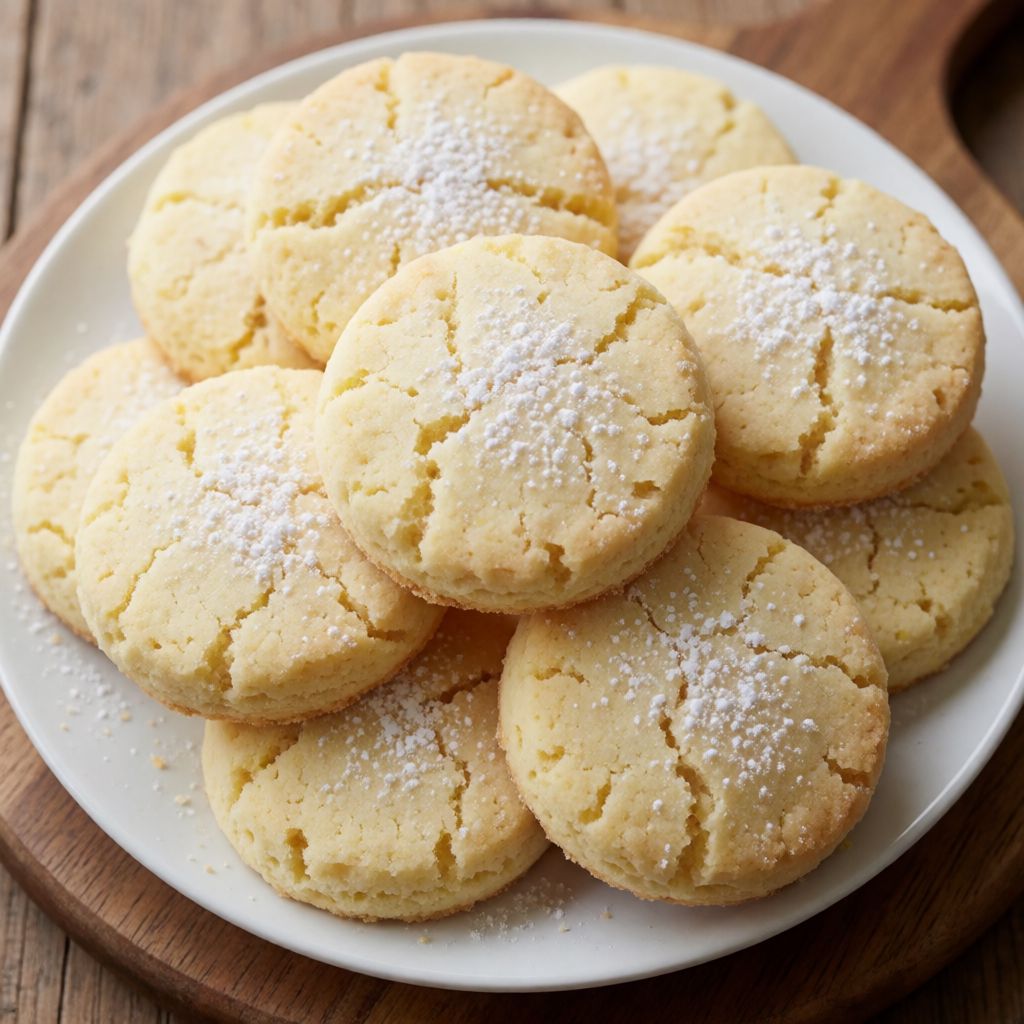
 AI photo
Vanilla Lemon Biscuits
Classic buttery biscuits flavoured with vanilla and lemon zest, lovely with a cup of tea.
Labels are worked out automatically from the ingredients and can be wrong. Check the packaging if it matters to you.
Ingredients
- 175 g Butter
- 110 g Icing sugar
- 1 pcs Egg
- 1 pinch Baking powder
- ½ pcs Lemon 2 tbsp juice and finely grated zest
- 220 g Plain flour
- ½ tsp Vanilla powder







Steps
Cream the butter and icing sugar together until light and fluffy.
3 minAdd the egg and the lemon juice, then mix into the dough.
1 minAdd the plain flour, baking powder, lemon zest and vanilla powder to the dough and mix until smooth.
2 minShape the dough into two logs and chill in the freezer for 1 hour, or in the fridge overnight.
60 minSlice the dough thinly and arrange on a baking tray with good spacing between the slices.
Bake in a preheated oven at 160°C (fan) for 8–10 minutes.
9 min
What was changed
Baker's ammonia has been replaced with Baking powder, mixed in with the flour rather than the lemon juice so it keeps its rising power until baking.
What you've got here is an icebox biscuit — the French call the family sablé, the Scots would recognise it as a thin cousin of shortbread. The whole method hinges on one journey: butter goes soft, gets worked, then has to go hard again before it meets the oven. Get that journey right and you have something crisp enough to snap under tea; get it wrong and you have a flat, greasy puddle on the tray.
Creaming butter and icing sugar until "light and fluffy" isn't really about the sugar dissolving — it's about folding tiny air pockets into the fat. Those pockets are what keep the biscuit from being a dense slab. But more creaming isn't a virtue here. This dough has almost no gluten to hold a structure, so extra air just gives the biscuit more room to spread sideways in the oven instead of staying put. Three minutes, until the colour pales and the texture turns from grainy to silky — that's the cue, not a stopwatch target to beat.
Some say you chill the dough purely so it's easier to slice. No — because the real job of that hour in the freezer (or the night in the fridge) is to let the butter's fat crystals set hard again after you knocked them loose with mixing. A warm log slumps the moment the knife goes through it, and slumped dough spreads into puddles under heat before the egg has a chance to set anything. A cold, firm log holds its round shape right up until the oven does its work.
On temperature: 160°C with the fan on is low enough that the sugar at the edges doesn't scorch before the centre of a thin slice has firmed up — a fan oven moves hot air evenly round every slice, which a still oven won't do as well, so if yours has no fan, expect patchier colour and check earlier. The real doneness sign isn't the clock, it's the rim: once the edge turns from pale gold to the colour of light honey, pull them. Centre still looks slightly soft on the tray — it finishes crisping as it cools, which is the one stage in this recipe where doing nothing is the correct move.
Butter is the whole mechanism, so buy one with no stated water content issues — standard block butter, not a spreadable tub softened with added water, which will never firm back into a proper log. It should be malleable under a thumb but not shiny or greasy; if it's gone that way, it's started to melt, and a melted-then-reset butter never creams the same.
Icing sugar isn't a style choice over caster sugar. It's fine enough to disappear into the fat completely during creaming — no undissolved grains left to melt into little craters in the oven. Caster sugar will work and give you a slightly sandier bite; granulated sugar won't, it stays gritty.
The egg is the only real binder in a dough this low on gluten — its proteins set under heat and hold the biscuit together once the butter's own structure has done its spreading. Lemon juice does double duty: acid for flavour, and a touch of extra liquid that loosens the dough just enough to mix smoothly. Don't be tempted to add more juice than the two tablespoons — any extra liquid and the log won't firm up enough to slice thin, which undoes the whole crisping logic above.
Lemon zest and vanilla powder are there for aroma, not liquid, which is exactly why zest and not more juice: the fragrant oils sit in the peel, not the flesh. No vanilla powder in the cupboard — fine, use a good vanilla extract, just knead it in with the egg stage rather than the dry stage, since it's wet.
Flour here is a vehicle, not a structure-builder — plain flour, mixed only until smooth, because working it longer develops gluten you don't want in a biscuit meant to shatter rather than chew. The pinch of baking powder gives the faintest lift, just enough that the biscuit isn't a dense disc — load in more and you'll tip it toward cakey, which is the wrong direction entirely. As for the hundred in the servings line: one batch, sliced thin, from two logs, makes a proper tea tray for eight to ten with a tin's worth left over — the second log keeps happily in the freezer for the next time the kettle goes on, which is rather the point of making dough this way in the first place.