
 AI photo
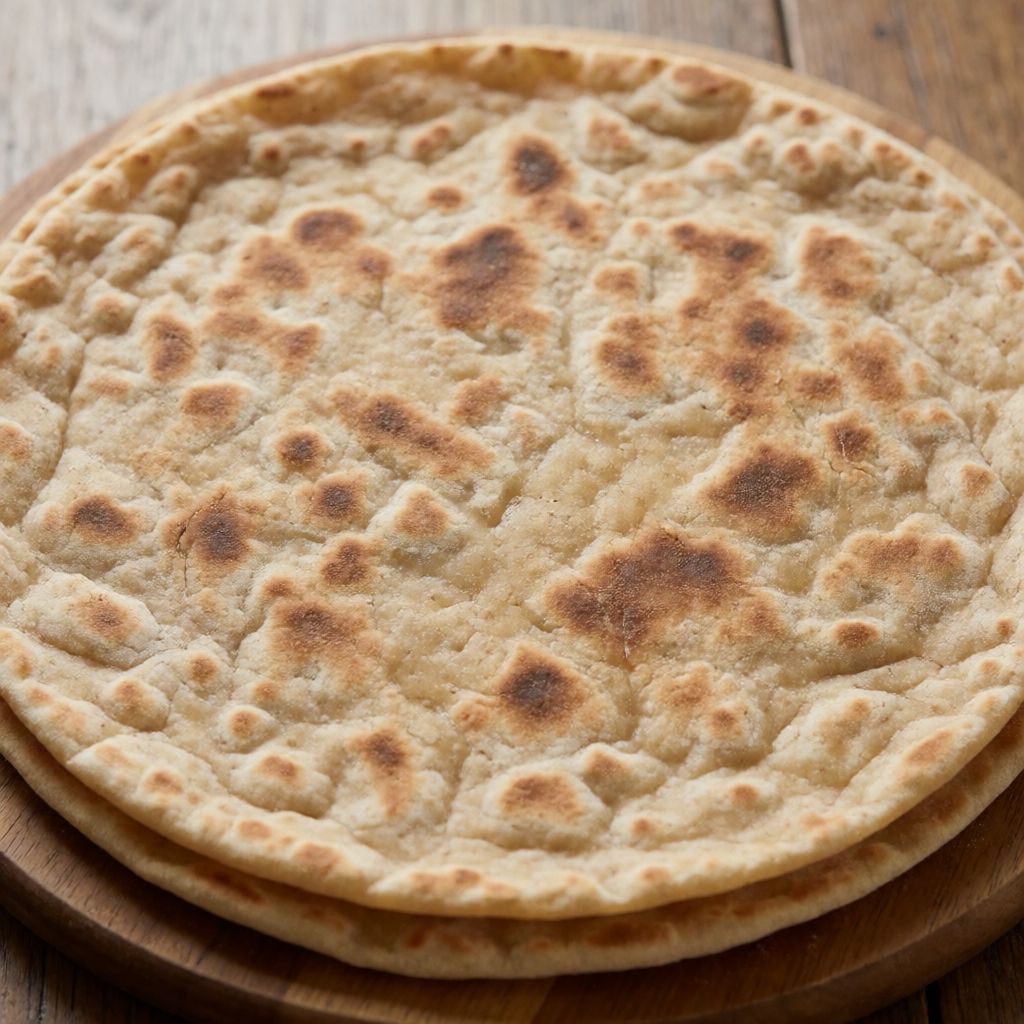
Wholemeal Piadina
A simple wholemeal flatbread, pan-fried and filled with whatever you like.
Labels are worked out automatically from the ingredients and can be wrong. Check the packaging if it matters to you.
Ingredients
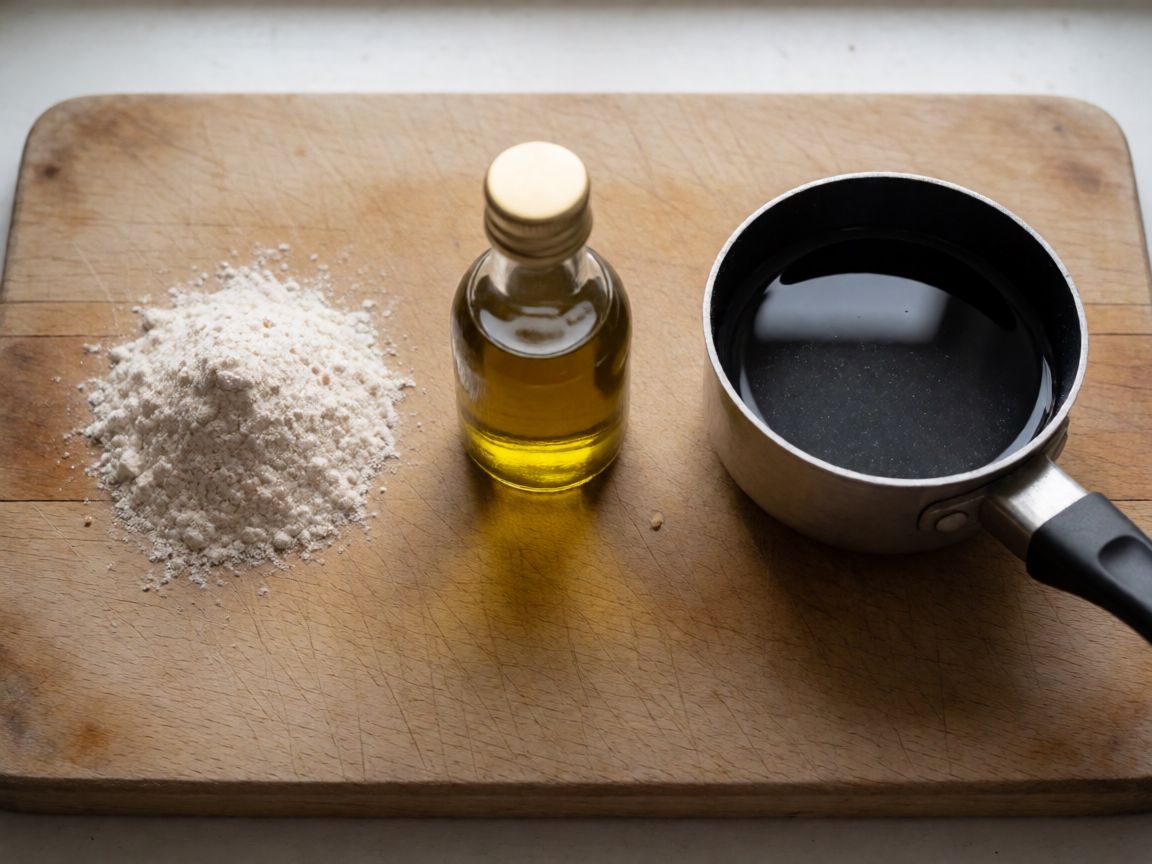
- 300 g Wholemeal Flour
- 35 g Olive Oil
- 150 ml Water
- 1 tsp Salt



Steps
Put the wholemeal flour into a bowl, add the olive oil and salt.
Gradually pour in the water, stirring until it's fully absorbed and the mixture has thickened.
Turn the dough onto a work surface and knead quickly by hand until it forms a soft, smooth ball.
Wrap the dough in cling film and leave to rest for about 15 minutes.
15 minDivide the dough into five equal pieces.
Flatten each piece by hand, then roll out with a rolling pin into a round about 20 cm across.
Heat a frying pan and cook each piadina for a few minutes on each side until done.
Fill the warm piadine with your favourite filling and serve.
Piadina is a flatbread that was never meant to rise. No yeast, no bicarb — just flour, oil, water, salt. That's not an unfinished dough waiting for something you forgot to add; that's the whole design. Some people see a flatbread and assume it failed to prove — no, because this one was built flat on purpose, to be cooked fast on a hot dry surface and eaten within the hour, not baked slow in an oven that most Romagna kitchens didn't have a hundred years ago.
What decides whether it works is two things: how much water the bran in that wholemeal flour has actually drunk before you roll it, and how hot your pan is when the dough hits it. Wholemeal isn't just "brown white flour" — the bran shreds are sharp little fibres that soak up water slowly. Skip the rest and you'll feel it the second you roll: the edges tear instead of stretching, because the bran hasn't softened yet, it's still cutting through the gluten strands around it.
The oil in the dough is doing a job you won't notice until it's missing. A dry pan with no oil in it is a harsh place for a thin disc of dough — without fat coating the flour, the surface dries out and cracks into something closer to a cracker than a bread you can fold round a filling. The fat is there to keep it bendable after the heat has done its work, not just for taste.
Flour first. Wholemeal gives you the bran and the germ along with the starch, and that's both the point and the problem. The point: more flavour, more chew, a bread with some backbone to it. The problem: bran doesn't hydrate as fast as the fine starch in white flour, so a dough that looks ready right after kneading can still be fighting you ten minutes later when you try to roll it thin. That's exactly why the fifteen-minute rest is in the method — it's not there to "let the dough relax" in some vague way, it's there so the bran finishes drinking the water it needs, and the gluten that got pulled tight during kneading loosens enough that the dough stops springing back at you. If you swap in plain white flour because that's what's in the tin, go ahead — you'll get a softer, more classically pale piadina, and you can likely use a touch less water, since white flour won't drink as thirstily as wholemeal does.
The oil: 35 g for 300 g of flour is not a lot, but it's enough to coat the flour particles and keep the dough from turning leathery on a dry hot surface later. Olive oil gives a flavour of its own, which is fine here — piadina isn't a neutral canvas. If you want the traditional texture rather than the traditional flavour, lard (strutto) is what it was made with for most of its history, because this was poor farming food cooked over embers on a terracotta disc called a testo, and lard was cheap, available, and kept the dough tender in a way oil only approximates. If you're substituting for any other reason, the criterion is simple: use a fat that's liquid or soft at room temperature and doesn't fight the filling with its own smell — sunflower oil is a fair stand-in, sesame or walnut oil would not be.
Salt and water are doing less glamorous but necessary work. The teaspoon of salt firms the gluten slightly as well as seasoning it — dough without salt feels noticeably slacker in the hand. The water's job is just to bring the flour and oil together into something you can knead; 150 ml is a starting point, not a law, because flour varies batch to batch in how dry it is. Go by feel: the dough should be soft and smooth, not sticky on your fingers and not stiff enough to resist a roll of the pin.
There's a small oddity in the numbers: the recipe serves four but tells you to divide the dough into five pieces. That's not a mistake to agonise over — it just means someone with a bigger appetite, or a Sunday-roast leftover sandwich in mind, gets a second one. Which is a reasonable thing to want, because piadina is built to be a wrapper as much as a bread — cold roast lamb and some mint sauce folded into a warm piece is not a betrayal of Romagna, it's the same economic logic that made the dish in the first place: whatever filling is in the house, wrapped in a flatbread that didn't need an oven or time to prove.
On cooking it in an ordinary kitchen: you don't need the clay testo this was traditionally baked on, and you certainly don't need a kazan. A heavy-based frying pan or a cast iron griddle, used dry, gets you the same result — what the testo gave was steady, even heat held in a lot of thermal mass, and a decent heavy pan does roughly the same job on a domestic hob. Just don't oil the pan; the oil's already in the dough, and a greasy pan surface will fry the piadina instead of searing it, which changes the texture from pliable bread to something closer to a thick crisp.
And patience, here, is mostly about not skipping the rest. Fifteen minutes feels like nothing is happening, which is exactly why people cut it short. It's the difference between a dough that rolls out smoothly to twenty centimetres and one that tears at the edges and shrinks back to sixteen the moment you let go of the pin.